Arbutus unedo
Strawberry Madrone
General Info
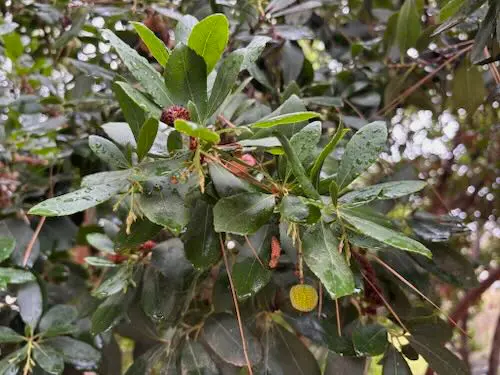
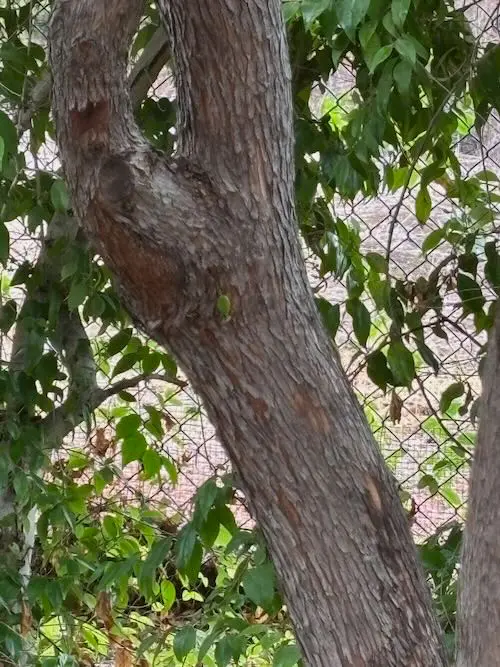
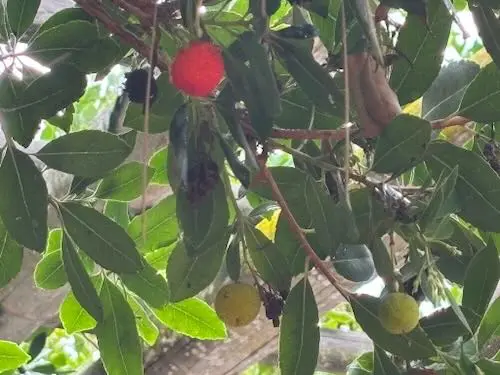
Strawberry Tree is an attractive small evergreen shade tree, with its shiny dark green color and attractive bark and multi-trunk branching habit. The flowers and fruit are also attractive highlights during the year. Once established, it is a very durable tree. The fruit drop tends to be messy near drives or walkways. It may require regularly scheduled light top-trimming (but not necessarily shearing) of vigorous top shoots to maintain its height below 25. It is resistant to oak root fungus.
Native Range: Southern Europe and Ireland
Horticultural use: Screen
Ethnobotanical Info / Tree Use: Citations Page
Schoolyard Use: This tree has rough, reddish-brown bark that peels away in thin strips, providing a tactile experience for students. The glossy, evergreen leaves can be used in lessons on leaf structure and photosynthesis. It produces small, white to pink bell-shaped flowers that attract pollinators, offering a chance to study plant-pollinator interactions. The tree also bears round, red fruits that ripen in the fall, which can be used to explore topics like fruit development and seed dispersal.
Tree Shape: Rounded or Vase
Foliage Type: Evergreen
Maximum Tree Height: 35 feet
Canopy Width: 20-35feet
Growth Rate: ~12-24in/year
Leaf Arrangement and Form: Alternate and Simple
Leaf Shape: Oblong
Leaf Color: Dark Green
Fall Color: No
Flowers: Showy
Flower Color: White
Flower Time: Fall or Winter
Fruit Size and Color: Medium Orange or Red Berry
Fruiting Time: Fall or Winter
Fruit Value: Edible and Wildlife use it
Bark Color: Striking Red Brown
Bark Texture: Exfoliating and Smooth
Litter Type: Wet Fruit
Recommended Planting Area: 4′ to 7′
Water Use Rating: Medium
Sunset Climate Zone: 4 – 24
Soil Texture: Loam, Sand or Clay
Soil pH: Very Acidic to Slightly Alkaline
Salt Tolerance: High
Schoolyard Trees: Yes
Shade Tolerance: Yes
Branch Strength: Strong
Root Damage Potential: Low
Potential health issues: Allergy
Biogenic Emissions: Low
Wildlife Interactions: Tree is deer resistant and Attracts Birds
Disease and Pest Susceptibility: Anthracnose, Phytophthora, Root Rot, Rust, Scales and Thrip
Disease and Pest Resistance: Armillaria and Root Rot
Utility Friendly: No