Eriobotrya japonica
Japanese Loquat
General Info
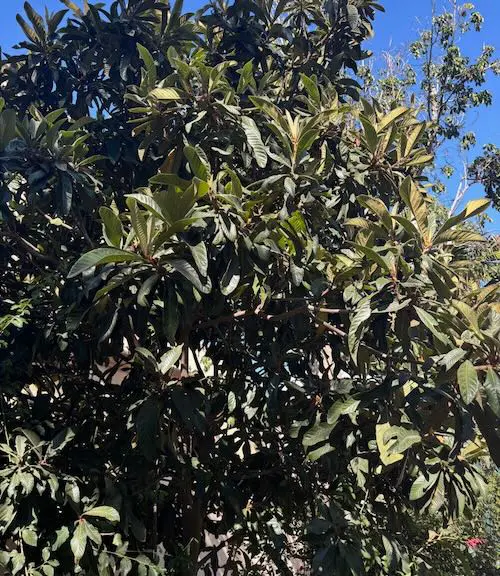
This tree is known for its broad, evergreen leaves that provide year-round greenery. It produces clusters of fragrant white flowers in the fall, which eventually give way to small, yellow-orange fruits that are both decorative and edible. The fruits are sweet and tangy, often attracting birds and other wildlife. This tree thrives in sunny locations and can tolerate a range of soil types, making it a versatile choice for urban landscapes. Its dense foliage provides excellent shade and can act as a windbreak or privacy screen. With its attractive appearance and practical benefits, this tree is a popular option for adding a touch of the exotic to gardens and streetscapes.
Native Range: Southeastern China
Horticultural use: Screen
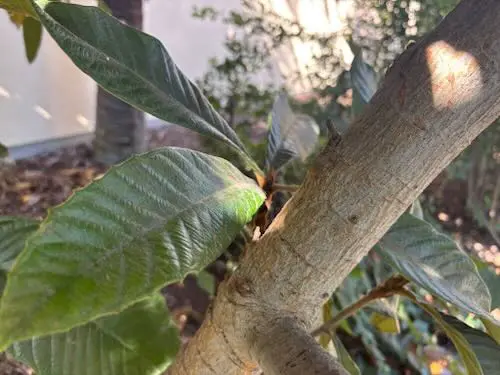
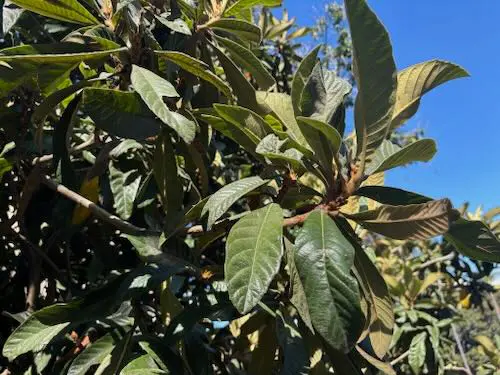
Schoolyard Use: This tree has broad, glossy leaves with a leathery texture, making it ideal for teaching about leaf anatomy and plant adaptations. Its fragrant white flowers bloom in clusters, providing an opportunity to study pollination and plant reproduction. The tree produces small, edible fruits that can be used in lessons about seed dispersal and the role of plants in human diets. The evergreen nature of this tree ensures year-round greenery, useful for discussions on different plant life cycles.
Tree Shape: Rounded or Vase
Foliage Type: Evergreen
Maximum Tree Height: 30 feet
Canopy Width: 15-30feet
Growth Rate: ~36in/year
Leaf Arrangement and Form: Alternate and Simple
Leaf Shape: Oblong
Leaf Color: Dark Green
Fall Color: No
Flowers: Showy, Fragrant
Flower Color: White
Flower Time: Fall
Fruit Size and Color: Large Orange or Yellow Pome
Fruiting Time: Spring or Summer
Fruit Value: Edible
Bark Color: Dark Gray
Bark Texture: Exfoliating and Smooth
Litter Type: Wet Fruit
Recommended Planting Area: 4′ to 7′
Water Use Rating: Medium
Sunset Climate Zone: 6 – 24, H1 and H2
Soil Texture: Loam, Sand or Clay
Soil pH: Very Acidic to Very Alkaline
Salt Tolerance: Moderate
Schoolyard Trees: Yes
Shade Tolerance: No
Branch Strength: Medium
Root Damage Potential: Low
Potential health issues: None Known
Biogenic Emissions: Low
Wildlife Interactions: Attracts Bees and Birds
Disease and Pest Susceptibility: Fire Blight, Armillaria and Root Rot
Disease and Pest Resistance: Armillaria and Root Rot
Utility Friendly: No