Grewia occidentalis
Lavender Star Flower
General Info
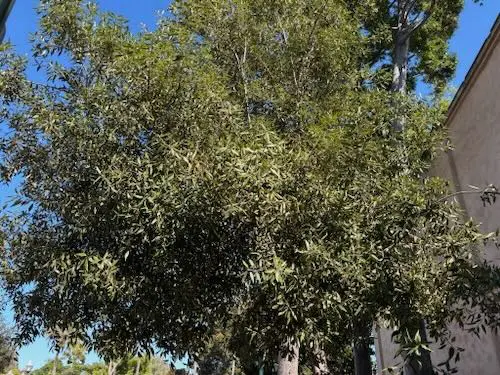
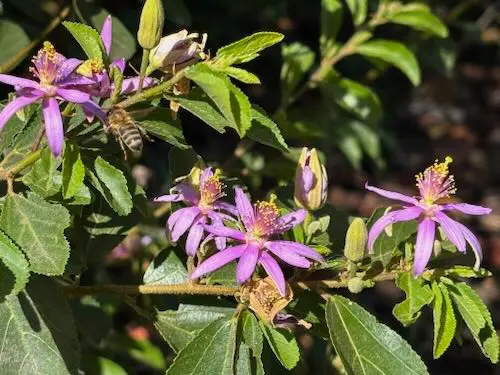
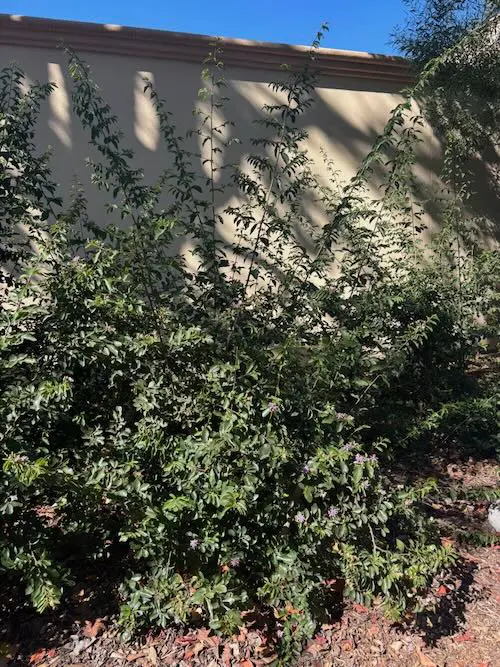
Grewia occidentalis is a deciduous plant that forms into a shrub, small tree, or climbing vine depending on its environment. It has soft, hairy branches and dark green foliage with lightly-toothed margins. This species is primarily planted for its vibrant lavender, star-shaped flowers with yellow and red stamens. These are followed by reddish-brown drupes with four distinct lobes. This versatile species can grow in tropical, subtropical, coastal, and desert climates. It has non-aggressive roots.
Native Range: South Africa, Botswana, Zimbabwe, and Mozambique
Horticultural use: Screen, Garden or Espallier
Ethnobotanical Info / Tree Use: The fruits of Crossberry are edible and sometimes brewed into beer. Its wood is made into bows, walking sticks, and spear shafts and its powdered bark is used as shampoo, believed to prevent graying hair. This species is utilizied across many traditional medicines to treat wounds, ulcers, skin irritations, diarrhoea, dysentery, and to help with childbirth.
Tree Shape: Rounded or Shrub
Foliage Type: Partly Deciduous
Maximum Tree Height: 50 feet
Canopy Width: 5-12feet
Leaf Arrangement and Form: Alternate and Simple
Leaf Shape: Oval
Leaf Color: Green
Fall Color: No
Flowers: Showy
Flower Color: Purple or Lavender
Flower Time: Fall, Spring or Summer
Fruit Size and Color: Small Reddish-Brown Drupe
Fruiting Time: Winter or Fall
Bark Color: Light Gray, Light Brown
Bark Texture: Smooth and Rough
Litter Type: Leaves
Recommended Planting Area: 2′ to 4′
Water Use Rating: Medium
Sunset Climate Zone: 8 – 9, 13 – 24, H1 and H2
Soil Texture: Loam or Sand
Salt Tolerance: Moderate
Schoolyard Trees: No
Shade Tolerance: No
Wildlife Interactions: Attracts Hummingbirds and Butterflies
Disease and Pest Susceptibility: Caterpillars, Mealy Bugs and Nematodes
Utility Friendly: Yes