Callistemon viminalis
Weeping Bottlebrush
General Info
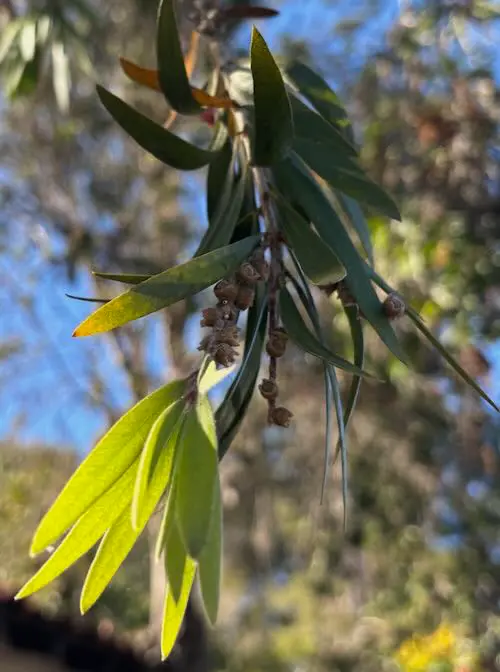
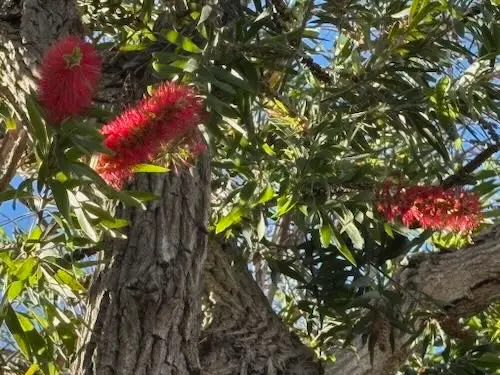
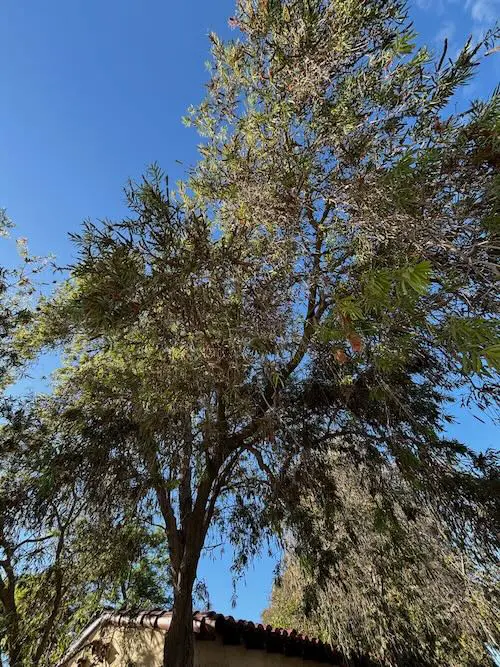
This tree features gracefully drooping branches that create a weeping effect, making it a striking addition to urban landscapes. Its vibrant red, bottlebrush-like flowers bloom profusely, attracting hummingbirds and other pollinators. The narrow, lance-shaped leaves are aromatic when crushed, adding another sensory dimension. It thrives in sunny locations and can tolerate a range of soil types, including those that are less fertile. This tree is also relatively drought-resistant once established, making it a low-maintenance choice for gardens and streetscapes.
Native Range: Eastern Australia
Horticultural use: Street Tree, Screen or Hedged
Ethnobotanical Info / Tree Use: The essential oil from this tree is used as insecticide and fungicide. In traditional Chinese medicine it is used to treat hemorrhoids, while in Jamaica a tea is made to treat gastro-enteritis and skin infection. Across C. viminalis’native range in Australia, it is used for a variety of traditional medicine applications. The ‘bottlebrush’ is a common ornamental street tree throughout the tropics and subtropics. (Salem et al., 2017)
Schoolyard Use: This tree has narrow, drooping leaves and vibrant, bottlebrush-like flowers that capture attention. The flowers attract bees and birds, making it a great subject for studying pollination and ecosystems. Its evergreen foliage provides year-round greenery, useful for lessons on plant life cycles. The tree’s bark is textured and peeling, which can be used to discuss plant growth and adaptation.
Tree Shape: Rounded
Foliage Type: Evergreen
Maximum Tree Height: 20 feet
Canopy Width: 15-20feet
Growth Rate: ~36in/year
Leaf Arrangement and Form: Alternate and Simple
Leaf Shape: Spear-shaped
Leaf Color: Green
Fall Color: No
Flowers: Showy, Fragrant
Flower Color: Red
Flower Time: Spring or Summer
Fruit Size and Color: Small Brown Capsule
Fruiting Time: Fall
Fruit Value: Wildlife use it
Bark Color: Dark Gray
Bark Texture: Exfoliating and Striated
Litter Type: Dry Fruit
Recommended Planting Area: 2′ to 4′
Water Use Rating: Low
Sunset Climate Zone: 6 – 9 and 12 – 24
Soil Texture: Loam, Sand or Clay
Soil pH: Slightly Acidic to Very Alkaline
Salt Tolerance: moderate
Schoolyard Trees: Yes
Shade Tolerance: No
Branch Strength: Medium
Root Damage Potential: Low
Potential health issues: Allergy
Biogenic Emissions: High
Wildlife Interactions: and Attracts Bees and Birds
Disease and Pest Susceptibility: Armillaria and Root Rot
Disease and Pest Resistance: Armillaria and Root Rot
Utility Friendly: Yes