Handroanthus heptaphyllus
Pink Trumpet Tree
General Info
Handroanthus heptaphyllus is the correct name for the trees in cultivation in Southern California, not Handroanthus impetiginosus. The reference for this correction is here: https://ucanr.edu/sites/HodelPalmsTrees/files/215523.pdf.
This tree is known for its stunning display of vibrant pink to purple flowers that bloom in clusters, creating a striking contrast against its dark green leaves. It typically has a straight trunk with a rough, grayish bark that adds to its visual interest. During the blooming season, the tree becomes a focal point in any landscape, attracting bees and other pollinators. Its canopy provides moderate shade, making it a pleasant addition to parks and gardens. The tree is also relatively drought-tolerant once established, making it suitable for urban environments with varying water availability.
Native Range: Central and South America
Horticultural use: Specimen, Buffer Strip, Container or Street TreeEthnobotanical Info / Tree Use: Native to the Amazon basin of South America where it is called lapacho, H. heptaphyllus is widely used in herbal medicine to treat respiratory conditions, as an anti-biotic, and as an immunostimulant. It is the national tree of Paraguay. Because of its dramatic pink inflorescences, it is commonly planted as a street and park tree around the world. (Castellanos et al., 2009)
Schoolyard Use: This tree displays vibrant, trumpet-shaped flowers that can be used to teach about pollination and plant reproduction. Its bright flowers attract various pollinators, offering a practical example for lessons on ecosystems. The tree’s compound leaves can be utilized to explain leaf structure and photosynthesis. Its hard, durable wood provides material for discussions on plant anatomy and uses of wood in human activities. The tree’s seasonal flowering cycle can also be integrated into lessons on plant life cycles and environmental adaptation.
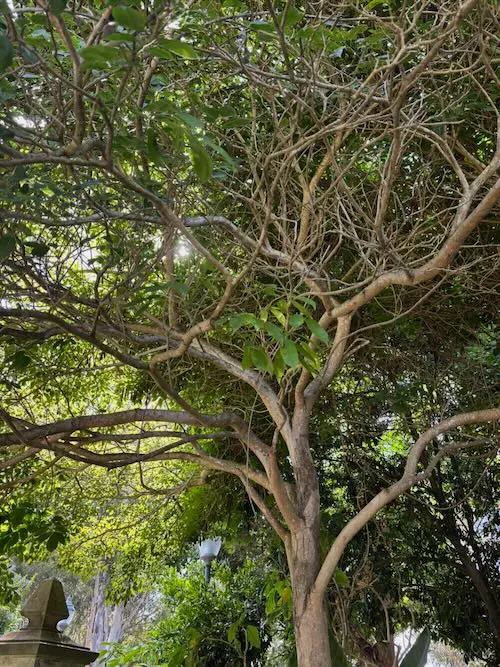
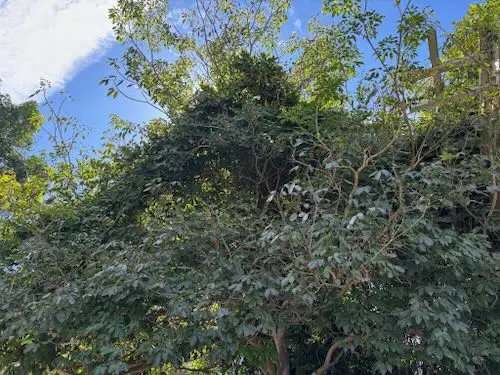
Tree Shape: Rounded
Foliage Type: Deciduous
Maximum Tree Height: 30 feet
Canopy Width: 15-25feet
Growth Rate: ~12-24in/year
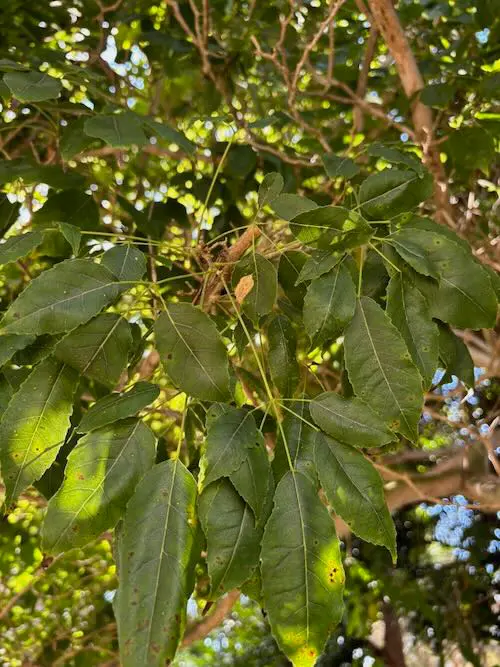
Leaf Arrangement and Form: Opposite and Palmately Compound
Leaf Shape: Oval
Leaf Color: Green
Fall Color: No
Flowers: Showy
Flower Color: Pink or Purple
Flower Time: Winter or Spring
Fruit Size and Color: Very Large Green to Brown Capsule
Fruiting Time: Summer
Bark Color: Brown to Gray
Recommended Planting Area: 4′ to 7′
Water Use Rating: Medium
Sunset Climate Zone: 15 – 16, 20 – 24, H1 and H2
Soil Texture: Loam, Sand or Clay
Soil pH: Acidic to Alkaline
Schoolyard Trees: Yes
Shade Tolerance: No
Root Damage Potential: Moderate
Wildlife Interactions: Attracts
Utility Friendly: No