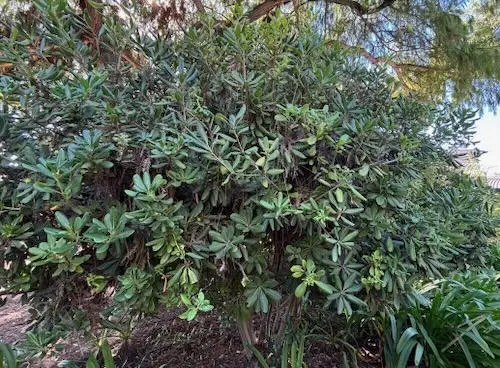
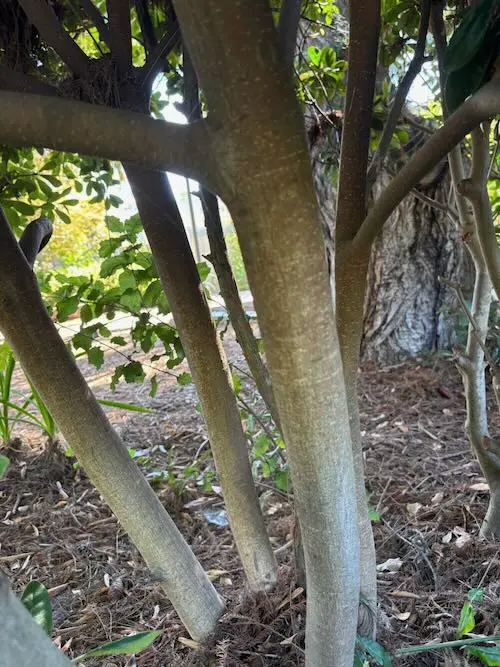
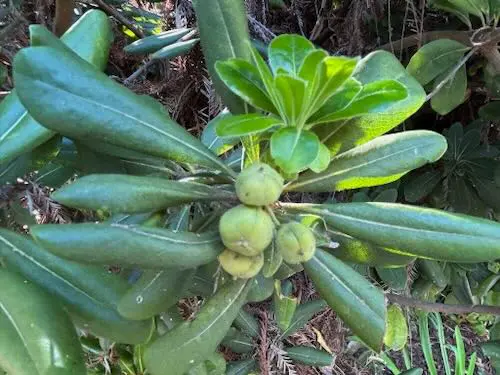
Pittosporum tobira
Mock Orange
General Info
This tree is fairly drought resistant and takes shearing. Pittosporum tobira has a HPWRA (Hawai‘i Pacific Weed Risk Assessment) score of 3.5 (Evaluate).
Native Range: Japan
Horticultural use: Screen or Hedged
Ethnobotanical Info / Tree Use: A popular ornamental tree native to Korea, China, and Japan, where it is called tobera. It is planted as an ornamental shrub extensively throughout the Mediterranean basin.
Tree Shape: Rounded
Foliage Type: Evergreen
Maximum Tree Height: 25 feet
Canopy Width: 5-15feet
Growth Rate: ~12-24in/year
Leaf Arrangement and Form: Alternate and Simple
Leaf Shape: Obovate
Leaf Color: Dark Green
Fall Color: No
Flowers: Showy, Fragrant
Flower Color: Cream or White
Flower Time: Spring
Fruit Size and Color: Small Brown or Mostly Green Capsule
Fruiting Time: Fall or Summer
Bark Color: Light Green or Light Gray
Bark Texture: Smooth
Litter Type: Dry Fruit
Recommended Planting Area: 4′ to 7′
Water Use Rating: Medium
Sunset Climate Zone: 8 – 24, H1 and H2
Soil Texture: Loam, Sand or Clay
Soil pH: Slightly Acidic to Very Alkaline
Salt Tolerance: Moderate
Schoolyard Trees: No
Shade Tolerance: No
Branch Strength: Medium
Root Damage Potential: Low
Potential health issues: Allergy
Biogenic Emissions: Low
Wildlife Interactions: Attracts Birds
Disease and Pest Susceptibility: Phytophthora, Root Rot, Sooty Mold, Aphids and Scales
Disease and Pest Resistance: Armillaria and Root Rot
Utility Friendly: Yes