Schinus terebinthifolius
Brazilian Peppertree
General Info
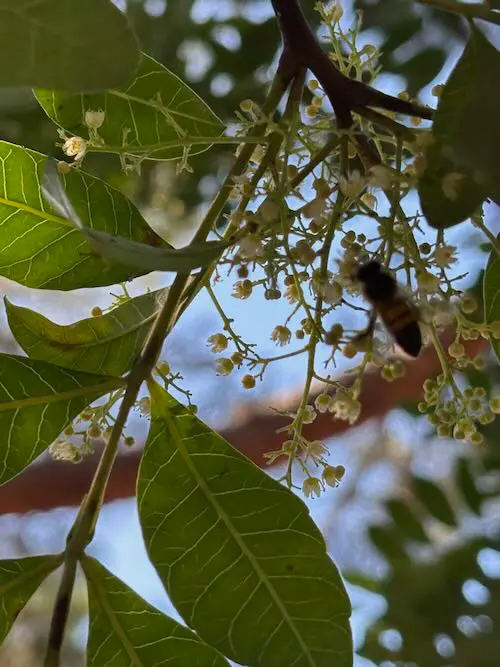
This species is widely naturalized in Hawai‘i, as it is in tropical areas worldwide. In California it only occasionally naturalizes. Female trees produce bright red fruit, dispersed by birds into forested areas and used as decoration, in leis, and wreaths. The sap can cause an allergic reaction on the skin of many people. The berries are used and sold as pink peppercorns in culinary realms and often blended with commercial pepper (Piper nigrum). We do not recommend planting this tree in Hawai‘i.According to Zona, S. (2015). The correct gender of Schinus (Anacardiaceae). Phytotaxa, 222(1), 75–77, the correct specific epithet is terebinthifolia. The name is commonly misspelled as “terebinthifolius” due to historic confusion about the gender of the genus. Schinus is feminine.Schinus terebinthifolia has a HPWRA (Hawai‘i Pacific Weed Risk Assessment) score of 10 (High Risk).
Native Range: South America
Potential invasiveness: This plant is classified as potentially invasive in specific areas of California by the California Invasive Plant Council
Horticultural use: Screen
Foliage Type: Deciduous
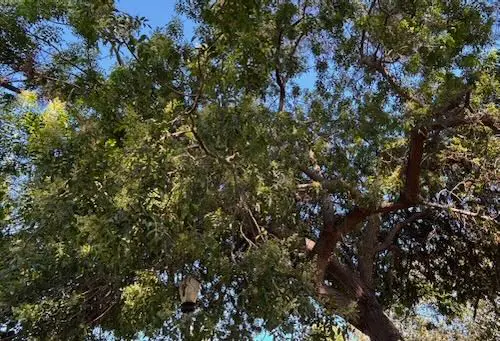
Maximum Tree Height: 30 feet
Canopy Width: 15-30feet
Growth Rate: ~24in/year
Leaf Arrangement and Form: Alternate and Pinnately Compound
Leaf Shape: Oblong
Leaf Color: Dark Green
Fall Color: No
Flower Color: White
Flower Time: Summer
Fruit Size and Color: Very Small Red Drupe
Fruiting Time: Fall
Fruit Value: Wildlife use it
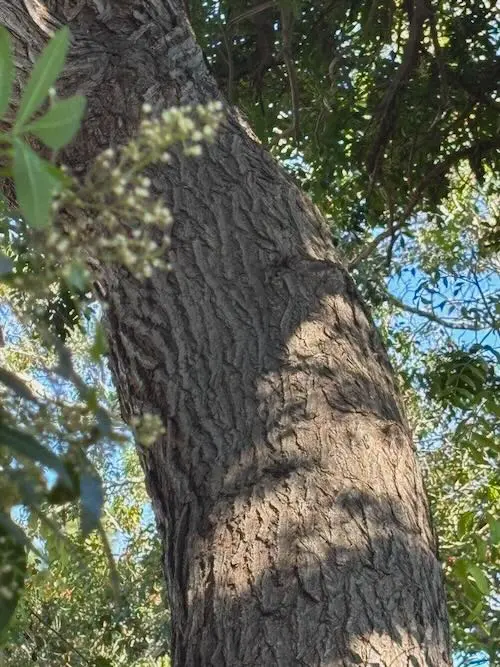
Bark Color: Light Green or Light Gray
Bark Texture: Fissured
Litter Type: Dry Fruit
Recommended Planting Area: 4′ to 7′
Water Use Rating: Low
Sunset Climate Zone: 13 – 17, 19 – 24, H1 and H2
Soil Texture: Loam, Sand or Clay
Soil pH: Slightly Acidic to Very Alkaline
Salt Tolerance: Moderate
Schoolyard Trees: No
Shade Tolerance: No
Branch Strength: Medium Weak
Root Damage Potential: Moderate
Potential health issues: Allergy and Irritant
Biogenic Emissions: Moderate
Wildlife Interactions: Attracts
Disease and Pest Susceptibility: Armillaria, Root Rot, Verticillium and Scales
Utility Friendly: No