Callistemon citrinus
Lemon Bottlebrush
General Info
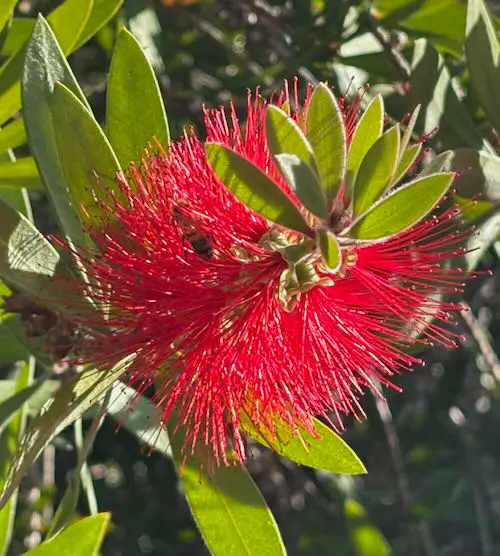
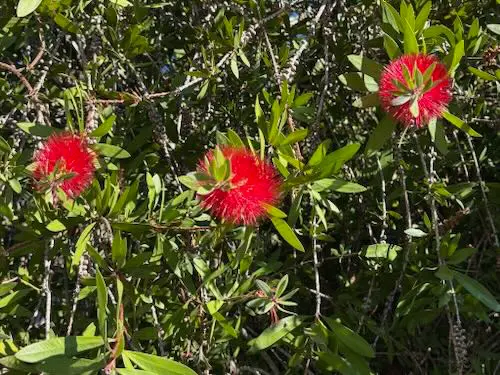
Lemon bottlebrush is commonly grown as a shrub, or as a single-trunked standard tree. It is a tough, reliable evergreen species, with red brush-like flowers in hanging clusters. The leaves smell lemon-like when crushed, hence the common name. It may require regularly scheduled light top-trimming (but not necessarily shearing) of vigorous top shoots to maintain its height below 25 feet. The leaves can be used as a tea substitute and a tan dye can be obtained from the flowers. Callistemon citrinus has a HPWRA (Hawai‘i Pacific Weed Risk Assessment) score of 0 (Low Risk)
Native Range: Eastern Australia
Horticultural use: Street Tree, Screen, Espalier or Hedged
Ethnobotanical Info / Tree Use: Commercially grown to produce essential oils with antibacterial properties. The ‘bottlebrush’ is a common ornamental street tree throughout the tropics and subtropics. (Oyedeji et al., 2009)
Schoolyard Use: This tree features vibrant, brush-like flowers that can be used to teach about pollination and the role of color in attracting pollinators. Its narrow, evergreen leaves release a citrus scent when crushed, providing a sensory experience for lessons on plant aromas and essential oils. The tree’s resilience to drought makes it an example of water conservation and adaptation in plant species. The unique flower structure can also be used to discuss the anatomy of flowering plants.
Tree Shape: Rounded
Foliage Type: Evergreen
Maximum Tree Height: 25 feet
Canopy Width: 25feet
Growth Rate: ~36in/year
Leaf Arrangement and Form: Alternate and Simple
Leaf Shape: Spear-shaped
Leaf Color: Green
Fall Color: No
Flowers: Showy, Fragrant
Flower Color: Red
Flower Type: Has male and female reproductive parts in each flower (perfect)
Flower Time: Spring or Summer
Fruit Size and Color: Small Brown Capsule
Fruiting Time: Fall
Fruit Value: Wildlife use it
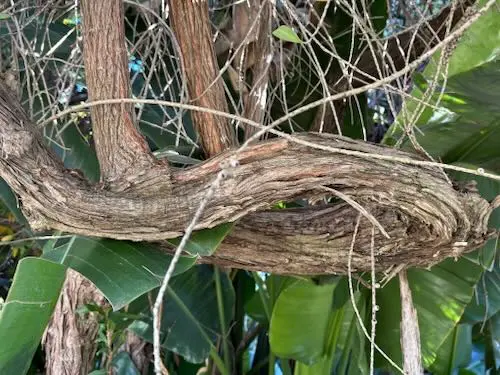
Bark Color: Light Green or Light Gray
Bark Texture: Exfoliating and Striated
Litter Type: Flowers
Recommended Planting Area: 4′ to 7′
Water Use Rating: Low
Sunset Climate Zone: 8 – 9, 12 – 24, H1 and H2
Soil Texture: Loam, Sand or Clay
Soil pH: Slightly Acidic to Very Alkaline
Salt Tolerance: moderate
Schoolyard Trees: Yes
Shade Tolerance: No
Branch Strength: Medium
Root Damage Potential: Low
Potential health issues: Allergy
Biogenic Emissions: High
Wildlife Interactions: Attracts Bees and Birds
Disease and Pest Susceptibility: Chlorosis
Disease and Pest Resistance: Armillaria and Root Rot
Utility Friendly: Yes