Lophostemon confertus
Brisbane Box
General Info
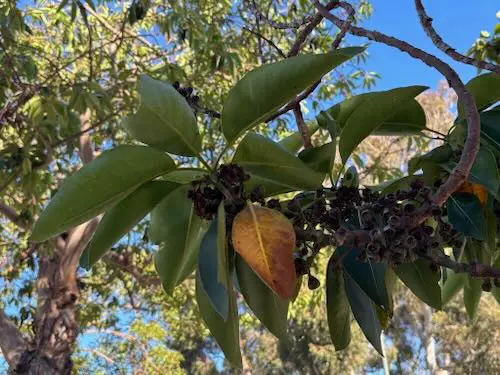
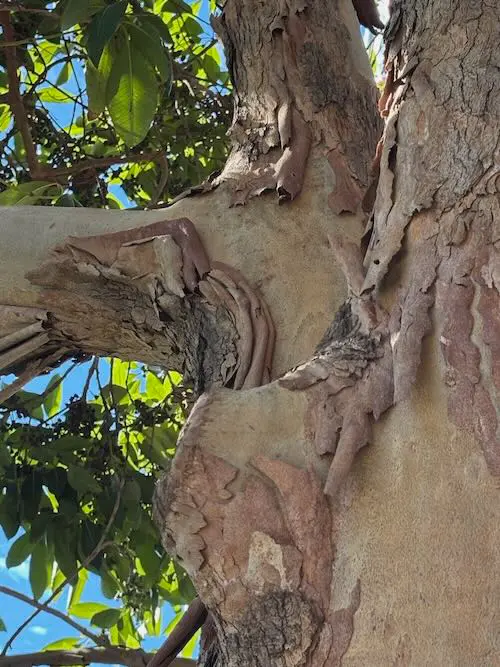
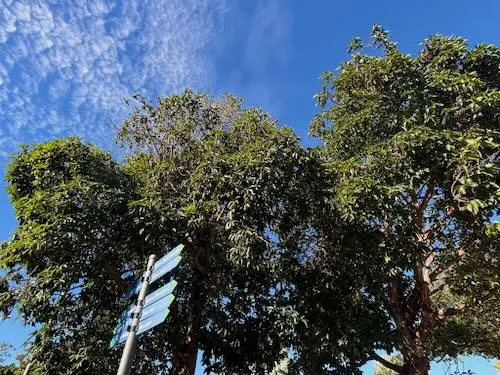
This tree stands tall with a dense, rounded canopy that provides ample shade. Its leaves are glossy and dark green, creating a lush, vibrant appearance throughout the year. During the warmer months, it produces clusters of small, white, fragrant flowers that attract bees and other pollinators. The bark is smooth and pale, often peeling away in patches to reveal a creamy underlayer, adding visual interest to the trunk. This hardy tree is well-suited for urban environments, tolerating pollution and poor soil conditions. It is a popular choice for streetscapes and parks due to its robust nature and minimal maintenance needs.
Native Range: Australia
Schoolyard Use: This tree has thick, leathery leaves that are perfect for teaching about plant durability and water conservation. The leaves remain green year-round, making it a great example for lessons on evergreen species. Its bark peels in strips, providing material for discussions on tree growth and bark functions. The flowers are small and white, blooming in clusters that can be used to explain pollination.
Tree Shape: Rounded
Foliage Type: Deciduous
Maximum Tree Height: 50 feet
Canopy Width: 10-30feet
Growth Rate: ~24-36in/year
Leaf Arrangement and Form: Alternate/Whorled and Simple
Leaf Shape: Ovate
Leaf Color: Green
Fall Color: No
Flowers: Inconspicuous
Flower Color: White
Flower Time: Spring
Fruit Size and Color: Small Brown or Red Capsule
Fruiting Time: Summer
Bark Color: Striking, Light Green, Red Brown or Multicolored
Bark Texture: Exfoliating and Smooth
Litter Type: Dry Fruit
Recommended Planting Area: 4′ to 7′
Water Use Rating: Medium
Soil pH: Slightly Acidic to Very Alkaline
Salt Tolerance: Moderate
Schoolyard Trees: Yes
Shade Tolerance: No
Branch Strength: Medium
Root Damage Potential: Moderate
Biogenic Emissions: High
Wildlife Interactions: Attracts
Disease and Pest Susceptibility: Phytophthora, Root Rot and Scales
Utility Friendly: No