Olea europaea
Olive Tree
General Info
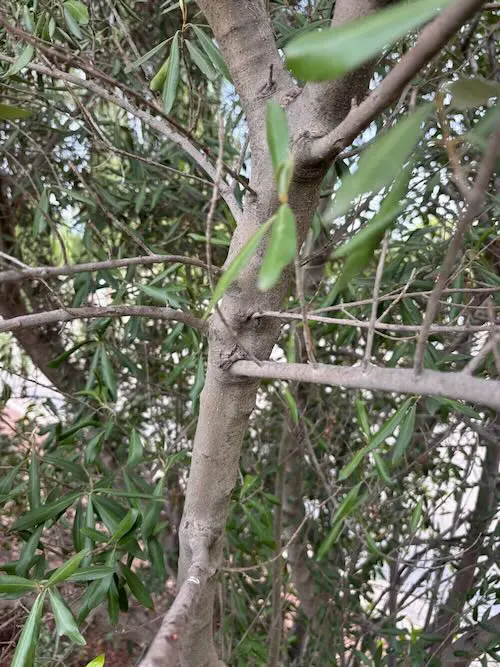
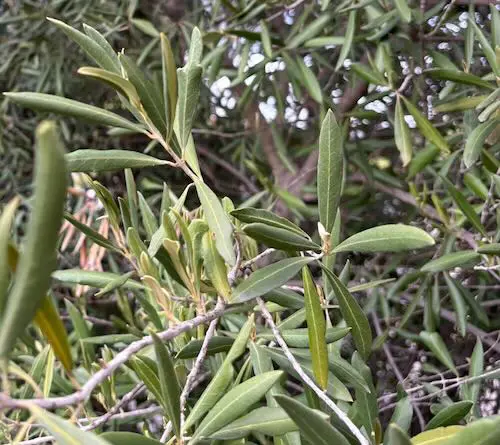
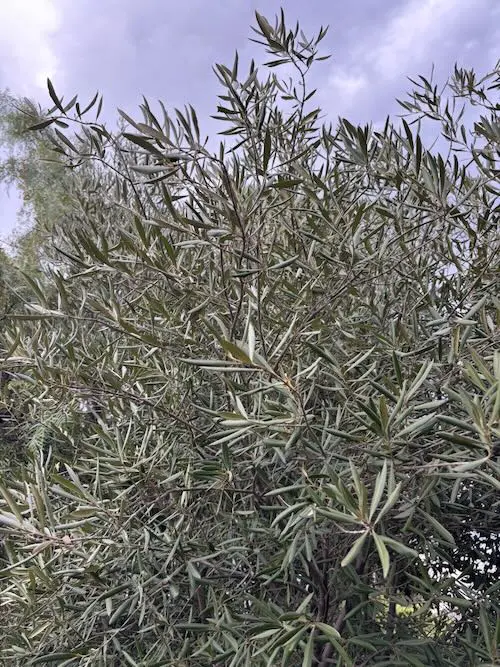
Olea europaea is known for its gnarled trunk and silvery-green leaves that shimmer in the sunlight. It produces small, fragrant flowers in the spring, which give way to clusters of tiny, oval-shaped fruits. The fruits start green and ripen to a deep purple or black, adding a splash of color to the landscape. It’s well-suited to dry, rocky soils and thrives in Mediterranean climates, making it a hardy choice for urban settings. Its slow growth and modest size make it a manageable option for smaller spaces, while its evergreen foliage provides year-round interest.
Native Range: Mediterranean
Potential invasiveness: This plant is classified as potentially invasive in specific areas of California by the California Invasive Plant Council
Horticultural use: Screen or Hedged
Schoolyard Use: Olive Tree has small, silvery-green leaves that are perfect for discussing leaf adaptations to arid climates. Its gnarled, twisting trunk can be used to explore topics like tree age and growth patterns. The small, fragrant flowers and subsequent fruit provide an opportunity to teach about pollination and fruit development. The fruit’s oil is a significant part of human history and can be tied into lessons on agriculture and trade.
Tree Shape: Rounded or Vase
Foliage Type: Deciduous
Maximum Tree Height: 30 feet
Canopy Width: 25-30feet
Growth Rate: ~12-24in/year
Leaf Arrangement and Form: Opposite and Simple
Leaf Shape: Ovate
Leaf Color: Bluish Green, Silver or Gray Green
Fall Color: No
Flowers: Inconspicuous, Fragrant
Flower Time: Spring
Fruit Size and Color: Medium Black, Purple or Mostly Green Drupe
Fruiting Time: Fall
Fruit Value: Edible and Wildlife use it
Bark Color: Light Gray
Bark Texture: Scaly
Litter Type: Wet Fruit
Recommended Planting Area: 4′ to 7′
Water Use Rating: Low
Sunset Climate Zone: 8 – 9, 11 – 24, H1 and H2
Soil Texture: Loam, Sand or Clay
Soil pH: Slightly Acidic to Very Alkaline
Salt Tolerance: Moderate
Schoolyard Trees: Yes
Shade Tolerance: No
Branch Strength: Strong
Root Damage Potential: Moderate
Potential health issues: Allergy
Biogenic Emissions: Low
Wildlife Interactions: Attracts Bees and Birds
Disease and Pest Susceptibility: Anthracnose, Armillaria, Phytophthora, Root Rot, Scales and Psyllid
Disease and Pest Resistance: Texas Root Rot, Armillaria and Root Rot*
Utility Friendly: No