Phoenix canariensis
Canary Island Date Palm
General Info
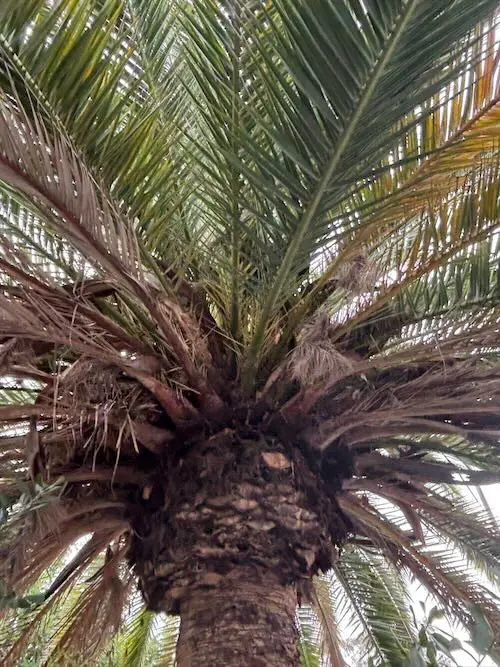
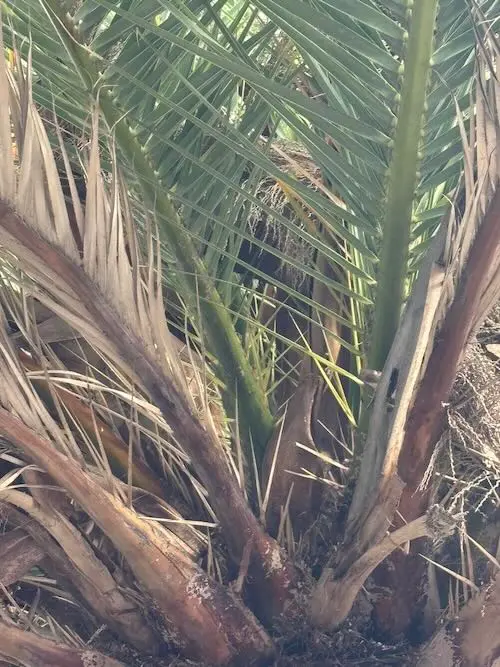
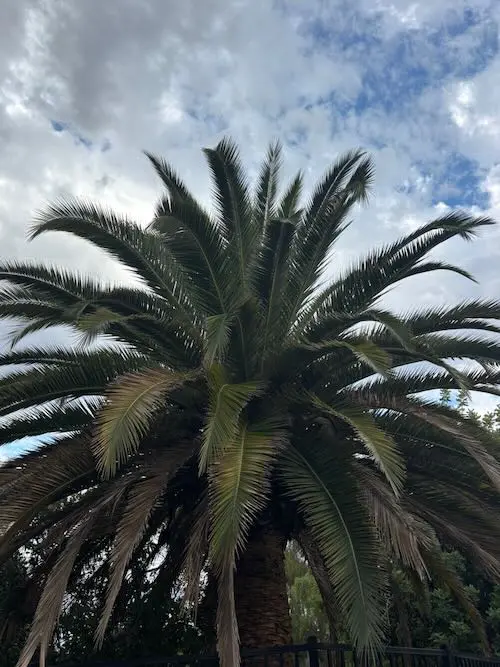
The native home of this date palm, the Canary Islands, is a small archipelago off the western coast of Morocco. The Canary Island date palm can be identified by its thick trunk covered in diamond-shaped leaf scars, splays of inedible, orange fruits, and resplendent crown of over one hundred feather-shaped fronds. The lower leaflets grow into stout spines. A close relative, the date palm (P. dactylifera), the source of commercial dates, can be distinguished by its more slender trunk and more upright, bluish gray leaves. It is one of the most commonly grown palms in California. Phoenix canariensis has a HPWRA (Hawai‘i Pacific Weed Risk Assessment) score of 17 (High Risk).
Native Range: Canary Islands
Potential invasiveness: This plant is classified as potentially invasive in specific areas of California by the California Invasive Plant Council
Ethnobotanical Info / Tree Use: This imposing palm is endemic to the Canary Islands, where it grows in the Mediterranean subxeric forest. Called the ʻCanary Island date palm’, this species is not the true commercial producer of dates (P. dactylifera), but rather rose to horticultural fame through intensive planting in European and American boulevards, botanical gardens, private homes, and its association with imperialism, wealth, and privilege. It is now one of the most common ornamental palms planted throughout tropics and temperate regions of the world. (Sosa et al., 2021; Zona, 2008)
Tree Shape: Palm
Foliage Type: Deciduous
Maximum Tree Height: 60 feet
Canopy Width: 40feet
Growth Rate: ~12-24in/year
Leaf Arrangement and Form: Alternate and Pinnately Compound
Leaf Color: Green
Fall Color: No
Flower Color: Yellow
Flower Time: Spring
Fruit Size and Color: Medium Orange or Yellow Drupe
Fruiting Time: Fall
Bark Color: Light Green
Bark Texture: Fibrous
Litter Type: Dry Fruit and Leaves
Recommended Planting Area: 4′ to 7′
Water Use Rating: Low
Sunset Climate Zone: 8 – 9, 12 – 24, H1 and H2
Soil Texture: Loam or Sand
Soil pH: Slightly Acidic to Very Alkaline
Salt Tolerance: moderate
Schoolyard Trees: No
Shade Tolerance: No
Root Damage Potential: Moderate
Potential health issues: Allergy
Biogenic Emissions: High
Wildlife Interactions: Attracts Birds
Disease and Pest Susceptibility: Fusarium, Root Rot and Red Palm Weevil (Rhynchophorus ferrugineus)
Disease and Pest Resistance: Texas Root Rot
Utility Friendly: No