Ceratonia siliqua
Carob Tree
General Info
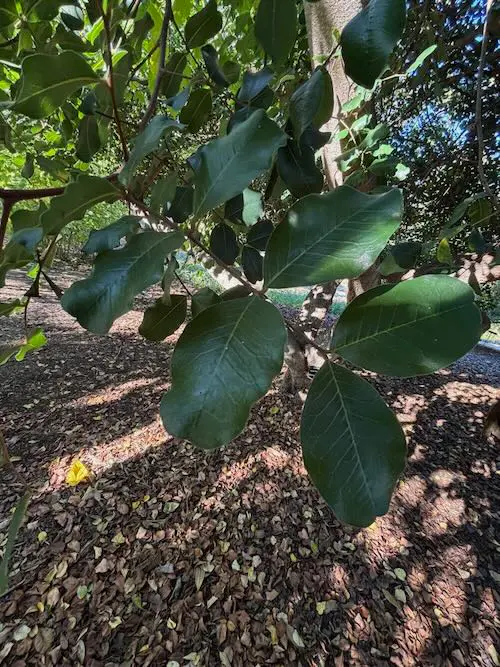
The drought-tolerant tree has pairs of nearly round leaflets and shiny, lavender-brown, flattened legumes, found only on female trees. The fruits, which have a pulpy texture on the inside (similar to tamarind), are high in sugar and protein. The seeds, which are exceptionally uniform in size and weight (about 5 seeds per gram), were the original jeweler’s carat weight standard. The fruit is processed into flour that is used as a chocolate substitute in candy and baked goods, as well as a stabilizer and texturing agent in many cosmetics, pharmaceuticals, and processed foods.
Native Range: Middle East
Horticultural use: Screen or Hedged
Ethnobotanical Info / Tree Use: Carob has been a nutritional food source for humans for millennia, with earliest evidence of use dating to 8000 B.C. The seed pods are edible raw or cooked, and are eaten in traditional dishes across Mediterranean basin. Processed carob pods are commercially sold as a sugar product, substitute for chocolate, and liquor. Medicinal uses of the leaves, bark, and fruit include treatments for indigestion, anti-bacterial, and anti-diabetic. The seedpods are used in the industrial production of locust bean gum, used extensively in processed foods. (Ramón-Laca & Mabberley, 2004; Silaev, 2017)
Schoolyard Use: This tree has thick, leathery leaves that provide shade and can be used to teach about leaf structure and water conservation in plants. Its small, fragrant flowers attract pollinators, making it a good subject for lessons on plant-pollinator interactions. The long, brown pods that follow are edible and can be incorporated into discussions about food sources and nutrition. The tree’s resilience to drought conditions can also be used to explore topics related to climate adaptation and sustainable landscaping.
Tree Shape: Rounded
Foliage Type: Evergreen
Maximum Tree Height: 40 feet
Canopy Width: 30-40feet
Growth Rate: ~24in/year
Leaf Arrangement and Form: Alternate and Pinnately Compound
Leaf Shape: Oval
Leaf Color: Dark Green
Fall Color: No
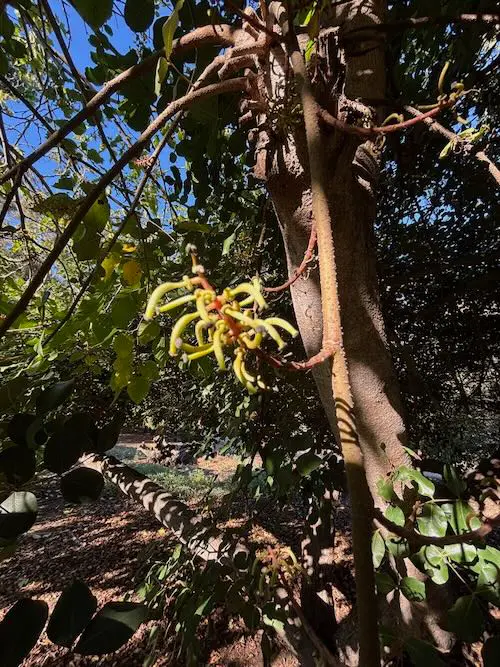
Flowers: Fragrant
Flower Color: Red
Flower Time: Spring
Fruit Size and Color: Very Large Brown Legume
Fruiting Time: Fall or Summer
Fruit Value: Edible
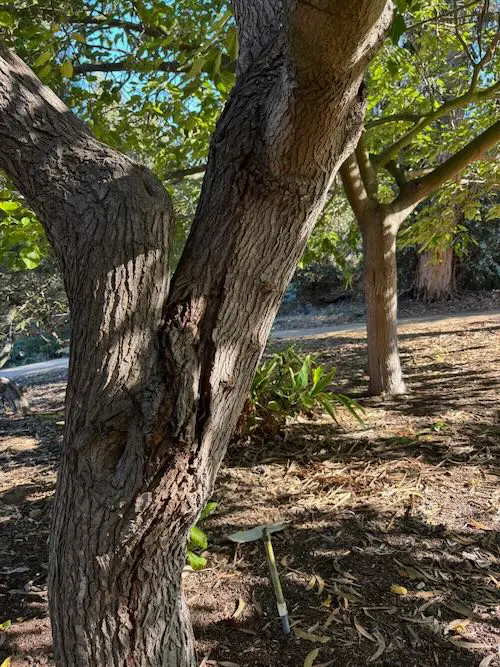
Bark Color: Dark Brown
Bark Texture: Scaly
Litter Type: Dry Fruit
Recommended Planting Area: 4′ to 7′
Water Use Rating: Low
Sunset Climate Zone: 9, 13 – 16, 18 – 24 and H1
Soil Texture: Loam, Sand or Clay
Soil pH: Slightly Acidic to Very Alkaline
Salt Tolerance: Moderate
Schoolyard Trees: Yes
Shade Tolerance: No
Branch Strength: Medium
Root Damage Potential: High
Potential health issues: None Known
Biogenic Emissions: Moderate
Wildlife Interactions: Attracts Birds
Disease and Pest Susceptibility: Armillaria and Root Rot
Utility Friendly: No