Grevillea robusta
Silk Oak
General Info
Silk oak is not a true oak (Quercus spp.), but is a member of the Protea family, a Southern Hemisphere family that includes the proteas, banksias, and macadamia nut (Macadamia integrifolia). Silk oak is the largest of the 360 or so species of Grevillea, most of which are from Australia. It can grow up to 150 feet high. Silk oak has pale, pinkish wood, which is reminiscent of oak, which is used for furniture, cabinets, door, windows, and musical instruments. This species is a fast-growing, spring blooming tree and reproduces vigorously in moist climates. It is an invasive weed in Hawai‘i, southern Florida, and other subtropical parts of the world. It has a HPWRA (Hawai‘i Pacific Weed Risk Assessment) score of 8 (High Risk).
Native Range: Eastern Australia
Potential invasiveness: This plant is classified as potentially invasive in specific areas of California by the California Invasive Plant Council
Horticultural use: Hedged
Ethnobotanical Info / Tree Use: This Australian native tree species has become economically important in agroforestry systems in India and Africa, where it is planted for its shade characteristics and hardwood value. The hardwood is widely used for construction, musical instruments, furniture, and window frames. The sawdust can produce dermatitis due to toxins in the wood. There are reports of Aboriginal peoples drinking the flower nectar mixed with water for a sweet beverage. The species was introduced to Hawaiʻi from Australia in 1880 for reforestation efforts, but has since naturalized and become a serious weed in the island’s mesic and wet forests. (Little, 1989; Ong et al., 2000)
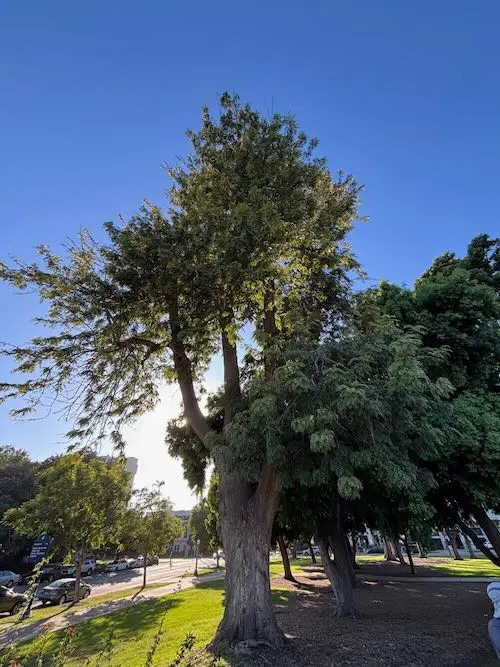
Tree Shape: Conical or Rounded
Foliage Type: Deciduous
Maximum Tree Height: 60 feet
Canopy Width: null60feet
Growth Rate: ~36in/year
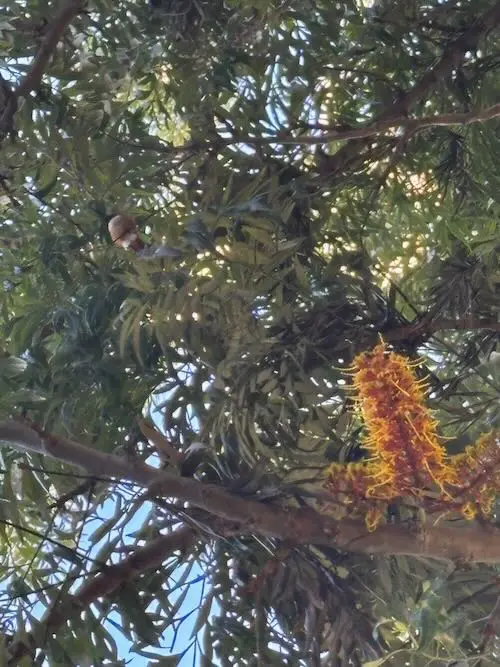
Leaf Arrangement and Form: Alternate and Bipinnately Compound
Leaf Shape: Linear
Leaf Color: Green
Fall Color: No
Flowers: Showy
Flower Color: Orange or Yellow
Flower Time: Spring
Fruit Size and Color: Medium Brown Capsule
Fruiting Time: Fall
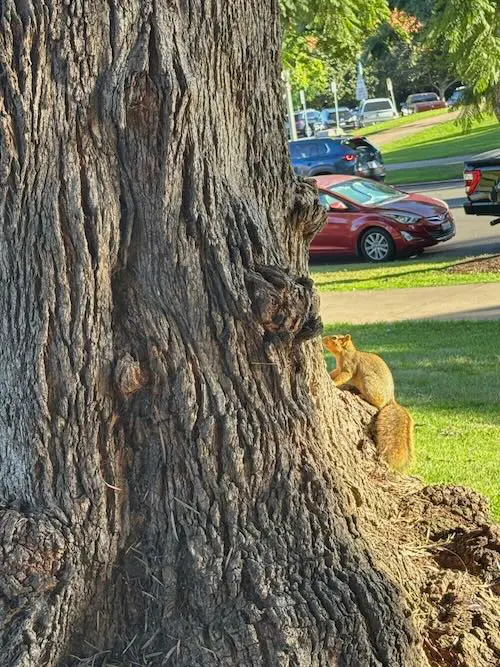
Bark Color: Dark Brown
Bark Texture: Fissured
Litter Type: Dry Fruit, Leaves and Twigs
Recommended Planting Area: 4′ to 7′
Water Use Rating: Low
Sunset Climate Zone: 8 – 9, 12 – 24, H1 and H2
Soil Texture: Loam, Sand or Clay
Soil pH: Slightly Acidic to Very Alkaline
Salt Tolerance: moderate
Schoolyard Trees: No
Shade Tolerance: No
Branch Strength: Weak
Root Damage Potential: Moderate
Potential health issues: Irritant
Wildlife Interactions: Attracts Bees and Birds
Disease and Pest Susceptibility: Phytophthora, Root Rot and Scales
Disease and Pest Resistance: Armillaria and Root Rot
Utility Friendly: No