Brachychiton acerifolius
Flame Tree
General Info
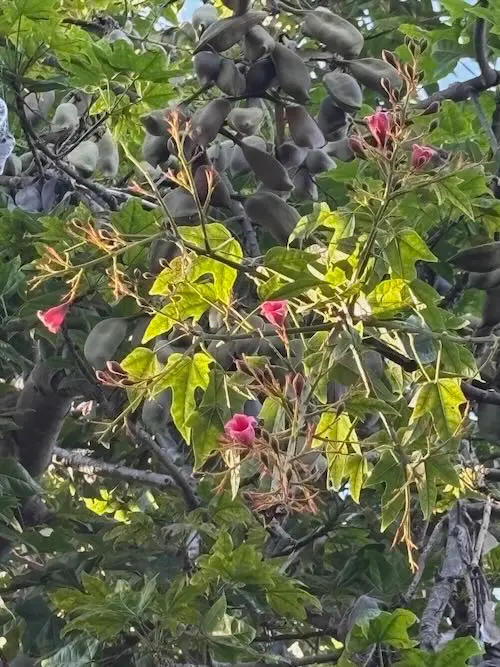
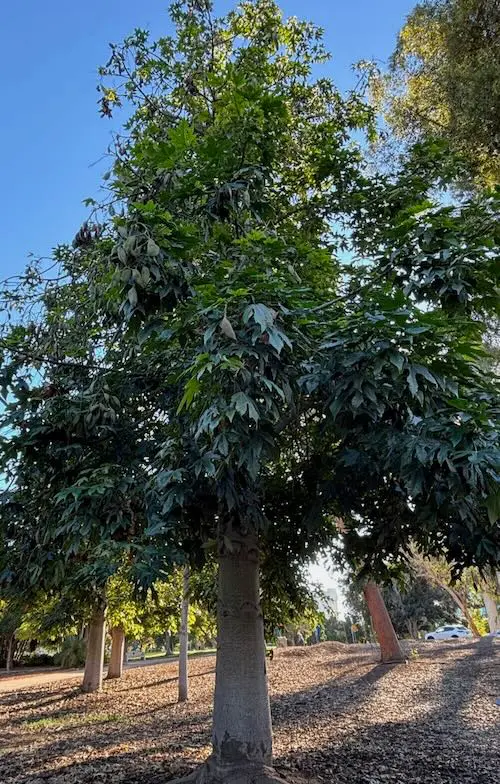
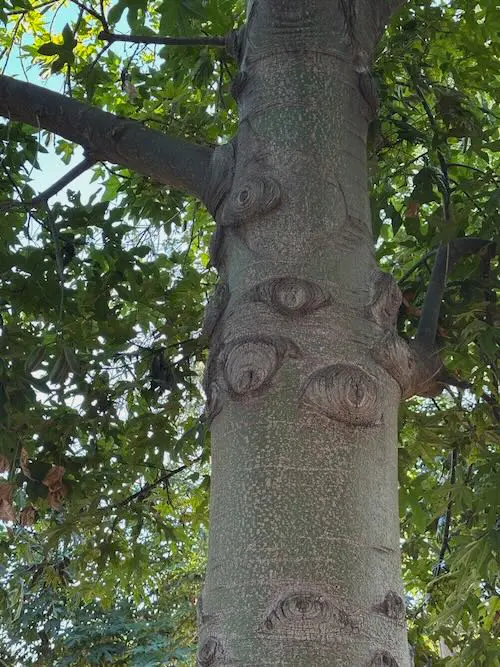
This tree is known for its stunning display of vibrant red flowers that bloom in clusters, creating a striking contrast against its dark green, lobed leaves. It often sheds its leaves just before flowering, allowing the blossoms to take center stage. The tree has a smooth, grayish bark and can grow to a considerable height, making it a standout feature in urban landscapes. It thrives in sunny locations and is relatively drought-tolerant once established. Its unique, ornamental appearance makes it a popular choice for adding a splash of color to parks and streetscapes.
Native Range: Australia
Horticultural use: Flowering Tree, Street Tree, Specimen Tree or Bonsai
Ethnobotanical Info / Tree Use: The dramatic scarlet annual flowering of B. acerifolius has made it a popular ornamental around the world. The seeds are edible and are a traditional food of Australia’s First Nation peoples. (Low, 1991)
Schoolyard Use: The bright red flowers come out when the tree is leafless and are bird-pollinated. Discussions on its adaptation to Australian climates contribute to a broader understanding of plant geography and environmental adaptation.
Tree Shape: Rounded
Foliage Type: Deciduous
Maximum Tree Height: 60 feet
Canopy Width: 30-40feet
Growth Rate: ~24in/year
Leaf Arrangement and Form: Alternate and Simple
Leaf Shape: Ovate
Leaf Color: Green
Fall Color: No
Flowers: Showy
Flower Color: Red
Flower Time: Spring
Fruit Size and Color: Very Large Brown Follicle
Fruiting Time: Fall or Summer
Bark Color: Green to Light Brown
Bark Texture: Rough and Smooth
Litter Type: Dry Fruit, Leaves and Flowers
Recommended Planting Area: Greater than 7′
Water Use Rating: Medium
Sunset Climate Zone: 15 – 24, H1 and H2
Soil Texture: Loam, Sand or Clay
Soil pH: Acidic to Neutral
Schoolyard Trees: Yes
Shade Tolerance: No
Wildlife Interactions: Attracts
Utility Friendly: No
WCISA Appraisal: Suggested LCANT 24″ box, Group Rating 3, Approx. cross sectional area 3.80 sq. in.