Punica granatum
Pomegranate Tree
General Info
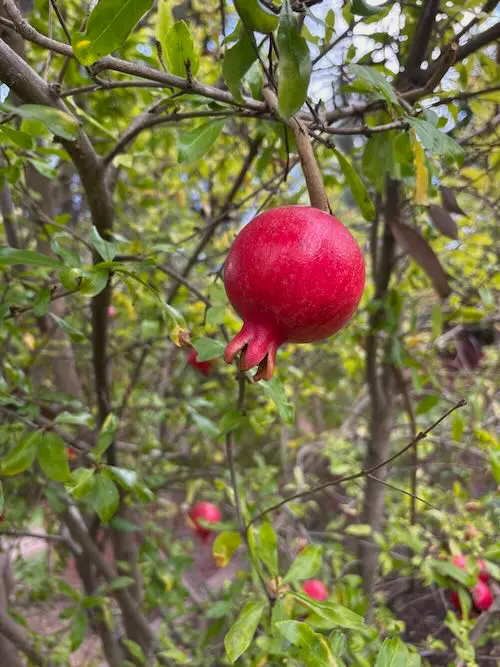
Pomegranate is a small flowering accent tree or shrub, usually multi-trunked or low-branching, either grown for its flowers or fruit, which can otherwise be messy. Multi-trunk trees are quite attractive as specimens though, with their fall color and mottled bark. Several fruiting varieties available including Wonderful, Fleshman, King, Utah Sweet, and Phil Arenas. It is easily maintained below 25 in height.
Native Range: Iran to the Himalayas
Horticultural use: Screen, Espalier or Hedged
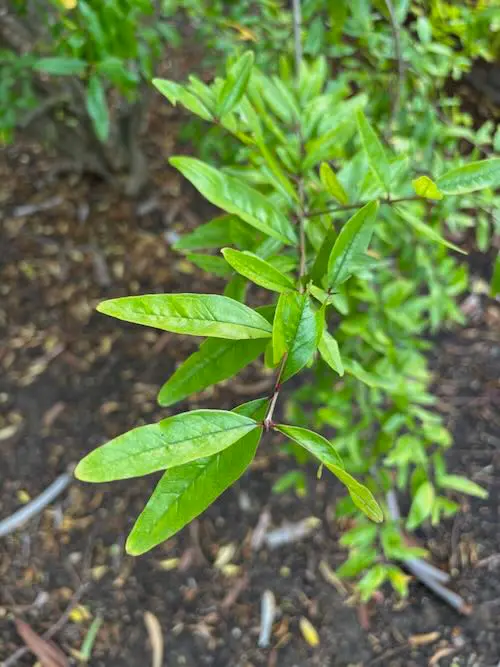
Schoolyard Use: This tree produces vibrant, bright red flowers that can be used to teach about pollination and the role of flowers in plant reproduction. The tree’s fruit, with its numerous seeds encased in juicy arils, offers a hands-on way to explore seed dispersal and fruit anatomy. Its glossy, narrow leaves provide an example of simple leaf structure. The tree is deciduous, which can be useful for lessons on seasonal changes and plant life cycles.
Tree Shape: Rounded or Vase
Foliage Type: Deciduous
Maximum Tree Height: 15 feet
Canopy Width: 15feet
Growth Rate: ~24in/year
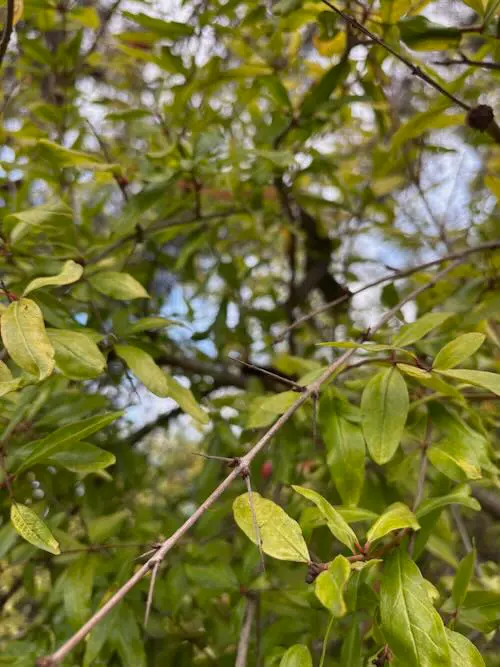
Leaf Arrangement and Form: Opposite and Simple
Leaf Shape: Oblong
Leaf Color: Light Green
Fall Color: Yes
Flowers: Showy
Flower Color: Orange, Pink or Red
Flower Time: Spring or Summer
Fruit Size and Color: Very Large Brown or Red Berry
Bark Color: Dark Gray
Bark Texture: Furrowed and Scaly
Litter Type: Wet Fruit
Recommended Planting Area: 2′ to 4′
Water Use Rating: Medium
Sunset Climate Zone: 5 – 24, H1 and H2
Soil Texture: Loam, Sand or Clay
Soil pH: Very Acidic to Very Alkaline
Salt Tolerance: Moderate
Schoolyard Trees: Yes
Shade Tolerance: No
Branch Strength: Medium
Root Damage Potential: Low
Potential health issues: None Known
Wildlife Interactions: Attracts
Disease and Pest Susceptibility: Chlorosis, Sooty Mold, Plant Bug and White Fly
Disease and Pest Resistance: Texas Root Rot, Armillaria and Root Rot
Utility Friendly: Yes