Melaleuca quinquenervia
Cajeput Tree
General Info
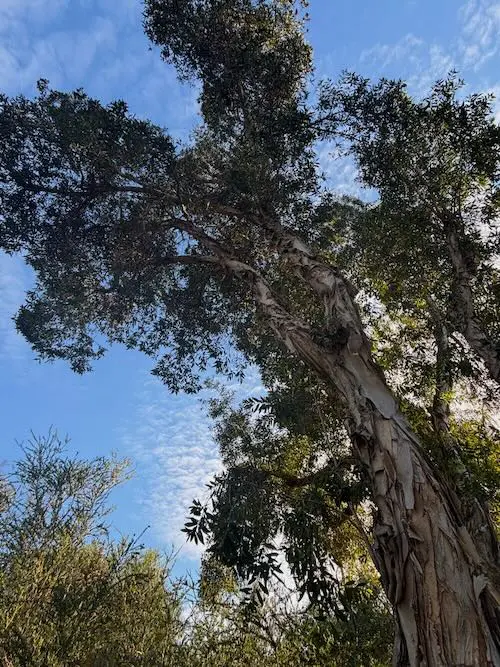
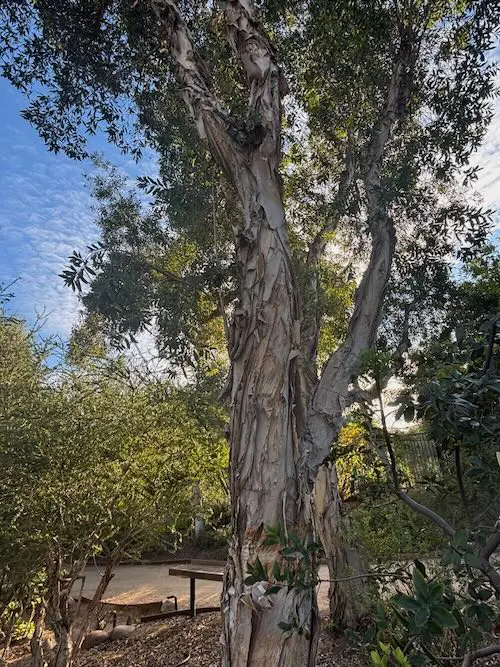
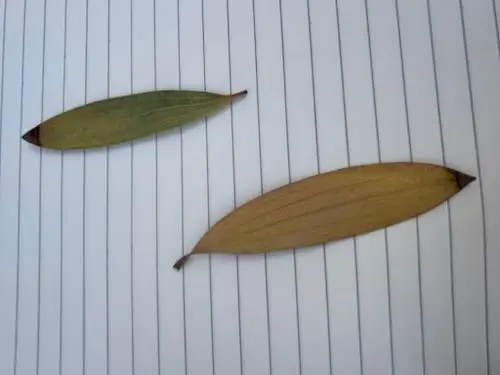
This tree has a distinctive, paper-like bark that peels away in layers, creating a textured, almost shaggy appearance. Its leaves are narrow and pointed, emitting a pleasant, aromatic scent when crushed. During the blooming season, it produces fluffy, white to cream-colored flowers that resemble bottlebrushes, adding a touch of elegance to its overall look. This tree is quite hardy and can thrive in a variety of soil types, making it a versatile choice for urban landscapes. It also provides excellent shade and can grow to a considerable height, offering both aesthetic and practical benefits to any setting.
Native Range: Eastern and Northern AustraliaHorticultural use: Riparian or Screen
Ethnobotanical Info / Tree Use: Native to Australia where it is called niaouli, Melaleuca quinquenervia is an aggressive and problematic invasive tree across its naturalized distribution. Indigenous people of Australia chewed the leaves to treat headcolds, and used the papery bark to make ‘coolamons’, or carrying vessels used to transport food, water, traveling materials, or children. Essential oil of M. quniquenervia is produced in Australia and used in herbal therapy, aroma therapy, and cosmetics. (Oliveira et al., 2020)
Schoolyard Use: This tree has thick, spongy bark that peels off in layers, which can be used to teach about tree bark adaptations and protection. Its narrow, pointed leaves release a distinctive fragrance when crushed, making it useful for lessons on plant aromas and essential oils. The tree produces small, bottlebrush-like flowers that attract pollinators, offering opportunities to discuss plant-pollinator relationships. The seed capsules remain on the tree and can be used to illustrate seed dispersal mechanisms.
Tree Shape: Rounded
Foliage Type: Evergreen
Maximum Tree Height: 40 feet
Canopy Width: 15-25feet
Growth Rate: ~24in/year
Leaf Arrangement and Form: Alternate and Simple
Leaf Shape: Oblong
Leaf Color: Light Green
Fall Color: No
Flowers: Showy
Flower Color: Pink, Purple or Yellow
Flower Time: Fall or Summer
Fruit Size and Color: Small Brown or Gray Capsule
Fruiting Time: Fall, Winter, Spring or Summer
Fruit Value: Wildlife use it
Bark Color: Striking, Cream or Light Green
Bark Texture: Exfoliating
Litter Type: Dry Fruit
Recommended Planting Area: 4′ to 7′
Water Use Rating: Low
Sunset Climate Zone: 9, 12 – 13, 15 – 17, 20 – 24, H1 and H2
Soil Texture: Loam, Sand or Clay
Soil pH: Slightly Acidic to Slightly Alkaline
Salt Tolerance: High
Schoolyard Trees: Yes
Shade Tolerance: No
Branch Strength: Medium
Root Damage Potential: Low
Potential health issues: Allergy and Irritant
Biogenic Emissions: High
Wildlife Interactions: Attracts Bees and Birds
Disease and Pest Susceptibility: Phytophthora and Root Rot
Utility Friendly: No