Parkinsonia ‘Desert Museum’
DM Palo Verde
General Info
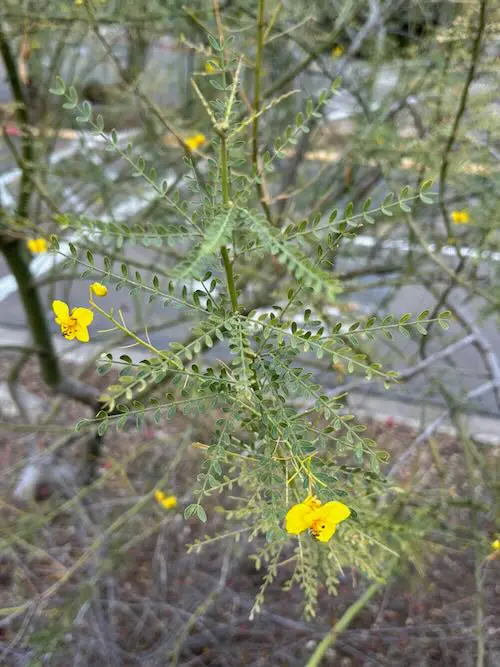
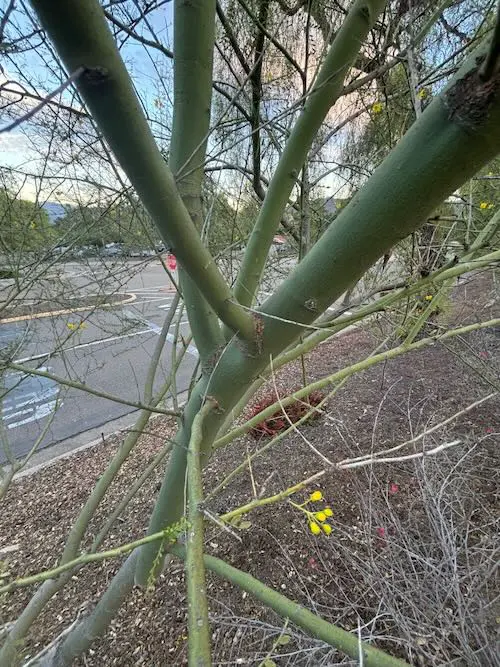
Parkinsonia × ‘Desert Museum’ is a striking addition to urban landscapes with its vibrant green bark and delicate, fern-like leaves. It produces clusters of bright yellow flowers that bloom profusely in the spring, attracting bees and other pollinators. The tree’s airy canopy provides dappled shade, making it a pleasant spot to rest underneath. It is well-suited to hot, dry climates and requires minimal water once established. Its thornless branches make it a safer choice for pedestrian areas compared to other similar species. This tree adds a touch of desert elegance to parks, streets, and gardens.
Native Range: A hybrid. Parents are native of the Sonoran and Chihuahan Deserts of the southwestern United States
Horticultural use: Screen, Streetscape, Parking Lot or Specimen
Schoolyard Use: This tree features delicate, fern-like leaves that provide dappled shade and can be used to teach about leaf structure and light filtration. It blooms with bright yellow flowers that attract pollinators, offering opportunities to discuss plant-pollinator relationships. The tree’s green bark is photosynthetic, making it a unique example for lessons on alternative photosynthesis methods. Its drought tolerance makes it suitable for discussions on water conservation and plant adaptation to arid environments.
Tree Shape: Rounded or Vase
Foliage Type: Deciduous
Maximum Tree Height: 40 feet
Canopy Width: 20-25feet
Growth Rate: ~24-36in/year
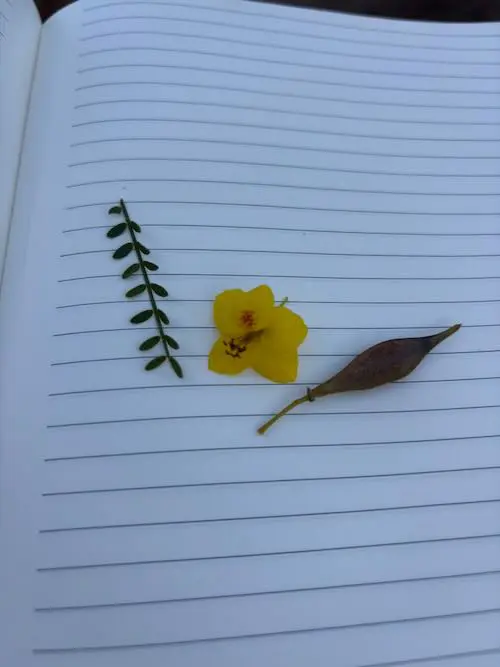
Leaf Arrangement and Form: Alternate and Bipinnately Compound
Leaf Shape: Oval
Leaf Color: Light Green
Fall Color: No
Flowers: Showy, Fragrant
Flower Color: Yellow
Flower Time: Spring or Summer
Fruit Size and Color: Very Large Brown Legume
Fruiting Time: Fall
Bark Color: Green
Bark Texture: Smooth
Litter Type: Dry Fruit and Leaves
Recommended Planting Area: 2′ to 4′
Water Use Rating: Very Low
Sunset Climate Zone: 8 – 14 and 18 – 20
Soil Texture: Loam, Sand or Clay
Soil pH: Neutral to Very Alkaline
Schoolyard Trees: Yes
Shade Tolerance: No
Branch Strength: Medium
Root Damage Potential: Low
Potential health issues: None Known
Biogenic Emissions: Moderate
Wildlife Interactions: Attracts Bees
Disease and Pest Susceptibility: Invasive Shot Hole Borer and Eriophyid Mite
Disease and Pest Resistance: Texas Root Rot
Utility Friendly: Yes