Phoenix dactylifera
Date Palm
General Info
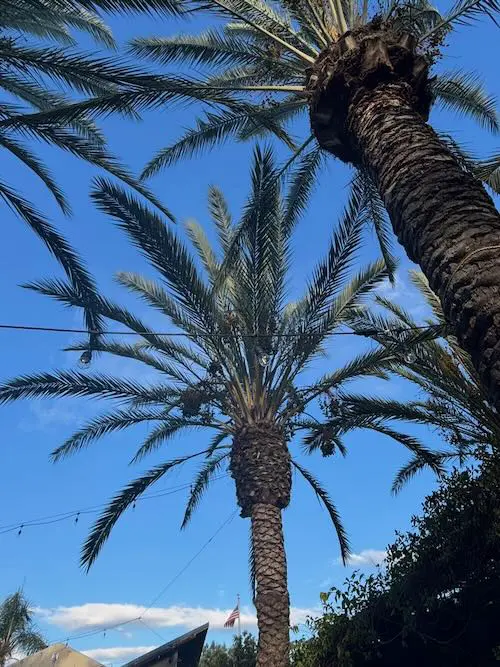
Phoenix dactylifera, the date palm, is one of the most well-known palm species worldwide and has been cultivated for nearly 5,000 years. It is the source of edible dates and requires high temperatures to produce fruit. This species is tolerant of coastal exposure and drought. It is dioecious, meaning individual trees are either male or female. This tree is the source of edible dates. It needs high temperatures to fruit. Phoenix dactylifera has a HPWRA (Hawai‘i Pacific Weed Risk Assessment) score of 10 (High Risk).
Native Range: Northern Africa, Arabian peninsula
Ethnobotanical Info / Tree Use: The date palm is one of the oldest fruit trees cultivated by humans; domestication began approximately 5000 years ago in the Tigris-Euphrates river basin near modern-day Iraq. Date palms were a sacred symbol of fertility and abundance to Mesopotamian societies. The date palm is culturally significant in Islam, Christianity, and Judaism, where it is mentioned numerous times in religious texts and fronds are used in ceremonies Dates are an important element of culinary tradition in northern Africa and the Middle East, and feature in regional sweets, date bread, date vinegar, and savory meat dishes. Beyond their nutritional value, date palms have utilitarian value as firewood, timber, and their fiber is used to make cordage, baskets, fishing gear, mats, and paper. 9.4 million tons of dates were commercially produced globally in 2020. (Chao & Krueger, 2007)
Tree Shape: Palm
Foliage Type: Evergreen
Maximum Tree Height: 50 feet
Canopy Width: 20-40feet
Growth Rate: ~12-36in/year
Leaf Arrangement and Form: Alternate and Pinnately Compound
Leaf Color: Bluish Green, Silver or Gray Green
Fall Color: No
Flower Color: Yellow
Flower Time: Spring or Summer
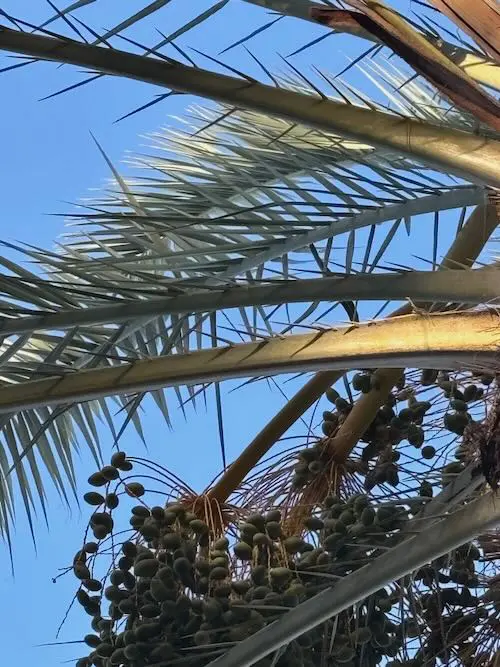
Fruit Size and Color: Large Brown Drupe
Fruiting Time: Fall
Fruit Value: Edible and Wildlife use it
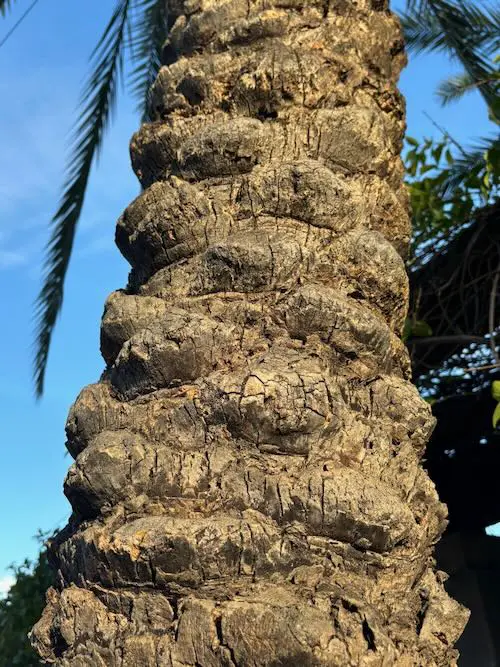
Bark Color: Light Green
Bark Texture: Fibrous and Smooth
Litter Type: Dry Fruit and Leaves
Recommended Planting Area: Greater than 7′
Water Use Rating: Low
Sunset Climate Zone: 8 – 9, 11 – 24, H1 and H2
Soil Texture: Loam or Sand
Soil pH: Slightly Acidic to Very Alkaline
Salt Tolerance: High
Schoolyard Trees: No
Shade Tolerance: No
Root Damage Potential: Moderate
Potential health issues: Allergy
Biogenic Emissions: High
Wildlife Interactions: Attracts Birds
Disease and Pest Susceptibility: Red Palm Weevil (Rhynchophorus ferrugineus)
Disease and Pest Resistance: Texas Root Rot
Utility Friendly: No