Geijera parviflora
Australian Willow
General Info
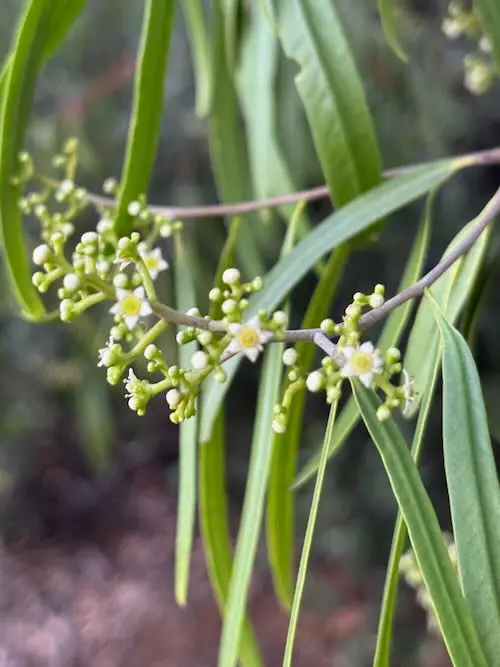
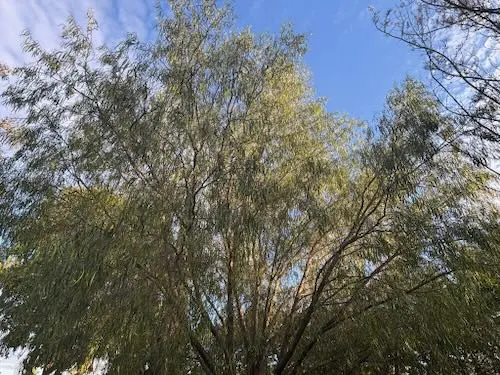
This tree has a graceful, weeping habit with slender branches that give it a delicate appearance. Its narrow, evergreen leaves are dark green and slightly leathery, providing a lush canopy year-round. Small, fragrant white flowers bloom in clusters, adding a subtle but pleasant aroma to the surroundings. The tree is drought-tolerant and thrives in a variety of soil types, making it a resilient choice for urban landscapes. Its moderate growth rate and manageable size make it suitable for both small gardens and larger public spaces.
Native Range: Australia
Horticultural use: Screen, Lawn Tree or Street Tree
Schoolyard Use: This tree has long, slender leaves that can be used to teach about leaf structure and function. Its small, white flowers bloom in clusters, providing an opportunity to discuss pollination and flower anatomy. The tree’s resilience to drought conditions makes it a suitable example for lessons on plant adaptation and survival in arid environments. The leaves also release a pleasant aroma when crushed, adding a sensory element to educational activities.
Tree Shape: Rounded
Foliage Type: Evergreen
Maximum Tree Height: 60 feet
Canopy Width: 20feet
Growth Rate: ~24-36in/year
Leaf Arrangement and Form: Alternate and Simple
Leaf Shape: Spear-shaped
Leaf Color: Green
Fall Color: No
Flower Color: White
Flower Time: Fall or Spring
Fruit Size and Color: Small Mostly Green Capsule
Fruiting Time: Summer
Fruit Value: Wildlife use it
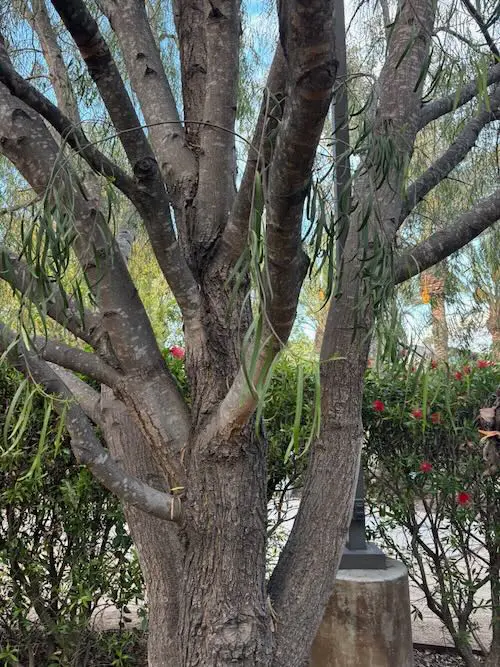
Bark Color: Dark Brown or Light Green
Bark Texture: Rough
Litter Type: Dry Fruit
Recommended Planting Area: 4′ to 7′
Water Use Rating: Medium
Sunset Climate Zone: 8 – 9 and 12 – 24
Soil Texture: Loam, Sand or Clay
Soil pH: Very Acidic to Slightly Alkaline
Salt Tolerance: Moderate
Schoolyard Trees: Yes
Shade Tolerance: No
Branch Strength: Medium
Root Damage Potential: Low
Potential health issues: None Known
Biogenic Emissions: Moderate
Wildlife Interactions: Attracts Bees
Disease and Pest Resistance: Armillaria
Utility Friendly: No