Dodonaea viscosa
Hopseed Bush
General Info
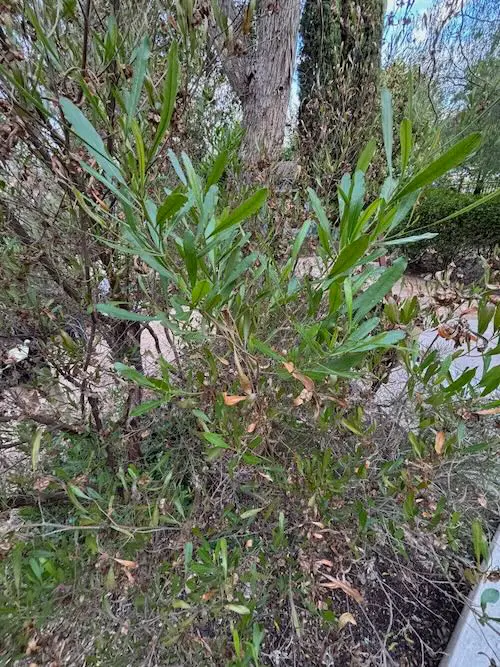
Hop Bush, or ‘A’ali‘i, is a shrub to small tree widely disbursed and commonly grown throughout the world. It is originally native to the Hawaiian Islands. This variety, ‘purpurea‘, boasts the most colorful foliage, a striking reddish-purple. It thrives best in full sun and a wide range of soil conditions, as long as there is adequate moisture. This species is also smog resistant. It may require regular light top-trimming (but not necessarily shearing) of vigorous top shoots to maintain its height and tidiness when mature.
Native Range: Subtropical Areas Worldwide
Horticultural use: Screen, Espalier or Hedged
Ethnobotanical Info / Tree Use: An extraordinarily widely dispersed species, with a global distribution which spans the Pacific Basin, Asia, Australia, African, and the Americas. D. viscosa is used as a medicinal plant throughout its global distribution; it is used in Middle Eastern countries to treat cardiac disease, by pre-Hispanic Mesoamerican peoples to treat hemorrhoids, dermatitis, and rheumatism, and infusions are made in India for anti-inflammatory and anti-viral properties. The wood is extremely durable, and is used to make weapons, tools, fishing and hunting gear, and housebuilding. A Hawaiian ʻolelonoʻeau (wise traditional saying) goes, He iki ʻaʻaliʻi ku makani, which means the small, wind resistant bush of aʻaliʻi, and symbolizes a small but powerful person. The colorful red and orange seeds of ʻaʻaliʻi are used in Hawaiʻi to make kapa (barkcloth) dye and traditional lei poʻo (ceremonial floral head adornments). (Abbott, 1992; Al-Snafi, 2017; Thaman, 1994)
Tree Shape: Rounded
Foliage Type: Evergreen
Maximum Tree Height: 15 feet
Canopy Width: 10-15feet
Growth Rate: ~24-36in/year
Leaf Arrangement and Form: Alternate and Simple
Leaf Shape: Oblanceolate
Leaf Color: Green
Fall Color: No
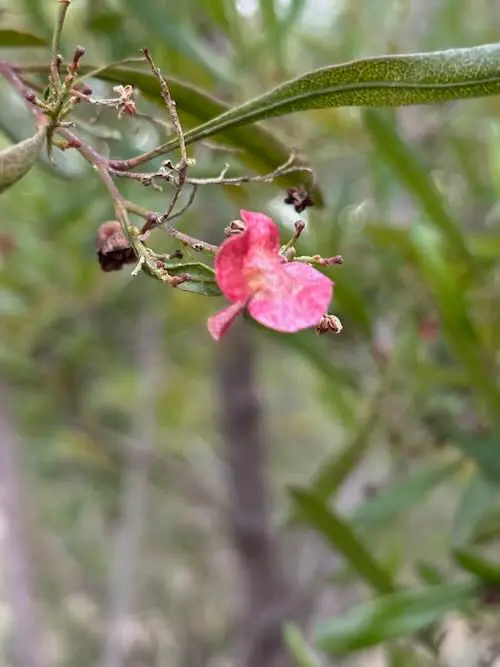
Flowers: Inconspicuous
Flower Time: Spring
Fruit Size and Color: Small Pink, Orange Samara
Fruiting Time: Fall or Summer
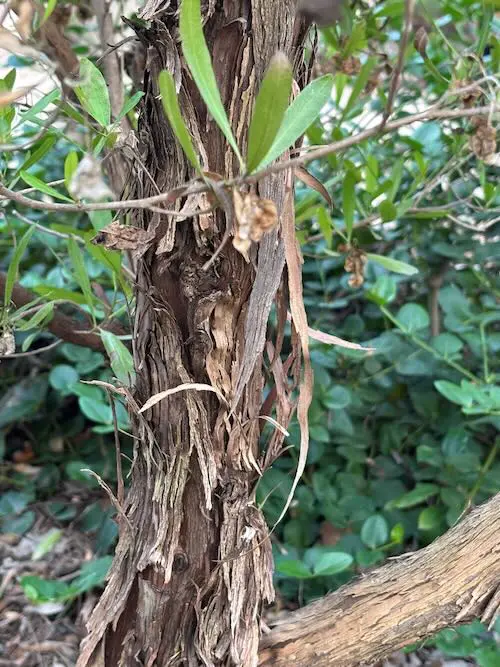
Bark Color: Dark Gray or Red Brown
Bark Texture: Scaly
Litter Type: Dry Fruit
Recommended Planting Area: 2′ to 4′
Water Use Rating: Medium
Sunset Climate Zone: 7 – 24, H1 and H2
Soil Texture: Loam, Sand or Clay
Soil pH: Slightly Acidic to Very Alkaline
Salt Tolerance: High
Schoolyard Trees: No
Shade Tolerance: No
Branch Strength: Medium
Root Damage Potential: Low
Potential health issues: None Known
Wildlife Interactions: Attracts Birds
Disease and Pest Susceptibility: Phytophthora, Root Rot and Scales
Utility Friendly: Yes