Acacia baileyana
Bailey Acacia
General Info
This tall tree is known for its strong, straight trunk and wide, spreading canopy that provides ample shade. Its leaves are compound, consisting of several leaflets that turn a rich golden color in the fall. The tree produces smooth, oval nuts encased in a hard shell, which are popular with both wildlife and humans. It thrives in well-drained soils and can tolerate occasional flooding, making it versatile for various urban settings. Its deep root system helps stabilize the soil, reducing erosion. This tree is a great choice for parks and large landscapes where its size and beauty can be fully appreciated.
Native Range: Eastern Australia
Potential invasiveness: This plant is classified as potentially invasive in specific areas of California by the California Invasive Plant Council
Horticultural use: Screen
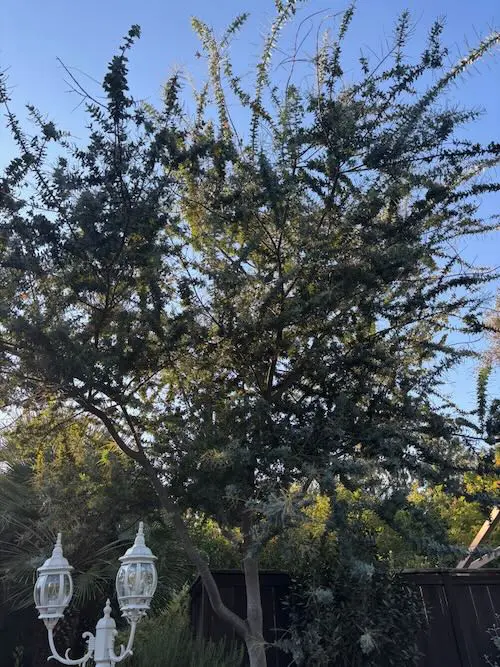
Tree Shape: Rounded
Foliage Type: Deciduous
Maximum Tree Height: 30 feet
Canopy Width: 20-40feet
Growth Rate: ~36in/year
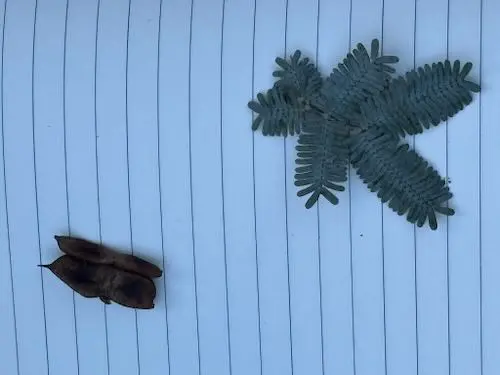
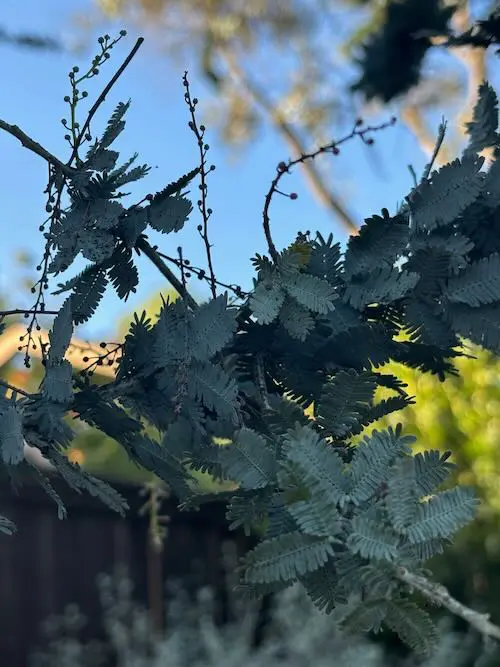
Leaf Arrangement and Form: Alternate and Bipinnately Compound
Leaf Shape: Linear
Leaf Color: Bluish Green, Silver or Gray Green
Fall Color: No
Flowers: Showy, Fragrant
Flower Color: Yellow
Flower Time: Winter or Spring
Fruit Size and Color: Large Brown Legume
Fruiting Time: Fall, Winter or Summer
Bark Color: Dark Gray or Light Gray
Bark Texture: Furrowed and Smooth
Litter Type: Dry Fruit
Recommended Planting Area: 4′ to 7′
Water Use Rating: Low
Sunset Climate Zone: 8 – 9 and 13 – 24
Soil Texture: Loam, Sand or Clay
Soil pH: Slightly Acidic to Very Alkaline
Salt Tolerance: Moderate
Schoolyard Trees: No
Shade Tolerance: No
Branch Strength: Weak
Root Damage Potential: Moderate
Potential health issues: Allergy
Biogenic Emissions: Moderate
Wildlife Interactions: and Attracts Bees and Birds
Disease and Pest Susceptibility: Phytophthora, Invasive Shot Hole Borer and Thrip
Disease and Pest Resistance: Armillaria and Root Rot
Utility Friendly: No