Albizia julibrissin
Silk Tree
General Info
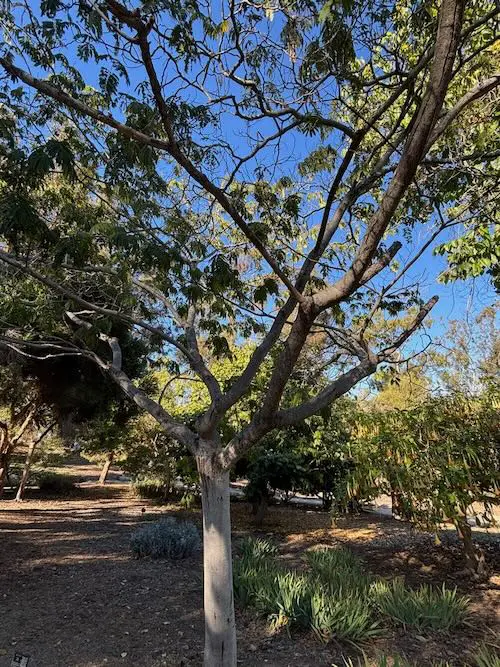
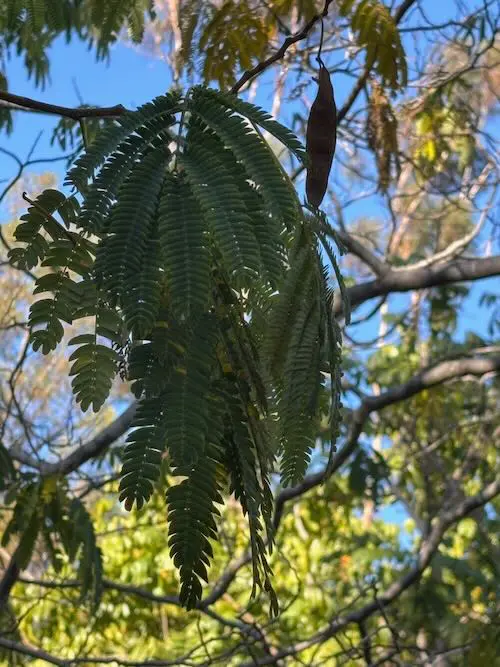
This tree has a broad, umbrella-like canopy that provides excellent shade. Its feathery, fern-like leaves add a delicate texture to the landscape. During the summer, it produces fluffy, pink flowers that attract bees and butterflies. The tree thrives in sunny locations and is quite drought-tolerant once established. It’s a fast grower, making it a popular choice for quickly creating a lush, tropical atmosphere. Its airy foliage allows dappled sunlight to filter through, creating a pleasant environment underneath.
Native Range: Eastern Asia
Horticultural use: Shade Tree, Street Tree or Screen
Ethnobotanical Info / Tree Use: In traditional Chinese medicine, the bark is of this mimosa is used to treat inflammation, infection, and pain, while the flowers are used to treat depression, insomnia, and anxiety. The seeds have high oil content and nutritional value; trees could be cultivated as an alternative to soybean oil. (Kang et al., 2007; I. Nehdi, 2011)
Schoolyard Use: This tree has fern-like, feathery leaves that can be used to teach about leaf structure and plant respiration. It produces fluffy, pink flowers that attract pollinators, making it a good example for lessons on pollination and ecosystems. The tree’s seed pods can be collected and studied for seed dispersal methods. Its rapid growth and ability to thrive in various soils offer insights into plant adaptability and urban forestry.
Tree Shape: Rounded or Vase
Foliage Type: Deciduous
Maximum Tree Height: 35 feet
Canopy Width: 20feet
Growth Rate: ~36in/year
Leaf Arrangement and Form: Alternate and Bipinnately Compound
Leaf Shape: Linear
Leaf Color: Light Green
Fall Color: Yes
Flowers: Showy
Flower Color: Pink or Rose
Flower Time: Spring or Summer
Fruit Size and Color: Very Large Brown Legume
Fruiting Time: Fall, Winter or Summer
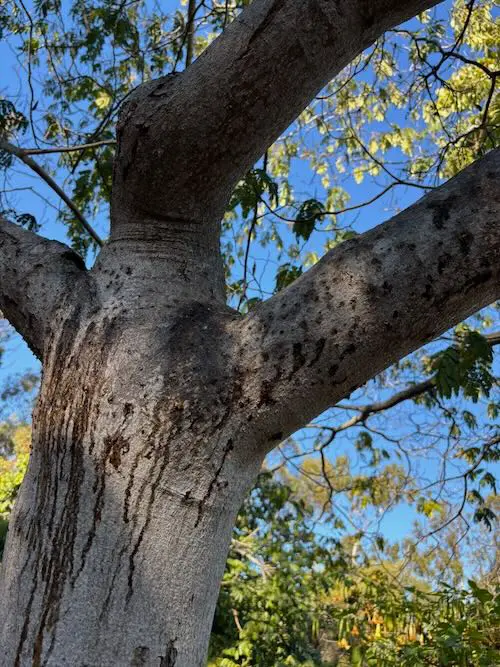
Bark Color: Dark Gray
Bark Texture: Smooth
Litter Type: Dry Fruit and Flowers
Recommended Planting Area: 4′ to 7′
Water Use Rating: Medium
Sunset Climate Zone: 4 – 23
Soil Texture: Loam, Sand or Clay
Soil pH: Very Acidic to Very Alkaline
Salt Tolerance: Moderate
Schoolyard Trees: Yes
Shade Tolerance: No
Branch Strength: Medium Weak
Root Damage Potential: Moderate
Potential health issues: Allergy
Biogenic Emissions: Moderate
Wildlife Interactions: Attracts Birds
Disease and Pest Susceptibility: Armillaria, Fusarium, Root Rot, Invasive Shot Hole Borer and Caterpillars
Disease and Pest Resistance: Armillaria and Root Rot
Utility Friendly: No