Aloidendron barberae
Tree Aloe
General Info
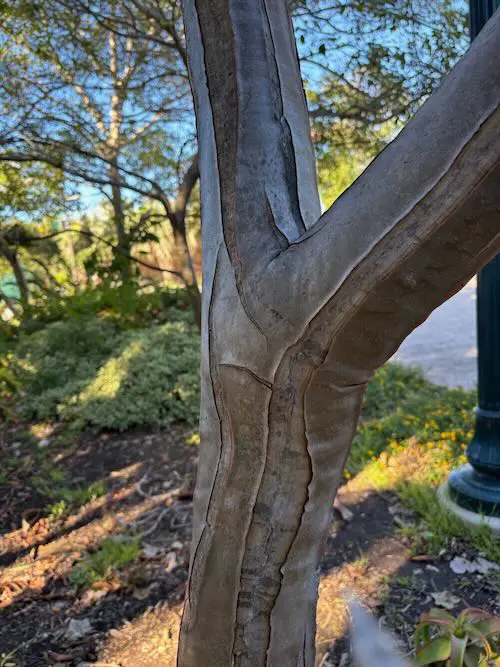
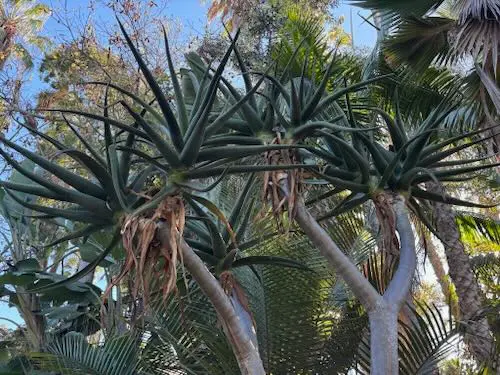
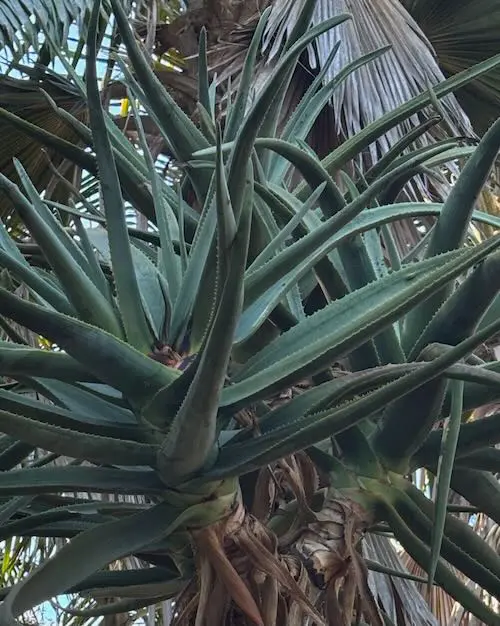
Tree Aloe is a tall, succulent tree with thick, upright stems and attractive, mottled gray bark. There is some discrepancy between whether it belongs to the Aloe or Aliodendron genera. Its canopy is very architectural, holding rosettes of fleshy, recurved, dark green leaves at the ends of branches. Tubular, pose-pink flowers on tall inflorescences make an appearance in late winter, attracting bees and birds. This fast-growing, subtropical African tree can reach impressive sizes in suitable conditions, often forming thick buttresses at its base. It is highly drought tolerant and hardy in Mediterranean climates. Overwatering or excessive rainfall often leads to root rot susceptibility.
Native Range: South Africa, Mozambique
Horticultural use: Specimen or Large Container
Tree Shape: Palm
Foliage Type: Evergreen
Maximum Tree Height: 30 feet
Canopy Width: 10-20feet
Growth Rate: ~12in/year
Leaf Arrangement and Form: Alternate and Simple
Leaf Shape: Linear
Leaf Color: Dark Green
Fall Color: No
Flowers: Showy
Flower Color: Rose or Pink
Flower Time: Fall or Winter
Fruit Size and Color: Medium Green Capsule
Fruiting Time: Spring
Bark Color: Mottled Gray
Bark Texture: Smooth and Mottled
Recommended Planting Area: 2′ to 4′
Water Use Rating: Low
Sunset Climate Zone: 8 – 9 and 12 – 24
Soil Texture: Loam or Sand
Soil pH: Slightly Alkaline to Neutral
Schoolyard Trees: No
Shade Tolerance: No
Wildlife Interactions: Attracts Bees and Birds
Disease and Pest Susceptibility: Mites and Mealy Bugs