Arbutus ‘Marina’
Marina Madrone
General Info
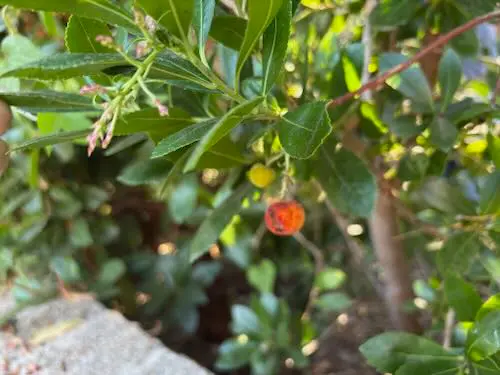
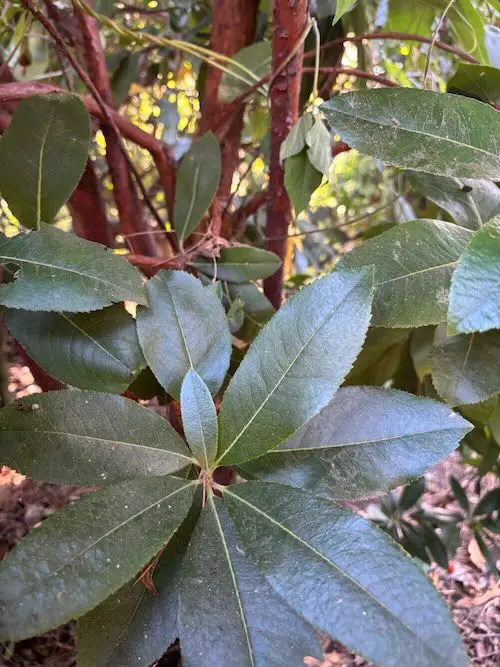
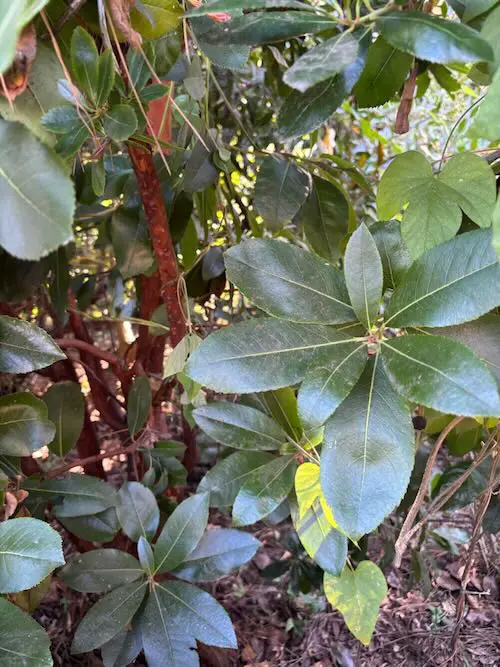
This tree boasts striking reddish-brown bark that peels away to reveal a smooth, lighter layer beneath, adding year-round visual interest. Its dark green, leathery leaves provide a lush canopy, while clusters of small, urn-shaped pink flowers bloom in the fall and winter. These blossoms attract pollinators, making it a great choice for supporting local wildlife. In addition to its ornamental appeal, this tree is drought-tolerant once established, making it well-suited for California’s dry climate. Its moderate growth rate and manageable size make it a versatile option for urban landscapes.
Native Range: Horticultural Hybrid
Horticultural use: Screen
Ethnobotanical Info / Tree
Schoolyard Use: This tree has glossy, dark green leaves that provide a striking contrast to its peeling, reddish-brown bark, making it an excellent subject for lessons on bark texture and plant adaptation. Its clusters of small, bell-shaped flowers are followed by bright, round fruits, which can be used to teach about pollination and seed dispersal. The evergreen foliage ensures year-round interest and can be incorporated into discussions on plant physiology and climate adaptation. The tree’s unique characteristics make it a versatile addition to any school garden.
Tree Shape: Rounded or Vase
Foliage Type: Evergreen
Maximum Tree Height: 40 feet
Canopy Width: 30feet
Growth Rate: ~12-24in/year
Leaf Arrangement and Form: Alternate and Simple
Leaf Shape: Elliptic
Leaf Color: Green
Fall Color: No
Flowers: Inconspicuous
Flower Color: Pink or Rose
Flower Time: Fall, Winter, Spring or Summer
Fruit Size and Color: Small Red or Yellow Berry
Fruiting Time: Fall or Winter
Fruit Value: Wildlife use it
Bark Color: Red Brown
Bark Texture: Exfoliating and Smooth
Litter Type: Wet Fruit
Recommended Planting Area: 2′ to 4′
Water Use Rating: Medium
Sunset Climate Zone: 8 – 9 and 14 – 24
Soil Texture: Loam, Sand or Clay
Soil pH: Very Acidic to Slightly Alkaline
Salt Tolerance: High
Schoolyard Trees: Yes
Shade Tolerance: No
Branch Strength: Strong
Root Damage Potential: Low
Potential health issues: None Known
Wildlife Interactions: Attracts Birds
Disease and Pest Susceptibility: Anthracnose, Phytophthora, Root Rot, Rust, Scales and Thrip
Disease and Pest Resistance: Armillaria and Root Rot
Utility Friendly: No