Camellia japonica
Camellia
General Info
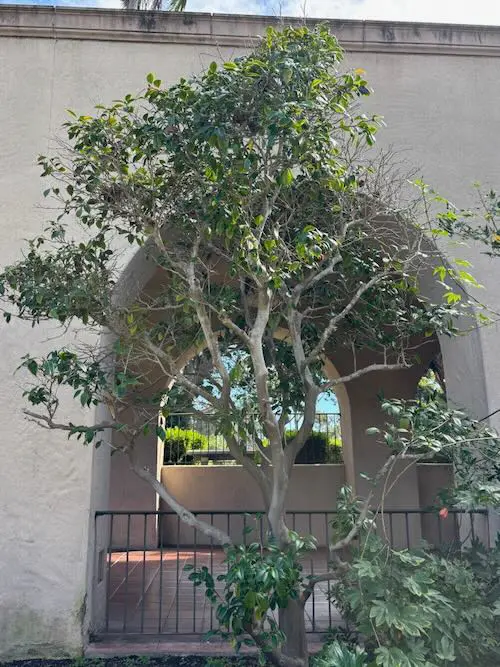
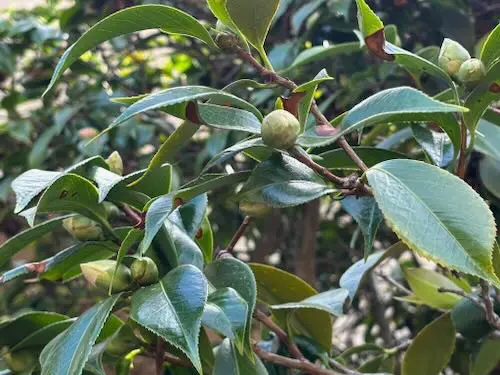
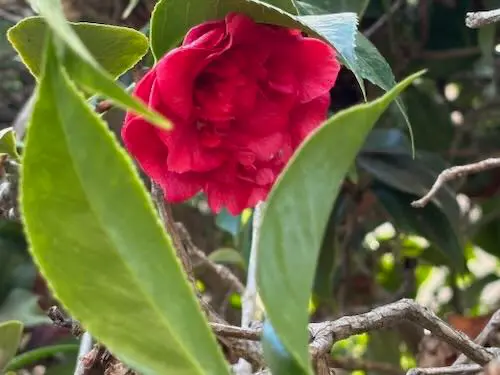
This small tree or large upright shrub has a dense canopy with dark green leaves that form a perfect backdrop for the single, deep-colored flowers and their prominent bright yellow stamens. There are thousands of cultivars with many variations on color and form. Camellia japonica has no HPWRA (Hawai‘i Pacific Weed Risk Assessment) score.
Native Range: Japan
Horticultural use: Screen or Hedged
Ethnobotanical Info / Tree Use: C. japonica is culturally important in Japan and China, where it has been cultivated since the 5th century and over 2000 varieties have been developed. The principal use of this species in Asia is ornamental, but it also used in Korean traditional medicine. Camellias are an important element in the symbology of Chinese calligraphy, visual arts, and poetry. (Kim et al., 2012; Menzies, 2017)
Tree Shape: Rounded
Foliage Type: Evergreen
Maximum Tree Height: 20 feet
Canopy Width: 5-10feet
Growth Rate: ~12in/year
Leaf Arrangement and Form: Alternate and Simple
Leaf Shape: Elliptic
Leaf Color: Dark Green
Fall Color: No
Flowers: Showy, Fragrant
Flower Color: White, Pink or Red
Flower Type: Has male and female reproductive parts in each flower (perfect)
Flower Time: Winter or Spring
Fruit Size and Color: Medium Capsule
Fruiting Time: Fall
Fruit Value: Edible
Bark Color: Dark Brown, Dark Gray, Light Gray or Light Green
Bark Texture: Smooth
Litter Type: Dry Fruit
Recommended Planting Area: 2′ to 4′
Water Use Rating: Medium
Sunset Climate Zone: 4 – 9, 12 and 14 – 24
Soil Texture: Loam or Clay
Soil pH: Very Acidic to Slightly Alkaline
Salt Tolerance: Moderate
Schoolyard Trees: No
Shade Tolerance: Yes
Branch Strength: Medium
Root Damage Potential: Low
Potential health issues: None Known
Wildlife Interactions: Attracts
Disease and Pest Susceptibility: Armillaria and Chlorosis
Disease and Pest Resistance: Armillaria and Root Rot