Chorisia speciosa
Floss Silk Tree
General Info
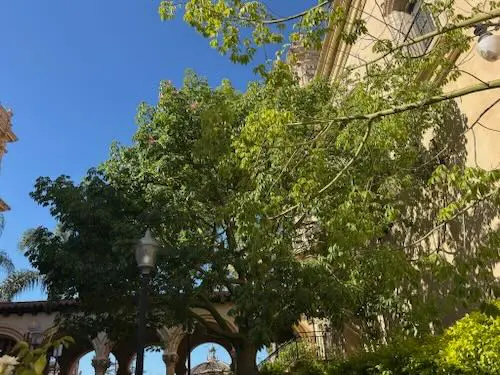
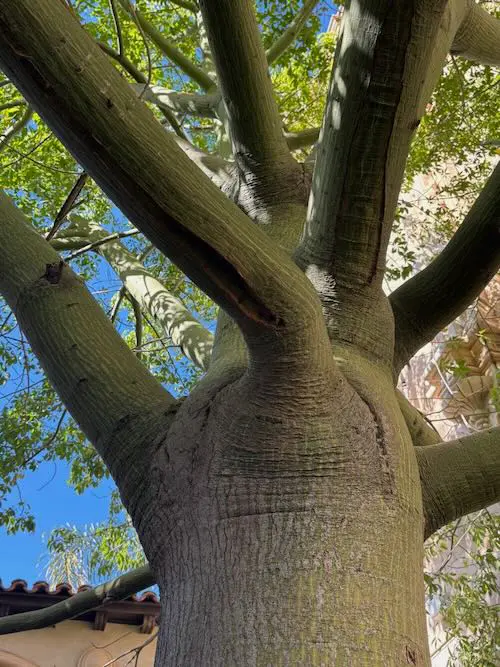
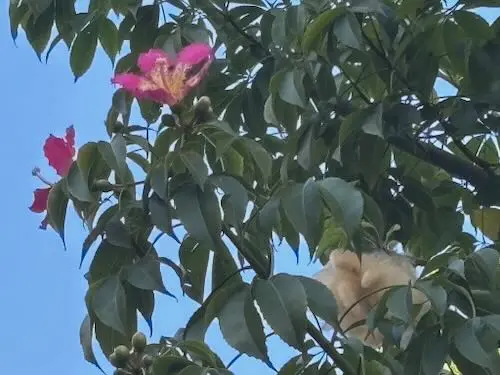
This tree stands out with its thick, green trunk covered in large conical spines. It produces striking, pink flowers that resemble hibiscus blooms, adding a splash of color to urban landscapes. The tree’s broad, palmate leaves provide ample shade, making it a popular choice for parks and streets. During certain seasons, it sheds its leaves, revealing its unique, spiny bark. Its large, woody seed pods eventually split open to release fluffy, cotton-like fibers. This tree is both ornamental and functional, thriving well in warm climates.
Native Range: South America
Ethnobotanical Info / Tree
Schoolyard Use: This tree features a stout, bottle-shaped trunk that can spark discussions about water storage and plant adaptation to dry environments. Its vibrant pink flowers and thorny bark provide material for lessons on plant defense mechanisms and pollination. The large, palmately compound leaves can be used to teach about different leaf structures. The tree also produces large, woody seed pods filled with fluffy fibers, which can be incorporated into lessons on seed dispersal and plant reproduction.
Tree Shape: Rounded
Foliage Type: Partly Deciduous
Maximum Tree Height: 60 feet
Canopy Width: 40-50feet
Growth Rate: ~12-24in/year
Leaf Arrangement and Form: Alternate and Palmately Compound
Leaf Shape: Oval
Leaf Color: Light Green
Fall Color: No
Flowers: Showy
Flower Color: Maroon, Pink, Purple or Rose
Flower Time: Fall or Winter
Fruit Size and Color: Very Large White Capsule
Fruiting Time: Spring or Summer
Bark Color: Green or Light Gray
Bark Texture: Spiny
Recommended Planting Area: Greater than 7′
Water Use Rating: Low
Sunset Climate Zone: 12 – 24, H1 and H2
Soil Texture: Loam or Sand
Soil pH: Neutral to Slightly Alkaline
Salt Tolerance: Moderate
Schoolyard Trees: Yes
Shade Tolerance: No
Root Damage Potential: Moderate
Potential health issues: None Known
Wildlife Interactions: Attracts
Utility Friendly: No