Corymbia ficifolia
Red Flowering Gum
General Info
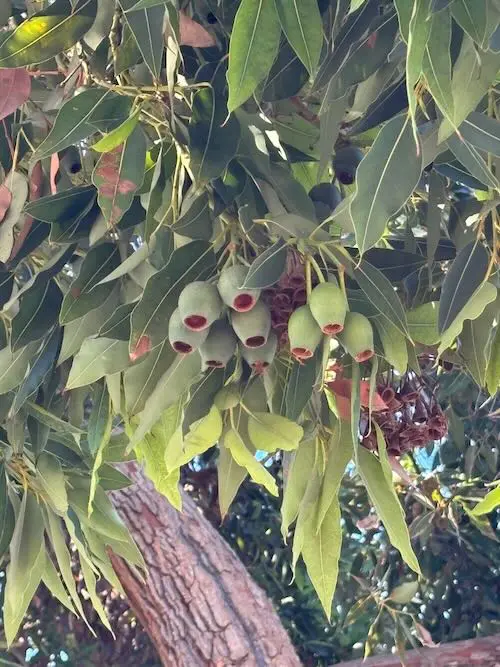
Red flowering gum is very desirable as a flowering accent tree, with its profusion of bright flower clusters in late summer, and sporadically throughout the year. It prefers temperate coastal conditions, where it tolerates dryness and salt spray. It is drought and smog tolerant. Hardiness estimate : 25-30 degrees F. Leaves have no dot glands when held up to the light (see photo).
The publication of a new genus within Eucalyptus (Blakella) by Crisp et. al. 2024, has led most world eucalypt experts to recognize all Corymbia and Angophora species in Eucalyptus. It now makes the most sense taxonomically, for field characteristics, and for disruption of names to move everything to one genus, and we have done so here at SelecTree. Corymbia citriodora becomes (or goes back) to Eucalyptus citriodora, C. ficifolia to E. ficifolia, Angophora costata becomes Eucalyptus apocynifolia (due to the species name having been previously published in Eucalyptus).
Native Range: Western Australia
Horticultural use: Screen
Schoolyard Use: This tree has striking clusters of bright, brush-like flowers that can introduce students to pollination and attract various pollinators. Its evergreen leaves provide a year-round example of photosynthesis and leaf structure. The bark peels in long strips, offering a tactile way to explore tree growth and bark texture. The woody seed capsules can be used to discuss seed dispersal and plant reproduction.
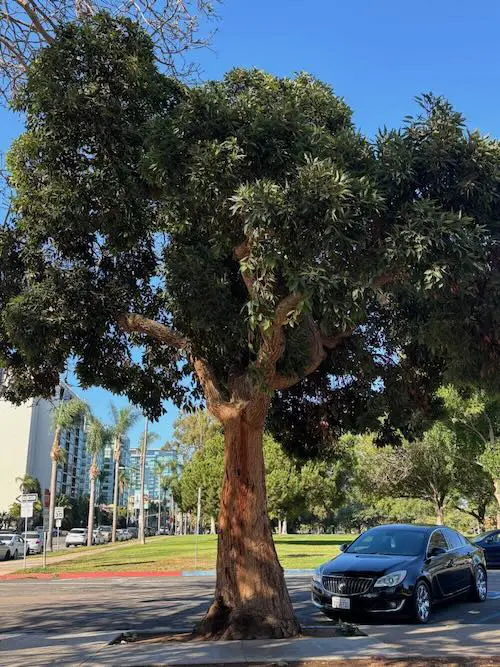
Tree Shape: Rounded
Foliage Type: Evergreen
Maximum Tree Height: 45 feet
Canopy Width: 15-60feet
Growth Rate: ~24in/year
Leaf Arrangement and Form: Alternate and Simple
Leaf Shape: Ovate
Leaf Color: Dark Green
Fall Color: No
Flowers: Showy, Fragrant
Flower Color: Orange, Pink, Red or Rose
Flower Time: Fall, Winter, Spring or Summer
Fruit Size and Color: Medium Brown Capsule
Fruiting Time: Fall, Spring or Summer
Fruit Value: Wildlife use it
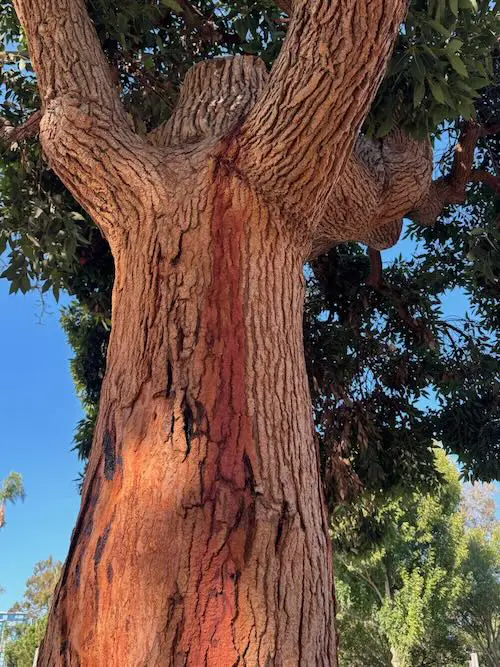
Bark Color: Light Gray or Red Brown
Bark Texture: Exfoliating and Furrowed
Litter Type: Dry Fruit
Recommended Planting Area: 4′ to 7′
Water Use Rating: Low
Sunset Climate Zone: 5 – 6, 8 – 24, H1 and H2
Soil Texture: Loam or Sand
Soil pH: Slightly Acidic to Very Alkaline
Salt Tolerance: High
Schoolyard Trees: Yes
Shade Tolerance: No
Branch Strength: Medium
Root Damage Potential: Moderate
Potential health issues: None Known
Wildlife Interactions: Attracts Bees and Birds
Disease and Pest Susceptibility: Armillaria, Phytophthora, Root Rot, Invasive Shot Hole Borer, Beetle Borers and Thrip
Disease and Pest Resistance: Texas Root Rot and Verticillium
Utility Friendly: No