Dypsis decaryi
Triangle Palm
General Info
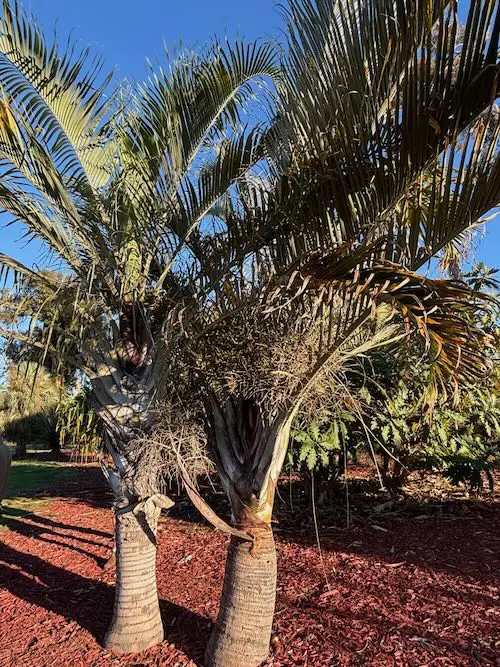
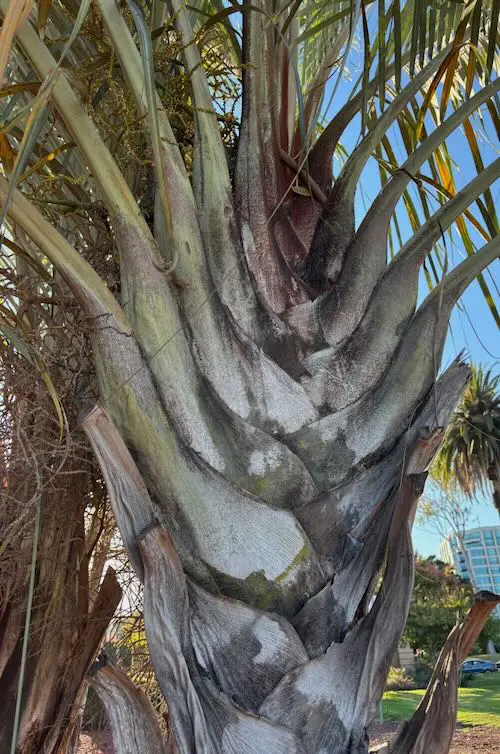
Like its cousin in the same genus, the golden cane palm (Dypsis lutescens), triangle palm grows natively only in Madagascar, where it is supposedly rare and threatened with extinction. This tree is a small to medium-sized feather palm with a triangular shape due to overlapping leafstalks growing in three distinct, twisting ranks on the trunk. Triangle palm is drought tolerant, and is commonly grown as a landscaping specimen on the leeward side of the Hawaiian Islands and in Southern California. Dypsis decaryi has a HPWRA (Hawai‘i Pacific Weed Risk Assessment) score of -7 (Low Risk)
Native Range: Madagascar
Horticultural use: Specimen or Container
Ethnobotanical Info / Tree Use: A palm native to the wet forests of southern Madagascar, where the local Tatsimu people use it for housebuilding, thatching, and the seeds are eaten as a sweet snack. There are less than 1000 individuals left in its native habitat. Widely cultivated and planted ornamentally in tropical America and the Pacific. (Walker & Dorr, 1998)
Tree Shape: Palm
Foliage Type: Evergreen
Maximum Tree Height: 30 feet
Canopy Width: 12-15feet
Growth Rate: ~12in/year
Leaf Arrangement and Form: Alternate and Pinnately Compound
Leaf Color: Bluish Green, Silver or Gray Green
Fall Color: No
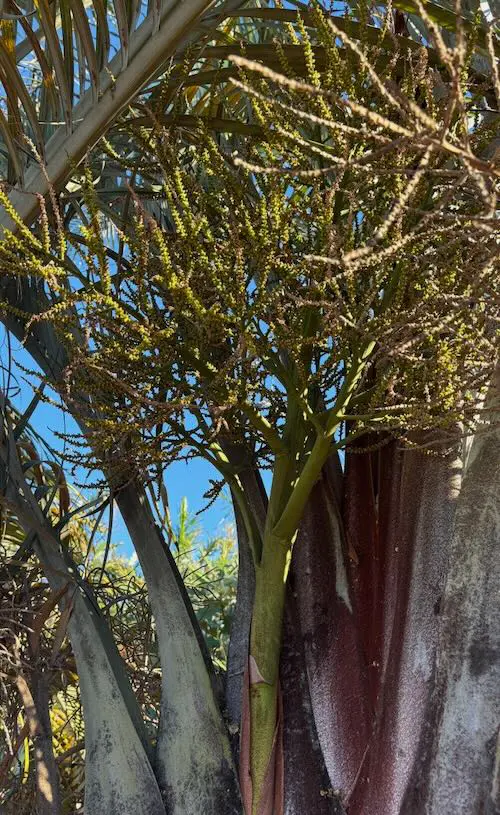
Flowers: Inconspicuous
Flower Color: Yellow
Flower Time: Fall, Winter, Spring or Summer
Fruit Size and Color: Small to Medium Black Drupe
Fruiting Time: Fall, Winter, Spring or Summer
Bark Color: Gray
Recommended Planting Area: 4′ to 7′
Water Use Rating: Medium
Sunset Climate Zone: 20 – 24 and H2
Soil Texture: Loam, Sand or Clay
Soil pH: Slightly Acidic to Slightly Alkaline
Schoolyard Trees: No
Shade Tolerance: No
Root Damage Potential: Low
Wildlife Interactions: Attracts
Utility Friendly: No