Eucalyptus cladocalyx
Sugar Gum
General Info
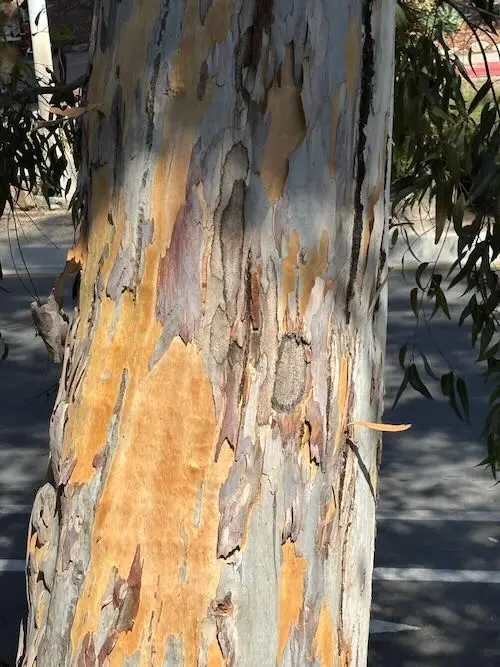
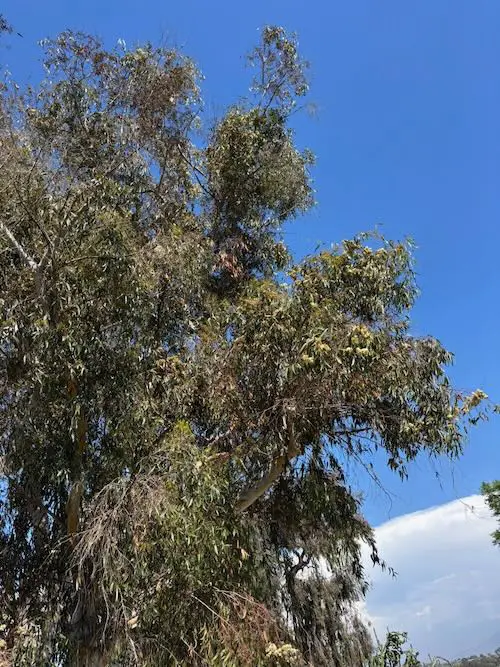
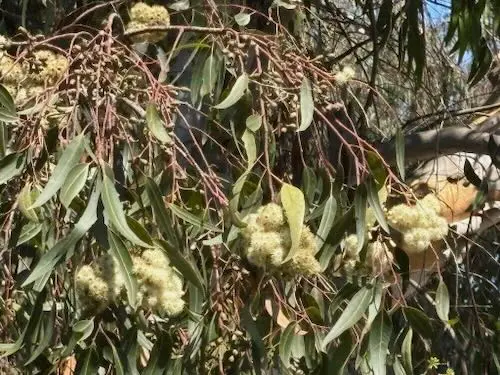
This tree is known for its striking, smooth bark that peels away in patches to reveal a mosaic of cream, grey, and brown underneath. It grows tall and straight, providing ample shade with its dense canopy of narrow, elongated leaves. The foliage emits a pleasant, aromatic scent, especially noticeable on warm days. During the flowering season, it produces clusters of small, creamy-white blossoms that attract a variety of pollinators, including bees and birds. This tree is drought-tolerant and thrives in well-drained soils, making it a resilient choice for urban landscapes.
Native Range: Southern Australia
Potential invasiveness: This plant is classified as potentially invasive in specific areas of California by the California Invasive Plant Council
Schoolyard Use: This tree has long, slender leaves that offer a chance to explore leaf structure and function. Its bark peels away in strips, revealing a smooth, multicolored trunk that can be used to discuss bark texture and tree growth. The tree produces small, fragrant flowers that attract pollinators, providing a hands-on lesson in pollination and the role of insects in ecosystems. Its resilience in dry conditions makes it a great example for studying plant adaptation to different environments.
Tree Shape: Rounded
Foliage Type: Deciduous
Maximum Tree Height: 80 feet
Canopy Width: 45-60feet
Growth Rate: ~36in/year
Leaf Arrangement and Form: Alternate and Simple
Leaf Shape: Oval
Leaf Color: Green
Fall Color: No
Flowers: Fragrant
Flower Color: White
Flower Time: Fall or Summer
Fruit Size and Color: Small Brown or Mostly Green Capsule
Fruiting Time: Fall
Fruit Value: Wildlife use it
Bark Color: Cream or Light Green
Bark Texture: Exfoliating and Smooth
Litter Type: Dry Fruit
Recommended Planting Area: 4′ to 7′
Water Use Rating: Low
Sunset Climate Zone: 5 – 6, 8 – 24, H1 and H2
Soil Texture: Loam or Sand
Soil pH: Slightly Acidic to Very Alkaline
Schoolyard Trees: Yes
Shade Tolerance: No
Branch Strength: Medium
Root Damage Potential: Moderate
Potential health issues: None Known
Wildlife Interactions: Attracts Bees and Birds
Disease and Pest Susceptibility: Armillaria, Phytophthora, Root Rot and Beetle Borers
Disease and Pest Resistance: Texas Root Rot and Verticillium
Utility Friendly: No