Eucalyptus sideroxylon
Red Ironbark
General Info
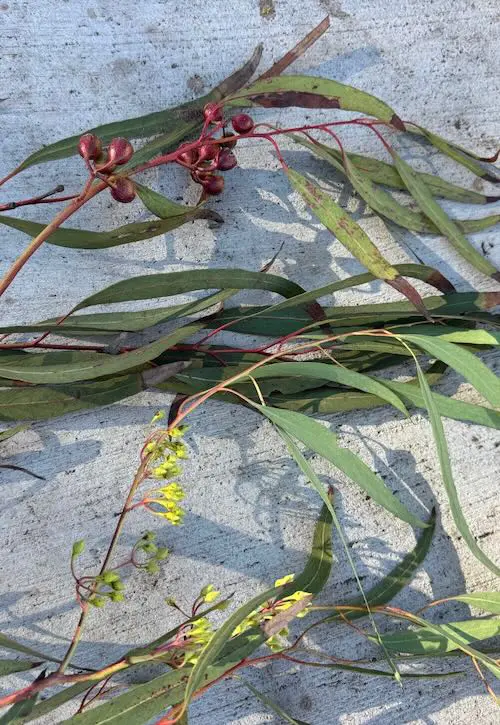
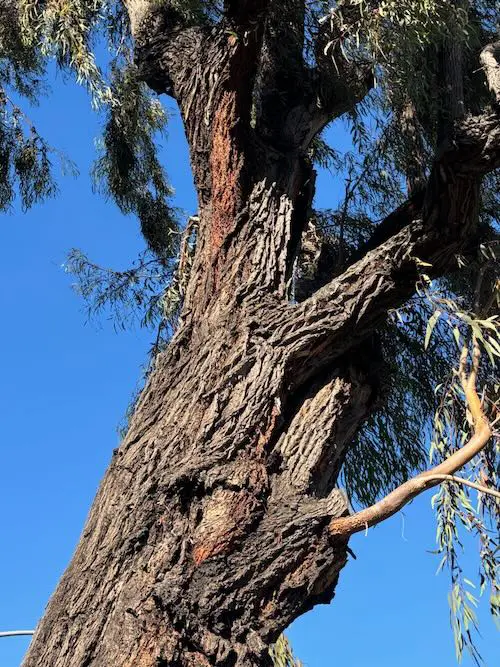
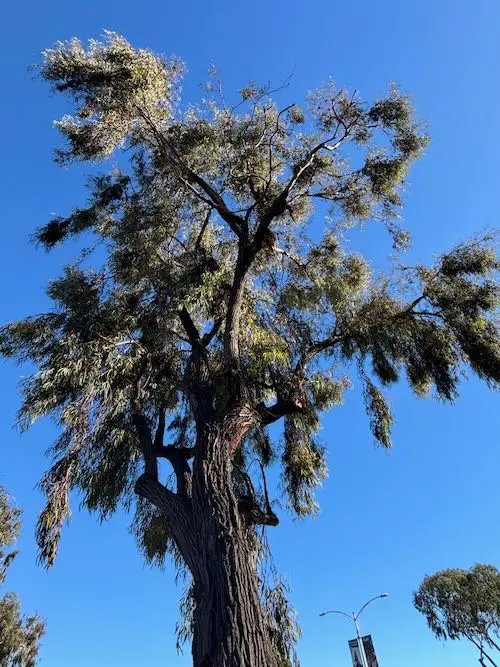
This tree features a striking, rough bark that ranges in color from dark brown to black, providing a dramatic contrast to its slender, blue-green leaves. It produces clusters of small, cream-colored to pink flowers that attract bees and birds, adding a lively touch to urban landscapes. Its branches have a graceful, slightly drooping habit, creating a soft, cascading effect. This tree is well-suited for dry climates, thriving in full sun and requiring minimal water once established. Its resilience and unique appearance make it a popular choice for parks and large gardens.
Native Range: Eastern Australia
Schoolyard Use: This tree has narrow, lance-shaped leaves that can be used to teach about leaf shapes and adaptations to dry climates. Its bark is deeply furrowed and peels away in strips, offering a tactile experience for lessons on tree anatomy. The small, clustered flowers attract various pollinators, making it ideal for discussions on ecosystems and pollination. The tree’s resilience to drought conditions can also be a practical example for environmental science topics.
Tree Shape: Rounded or Vase
Foliage Type: Evergreen
Maximum Tree Height: 80 feet
Canopy Width: 30-60feet
Growth Rate: ~36in/year
Leaf Arrangement and Form: Alternate and Simple
Leaf Shape: Spear-shaped
Leaf Color: Bluish Green, Silver or Gray Green
Fall Color: No
Flowers: Showy, Fragrant
Flower Color: Pink, Red or Rose
Flower Time: Fall, Winter or Spring
Fruit Size and Color: Small Brown Capsule
Fruiting Time: Spring or Summer
Fruit Value: Wildlife use it
Bark Color: Black or Red Brown
Bark Texture: Blocky and Furrowed
Litter Type: Dry Fruit
Recommended Planting Area: Greater than 7′
Water Use Rating: Low
Sunset Climate Zone: 5 – 6, 8 – 24, H1 and H2
Soil Texture: Loam, Sand or Clay
Soil pH: Neutral to Very Alkaline
Salt Tolerance: High
Schoolyard Trees: Yes
Shade Tolerance: No
Branch Strength: Medium
Root Damage Potential: High
Potential health issues: None Known
Biogenic Emissions: High
Wildlife Interactions: Attracts Bees and Birds
Disease and Pest Susceptibility: Chlorosis, Armillaria, Phytophthora, Root Rot, Beetle Borers and Thrip
Disease and Pest Resistance: Texas Root Rot, Verticillium and Eucalyptus Snout Beetle (Gonipterus platensis)
Utility Friendly: No