Heteromeles arbutifolia
Toyon
General Info
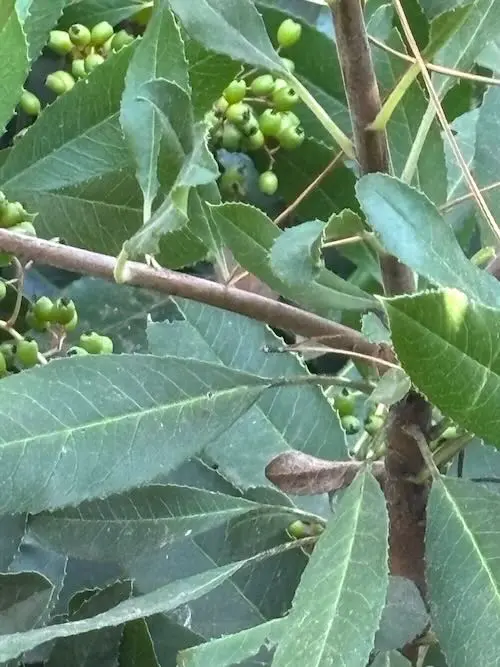
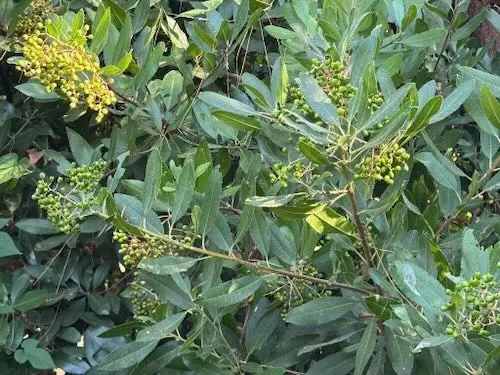
Toyon is the name given to this attractive, well-known plant by the southern Bay Area Ohlone Native American tribe, and it is the only California native plant still called by a Native American name. Throughout summer, toyon develops clusters of white flowers followed in the fall and early winter by pea-sized, bright red fruit. The genus name, Heteromeles, means different apple and describes these fruits, which are botanically similar to apples and pears, but far less tasty. In the past, entire limbs bearing these beautiful fruit were gathered from the wild and sold commercially for decorations at Christmas time (another common name is Christmas berry). Although there are no holly (Ilex spp.) native to the state, California folklore holds that the resemblance of toyon to hollies (with dark, evergreen, toothed leaves, and bright red fruit) may have influenced the naming of Hollywood, as toyon is abundant in the chaparral-covered hills above Los Angeles. The more likely origin of TinseltownÕs name is an 1880s subdivision in that area named after an Illinois estate called Hollywood. The species name, arbutifolia, refers to the similarity between the leaves of toyon and the leaves of members of the genus Arbutus
Native Range: California
Horticultural use: Screen
Schoolyard Use: This tree has glossy, dark green leaves that are perfect for teaching about leaf texture and structure. The bright red berries it produces can be used to discuss plant reproduction and the role of fruit in seed dispersal. Its evergreen nature makes it a great example for lessons on different types of foliage and plant adaptation to the Californian climate. The clusters of small white flowers that bloom in spring attract various pollinators, providing a practical example of plant-pollinator interactions.
Tree Shape: Rounded or Vase
Foliage Type: Deciduous
Maximum Tree Height: 25 feet
Canopy Width: 8-15feet
Growth Rate: ~12-24in/year
Leaf Arrangement and Form: Alternate and Simple
Leaf Shape: Oblong
Leaf Color: Dark Green
Fall Color: No
Flowers: Showy
Flower Color: White
Flower Time: Summer
Fruit Size and Color: Small Red Berry
Fruiting Time: Fall or Winter
Fruit Value: Wildlife use it
Bark Color: Dark Brown, Dark Gray or Light Gray
Bark Texture: Smooth
Litter Type: Wet Fruit
Recommended Planting Area: 4′ to 7′
Water Use Rating: Low
Sunset Climate Zone: 5 – 9 and 14 – 24
Soil Texture: Loam, Sand or Clay
Soil pH: Very Acidic to Slightly Alkaline
Salt Tolerance: Moderate
Schoolyard Trees: Yes
Shade Tolerance: No
Branch Strength: Medium
Root Damage Potential: Low
Potential health issues: None Known
Biogenic Emissions: Low
Wildlife Interactions: Attracts Bees and Birds
Disease and Pest Susceptibility: Sudden Oak Death, Armillaria, Root Rot, Scales and Thrip
Utility Friendly: Yes