Leptospermum scoparium
New Zealand Tea Tree
General Info
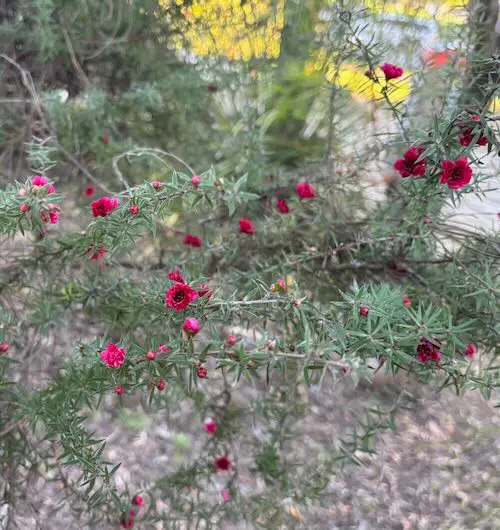
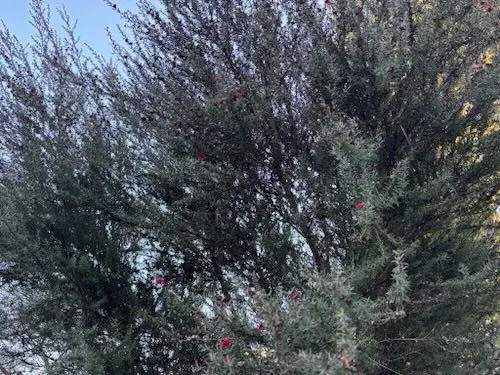
Leptospermum scoparium is a small, compact, and highly ornamental shrub. It rarely forms into a tree. Its bluish-green, needle-like leaves have prickly ends and release a pleasant aroma when bruised. Late spring yields elegant, cup-shaped blooms in shades of white, pink, and red, which are adored by bees. While tolerant of light shade and coastal conditions, this plant requires protection from cold and strong winds. It is considered invasive in South Africa and Hawai’i.
Native Range: New Zealand and southeastern Australia
Horticultural use: Container
Ethnobotanical Info / Tree Use: As its common name suggests, the leaves of New Zealand Tea Tree are brewed into a refreshing tea. In traditional medicines, this plant is used to treat skin conditions and coughs. Its flowers produce Manuka honey, which is valued as both a food and for its antibacterial properties. Its wood is used for inlay work, cabinets, tools, and fencing, while its essential oils are used in cosmetic products.
Tree Shape: Rounded
Foliage Type: Evergreen
Maximum Tree Height: 10 feet
Canopy Width: 10feet
Growth Rate: ~24in/year
Leaf Arrangement and Form: Alternate/Whorled and Simple
Leaf Shape: Spear-shaped
Leaf Color: Blue Green
Fall Color: No
Flowers: Showy, Fragrant
Flower Color: White, Pink or Red
Flower Type: Has male and female reproductive parts in each flower (perfect)
Flower Time: Spring or Summer
Fruit Size and Color: Small Brown, Black Capsule
Fruiting Time: Fall
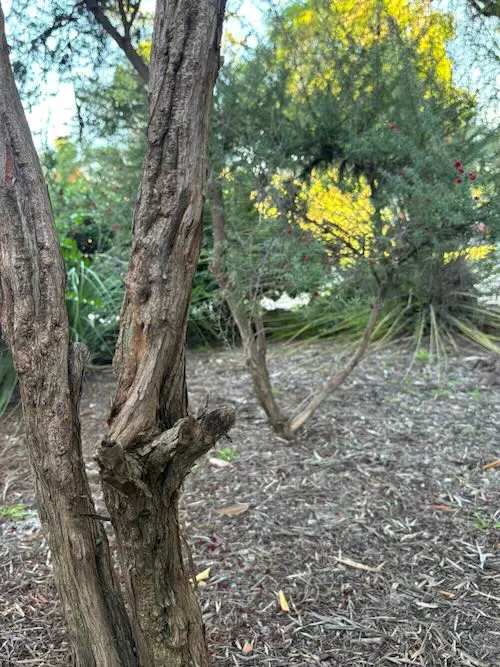
Bark Color: Light Gray, Light Brown, Black
Bark Texture: Exfoliating and Scaly
Litter Type: Dry Fruit
Recommended Planting Area: 2′ to 4′
Water Use Rating: Medium
Sunset Climate Zone: 14 – 24, H1 and H2
Soil Texture: Loam or Sand
Soil pH: Slightly Acidic to Slightly Alkaline
Salt Tolerance: High
Schoolyard Trees: No
Shade Tolerance: No
Branch Strength: Strong
Root Damage Potential: Low
Potential health issues: None Known
Wildlife Interactions: and Attracts Bees and Birds
Disease and Pest Susceptibility: Armillaria
Disease and Pest Resistance: Armillaria and Root Rot
Utility Friendly: Yes