Metrosideros excelsa
New Zealand Christmas Tree
General Info
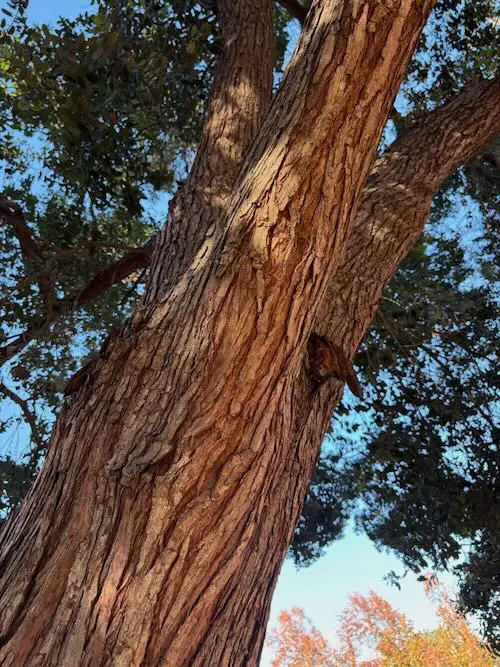
This tree is known for its striking, bright red flowers that bloom in clusters, creating a vibrant display. It has a gnarled, twisted trunk and branches that give it a unique, sculptural appearance. The leaves are leathery and dark green, often with a silvery underside, adding to its visual appeal. This tree is well-suited to coastal areas, as it is highly tolerant of salt and wind. It provides excellent shade and can attract a variety of birds and pollinators. Its resilience and beauty make it a popular choice for parks and gardens in urban settings.
Native Range: New Zealand
Horticultural use: Screen or Hedged
Schoolyard Use: This tree has striking, leathery leaves with a silvery underside, ideal for studying plant texture and adaptation to coastal environments. It produces vibrant, brush-like flowers that attract pollinators, offering a practical example of plant-pollinator interactions. The tree’s resilience to wind and salt spray can be used to discuss plant survival strategies in harsh conditions. Its gnarled branches and dense canopy provide ample shade, making it a pleasant spot for outdoor learning sessions.
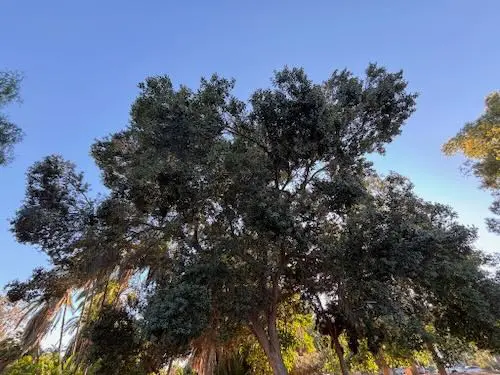
Tree Shape: Rounded
Foliage Type: Evergreen
Maximum Tree Height: 40 feet
Canopy Width: 30-35feet
Growth Rate: ~24in/year
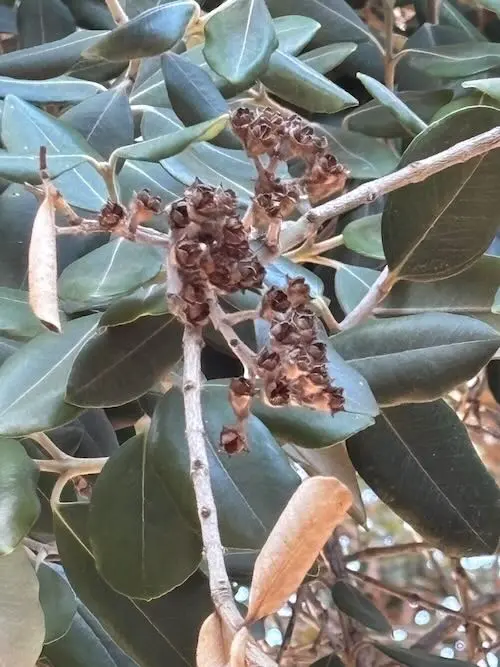
Leaf Arrangement and Form: Opposite and Simple
Leaf Shape: Oval
Leaf Color: Dark Green
Fall Color: No
Flowers: Showy
Flower Color: Red
Flower Time: Spring or Summer
Fruit Size and Color: Small Brown or Gray Capsule
Fruiting Time: Fall or Summer
Bark Color: Dark Brown
Litter Type: Dry Fruit
Recommended Planting Area: 4′ to 7′
Water Use Rating: Low
Sunset Climate Zone: 16 – 17, 23 – 24, H1 and H2
Soil Texture: Loam or Sand
Soil pH: Neutral to Slightly Alkaline
Salt Tolerance: High
Schoolyard Trees: Yes
Shade Tolerance: No
Branch Strength: Medium
Root Damage Potential: Moderate
Potential health issues: None Known
Biogenic Emissions: High
Wildlife Interactions: Attracts Birds
Disease and Pest Susceptibility: Phytophthora and Root Rot
Utility Friendly: No