Myrtus communis
Myrtle
General Info
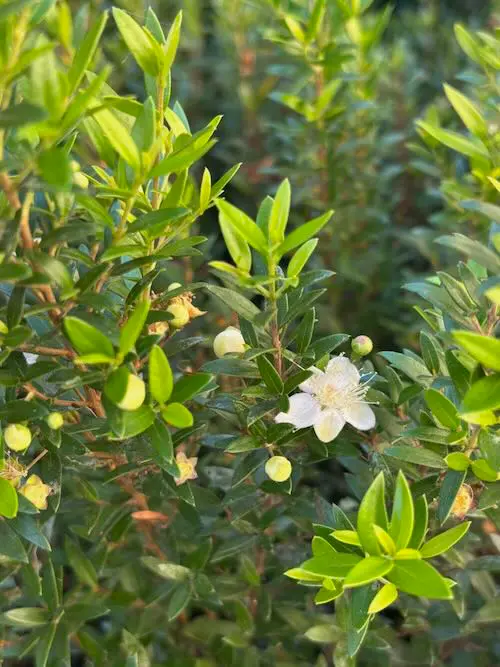
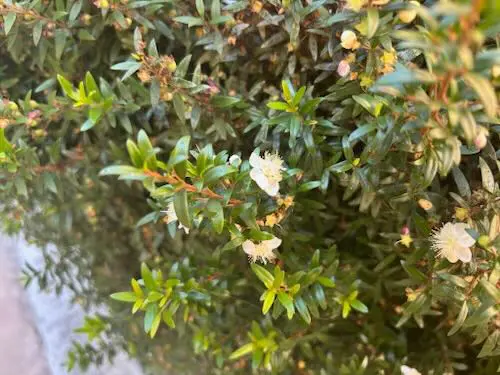
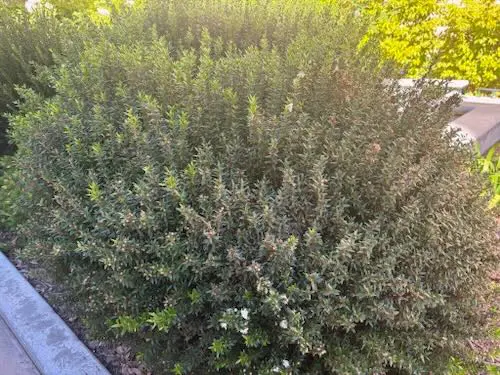
Myrtus communis is a multi-stemmed shrub with gnarled and twisting branches. Its papery, light gray bark flakes in chunks to reveal reddish-browns underneath, providing a rustic charm. Its small, glossy foliage is aromatic when crushed. Blooms are showy and fragrant, featuring delicate white flowers with numerous stamens. This tree produces small, dark blue berries in autumn. In addition to its ornamental appeal, it is tolerant to a wide range of soil conditions. It attracts birds and bees.
Native Range: Northern Africa, southwestern Asia, southern Europe
Horticultural use: Screen, Hedged or Topiary
Ethnobotanical Info / Tree Use: Common Myrtle holds cultural reverence as a symbol of love, often used in wedding bouquets and associated with the Greek goddess, Aphrodite. Its fruits are eaten fresh or processed into seasonings, alcoholic beverages, and syrups. The flowers are sometimes eaten in salads. In traditional medicines, various parts of this plant are used to treat urinary infections, digestive problems, vaginal discharge, bronchial congestion, sinusitis, dry coughs, epilepsy, acne, wounds, gum infections, and haemorrhoids.
Tree Shape: Conical or Rounded
Foliage Type: Evergreen
Maximum Tree Height: 20 feet
Canopy Width: 20feet
Growth Rate: ~24in/year
Leaf Arrangement and Form: Opposite and Simple
Leaf Shape: Ovate
Leaf Color: Green
Fall Color: No
Flowers: Showy, Fragrant
Flower Color: White
Flower Type: Has male and female reproductive parts in each flower (perfect)
Flower Time: Summer
Fruit Size and Color: Small Black, Dark Blue Berry
Fruiting Time: Fall
Fruit Value: Edible and Wildlife use it
Bark Color: Light Gray, Reddish
Bark Texture: Scaly, Smooth and Peeling
Litter Type: Dry Fruit
Recommended Planting Area: 2′ to 4′
Water Use Rating: Medium
Sunset Climate Zone: 8 – 24, H1 and H2
Soil Texture: Loam, Sand or Clay
Soil pH: Very Acidic to Very Alkaline
Salt Tolerance: Moderate
Schoolyard Trees: No
Shade Tolerance: No
Branch Strength: Medium
Root Damage Potential: Low
Potential health issues: None Known
Biogenic Emissions: High
Wildlife Interactions: and Attracts Birds and Bees
Disease and Pest Susceptibility: Phytophthora and Root Rot
Disease and Pest Resistance: Armillaria and Root Rot
Utility Friendly: Yes