Nerium oleander
Oleander
General Info
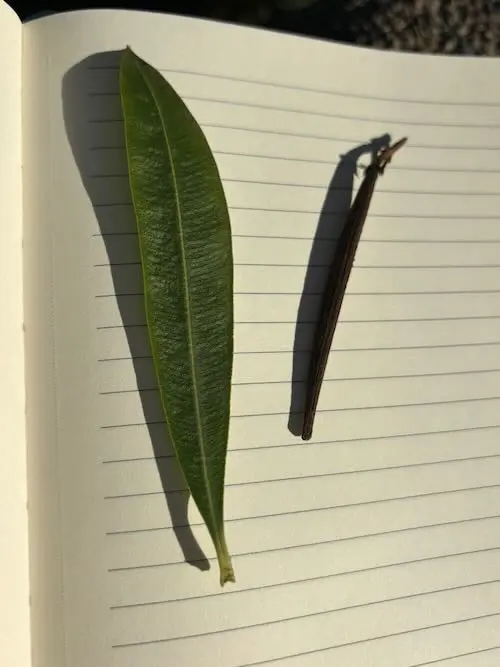
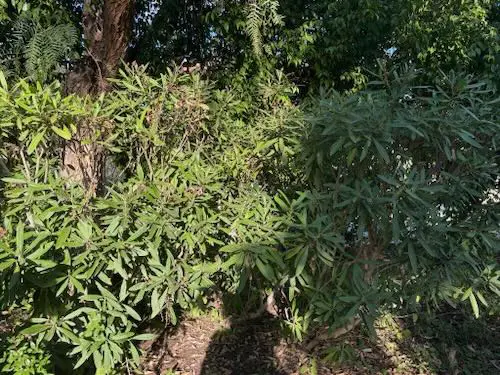
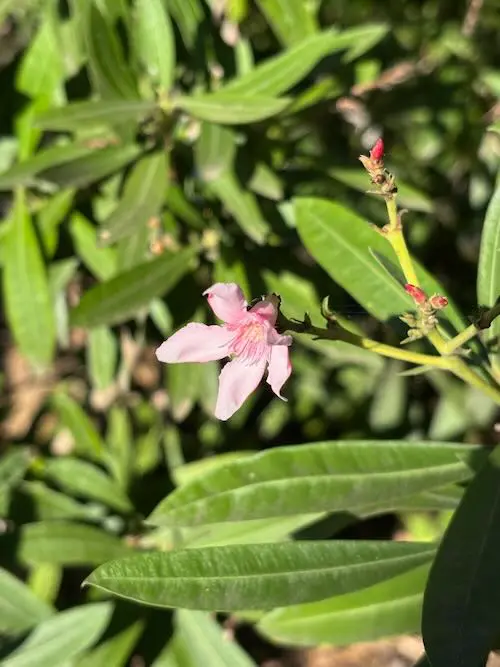
Nerium oleander is highly sought after for its dense growth habit and colorful, prolific flowering. While naturally forming a multi-stemmed shrub, this species can be trained into a rounded, single-trunked tree. Its delicate, narrow foliage can either be oppositely-arranged or whorled. Its blooms range in color from white, pink, red, purple, and orange, forming the basis for many varieties. This incredibly hardy species is tolerant of heat, drought, salt, and strong wind. However, all parts of this plant are highly poisonous, and its milky white sap is known to irritate skin.
Native Range: Asia and the Mediterranean
Potential invasiveness: This plant is classified as potentially invasive in specific areas of California by the California Invasive Plant Council.
Horticultural use: Screen or Hedged
Tree Shape: Rounded
Foliage Type: Deciduous
Maximum Tree Height: 20 feet
Canopy Width: 10-15feet
Growth Rate: ~24-36in/year
Leaf Arrangement and Form: Whorled and Simple
Leaf Shape: Spear-shaped
Leaf Color: Dark Green
Fall Color: No
Flowers: Showy, Fragrant
Flower Color: Pink, Red, Rose or White
Flower Time: Fall, Spring or Summer
Fruit Size and Color: Medium Brown, Green Follicle
Fruiting Time: Fall or Summer
Fruit Value: Wildlife use it
Bark Color: Dark Brown or Light Green
Bark Texture: Furrowed and Smooth
Litter Type: Dry Fruit
Recommended Planting Area: 2′ to 4′
Water Use Rating: Low
Sunset Climate Zone: 8 – 16, 18 – 24, H1 and H2
Soil Texture: Loam, Sand or Clay
Soil pH: Slightly Acidic to Very Alkaline
Salt Tolerance: High
Schoolyard Trees: No
Shade Tolerance: No
Branch Strength: Medium
Root Damage Potential: Low
Potential health issues: Irritant and Poisonous
Biogenic Emissions: Low
Wildlife Interactions: Attracts
Disease and Pest Susceptibility: Armillaria, Sooty Mold, Aphids and Scales
Disease and Pest Resistance: Texas Root Rot, Verticillium and Armillaria*
Utility Friendly: No