Pistacia chinensis
Chinese Pistache
General Info
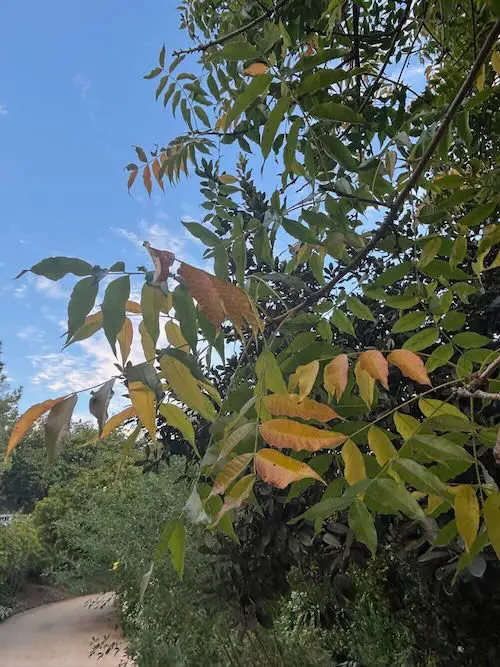
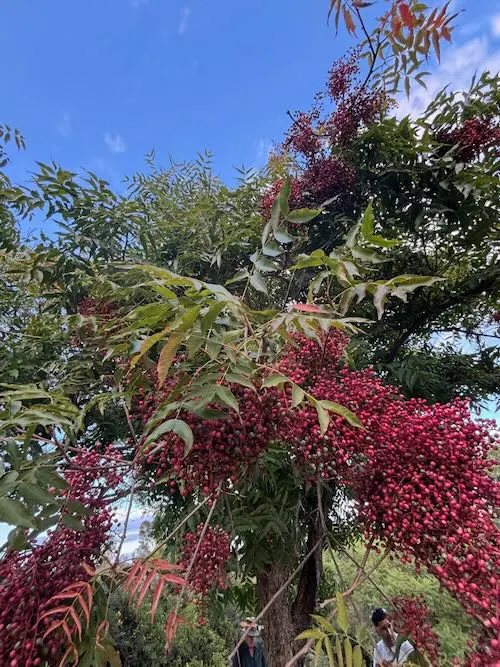
Pistacia chinensis is known for its striking fall foliage, which transforms into vibrant shades of red, orange, and yellow, creating a stunning display in urban landscapes. It has a rounded canopy that provides ample shade, making it a popular choice for parks and streets. The tree is drought-tolerant and can thrive in a variety of soil types, which adds to its versatility in different environments. Its small, inconspicuous flowers give way to clusters of small, red fruits that add visual interest. Additionally, it has a relatively low maintenance requirement, making it an attractive option for those seeking a resilient and beautiful tree for their urban setting.
Native Range: China
Potential invasiveness: This plant is classified as potentially invasive in specific areas of California by the California Invasive Plant Council (California Invasive Plant Council) lists this plant as unknown potentially invasive in specific areas of Californianess.
Horticultural use: Street Tree, Park Tree or Screen
Schoolyard Use: Chinese Pistache features pinnate leaves that turn vibrant shades of red, orange, and yellow in the fall, making it ideal for lessons on seasonal changes and plant pigmentation. The small, clustered fruits can be used to discuss seed development and dispersal methods. Its drought tolerance provides a practical example of plant adaptation to different environmental conditions. The tree’s canopy offers a pleasant shade, making outdoor learning sessions more comfortable.
Tree Shape: Rounded
Foliage Type: Deciduous
Maximum Tree Height: 40 feet
Canopy Width: 25-35feet
Growth Rate: ~24in/year
Leaf Arrangement and Form: Alternate and Pinnately Compound
Leaf Shape: Oblong
Leaf Color: Green
Fall Color: Yes
Flowers: Inconspicuous, Fragrant
Flower Time: Spring
Fruit Size and Color: Medium Red or Mostly Blue Drupe
Fruiting Time: Fall or Summer
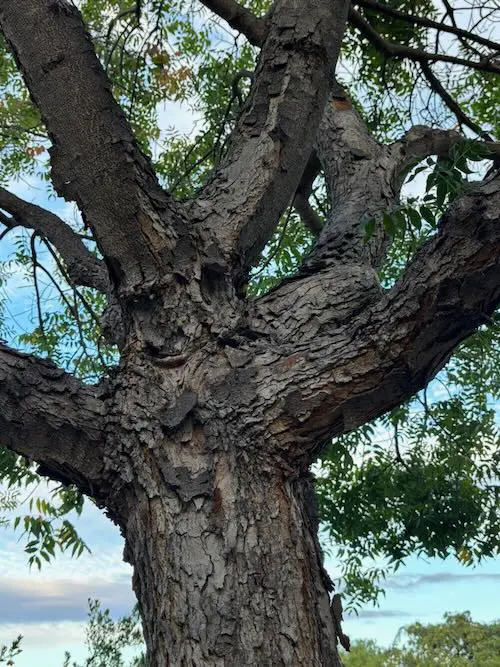
Bark Color: Dark Brown, Light Gray or Light Green
Bark Texture: Furrowed and Scaly
Recommended Planting Area: 4′ to 7′
Water Use Rating: Low
Sunset Climate Zone: 4 – 23
Soil Texture: Loam, Sand or Clay
Soil pH: Slightly Acidic to Very Alkaline
Salt Tolerance: Low
Schoolyard Trees: Yes
Shade Tolerance: No
Branch Strength: Strong
Root Damage Potential: Low
Potential health issues: Allergy
Biogenic Emissions: Moderate
Wildlife Interactions: Attracts Birds
Disease and Pest Susceptibility: Verticillium and Root Rot
Disease and Pest Resistance: Armillaria
Utility Friendly: No