Platanus racemosa
California Sycamore
General Info
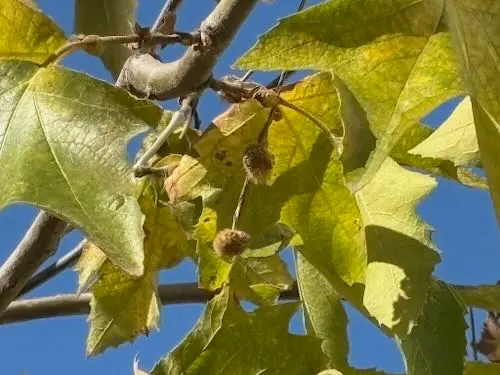
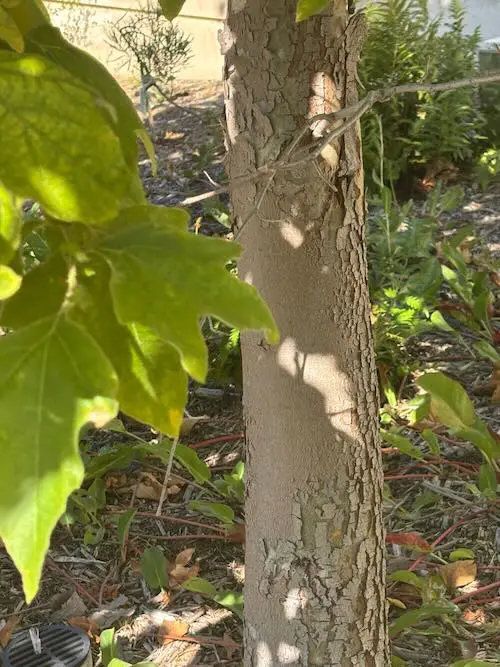
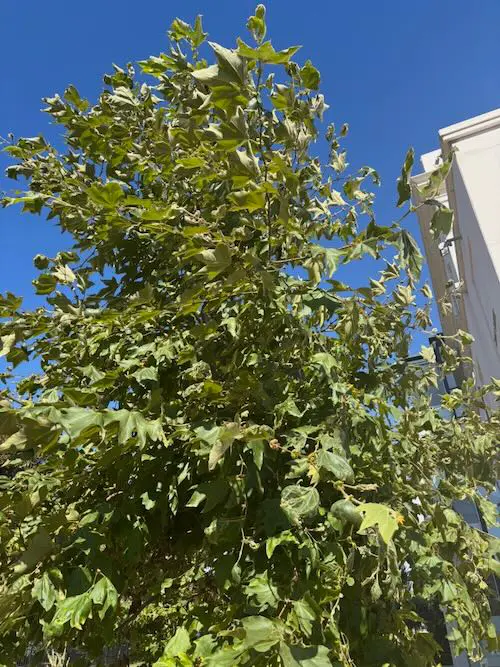
This large tree is known for its striking, mottled bark that peels away in patches, revealing a smooth, creamy underlayer. Its broad, spreading canopy provides ample shade, making it a popular choice for parks and urban landscapes. The leaves are large, lobed, and turn a beautiful golden hue in the fall. It produces small, round seed balls that hang in clusters and add visual interest throughout the year. This tree is well-suited to California’s climate and can often be found lining streets and adorning public spaces. Its resilience to pollution and ability to thrive in various soil types make it a versatile addition to urban environments.
Native Range: California
Horticultural use: Riparian
Schoolyard Use: This tree has broad, lobed leaves that can be used to teach about leaf structure and function. Its bark peels away in patches, revealing a mix of colors that can be incorporated into lessons on plant growth and adaptation. The tree produces small, round seed balls that hang in clusters, which are useful for studying seed dispersal methods. Its deciduous nature makes it suitable for discussions on seasonal changes and their impact on plant life.
Tree Shape: Rounded
Foliage Type: Deciduous
Maximum Tree Height: 80 feet
Canopy Width: 20-50feet
Growth Rate: ~36in/year
Leaf Arrangement and Form: Alternate and Simple
Leaf Shape: Palmately-lobed
Leaf Color: Light Green
Fall Color: Yes
Flowers: Inconspicuous
Flower Time: Spring
Fruit Size and Color: Medium Brown or Mostly Green Achene
Fruiting Time: Fall or Summer
Bark Color: Striking, Cream or Light Green
Bark Texture: Exfoliating, Furrowed and Smooth
Litter Type: Bark, Dry Fruit, Leaves and Twigs
Recommended Planting Area: Greater than 7′
Water Use Rating: High
Sunset Climate Zone: 4 – 24
Soil Texture: Loam, Sand or Clay
Soil pH: Very Acidic to Very Alkaline
Salt Tolerance: Moderate
Schoolyard Trees: Yes
Shade Tolerance: No
Branch Strength: Medium
Root Damage Potential: Moderate
Potential health issues: Allergy
Biogenic Emissions: High
Wildlife Interactions: Attracts Birds
Disease and Pest Susceptibility: Anthracnose, Armillaria, Phytophthora, Mistletoe, Invasive Shot Hole Borer, Leaf Miner, Scales and Spider Mites
Disease and Pest Resistance: Verticillium
Utility Friendly: No