Quercus agrifolia
Coast Live Oak
General Info
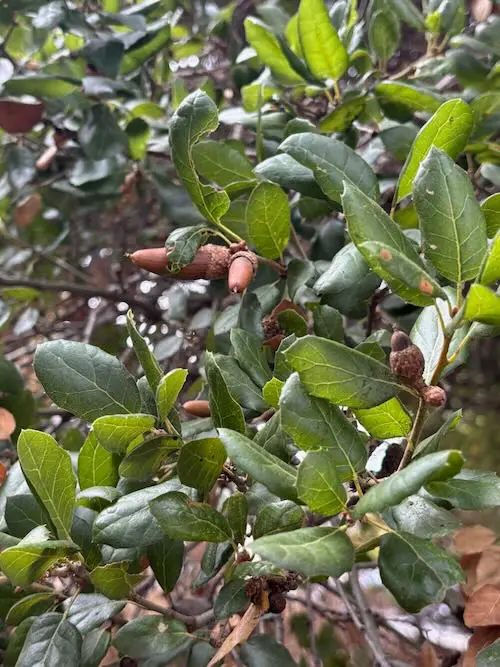
The coast live oak is an evergreen tree that can live for several hundred years. It’s the backbone of coastal California woodlands, a California icon, and the basis for city names like Thousand Oaks and Oakland. Its leathery cupped leaves have tufts of hair on the undersides where the main vein and the secondary veins intersect. These pockets of hair, which are especially present on younger leaves, are used as shelter by mites that graze fungi on the leaf surface. Spanish settlers associated this tree with fertile land, and the placement of the Franciscan missions matches the coast live oak’s native range.
Native Range: California, Northwest Mexico
Horticultural use: Hedged
Ethnobotanical Info / Tree Use: The acorns of these trees were incredibly important food resources for indigenous people throughout their range.
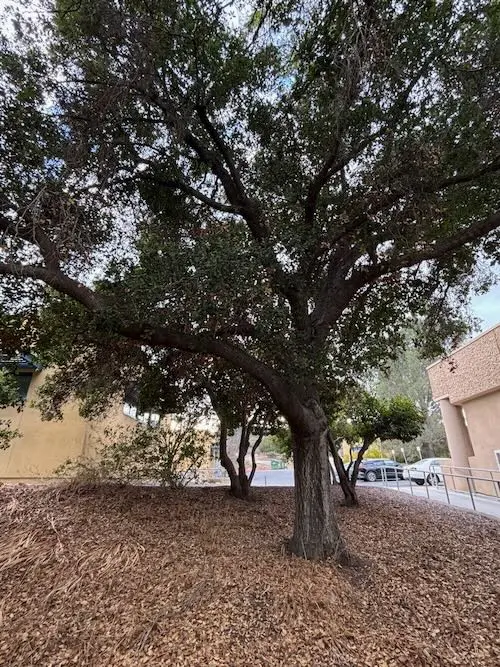
Tree Shape: Rounded
Foliage Type: Evergreen
Maximum Tree Height: 70 feet
Canopy Width: 30-70feet
Growth Rate: ~24in/year
Leaf Arrangement and Form: Alternate and Simple
Leaf Shape: Oval
Leaf Color: Dark Green
Fall Color: No
Flowers: Inconspicuous
Flower Color: Brown or Yellow-Green
Flower Time: Spring
Fruit Size and Color: Large Brown Acorn
Fruiting Time: Fall or Winter
Fruit Value: Edible and Wildlife use it
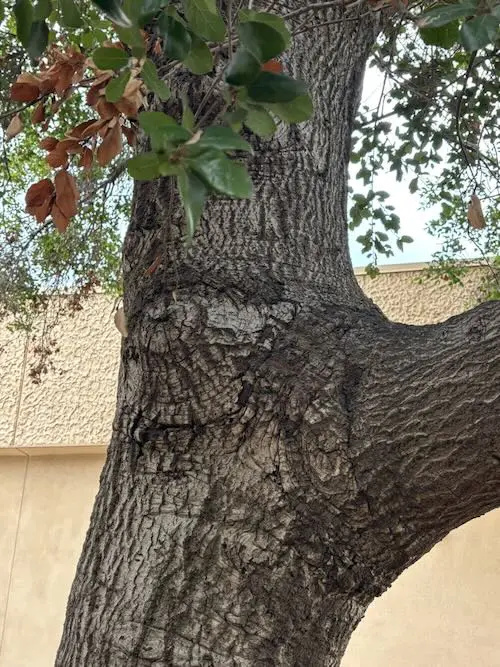
Bark Color: Dark Gray
Bark Texture: Furrowed and Smooth
Litter Type: Dry Fruit
Recommended Planting Area: 4′ to 7′
Water Use Rating: Low
Sunset Climate Zone: 7 – 9 and 14 – 24
Soil Texture: Loam, Sand or Clay
Soil pH: Very Acidic to Slightly Alkaline
Salt Tolerance: High
Schoolyard Trees: Yes
Shade Tolerance: No
Branch Strength: Strong
Potential health issues: Allergy and Poisonous
Biogenic Emissions: High
Wildlife Interactions: Attracts Birds and Squirrels
Disease and Pest Susceptibility: Sudden Oak Death, Crown Rot, Mistletoe, Armillaria, Carpenterworm, Invasive Shot Hole Borer, Goldspotted Oak Borer and Aphids
Disease and Pest Resistance: Verticillium
Utility Friendly: No