Searsia lancea
African Sumac
General Info
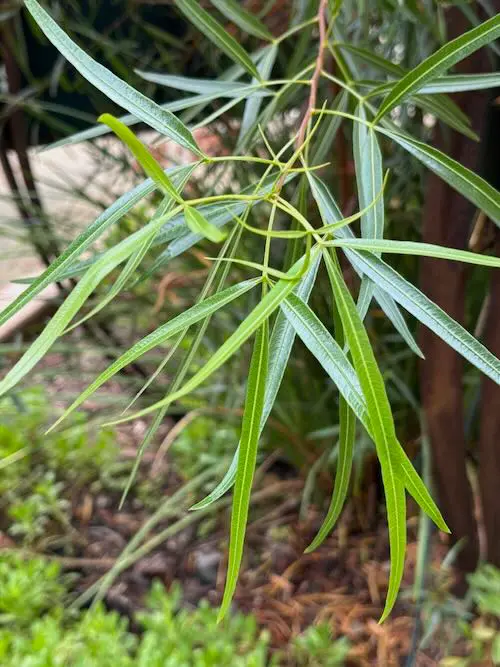
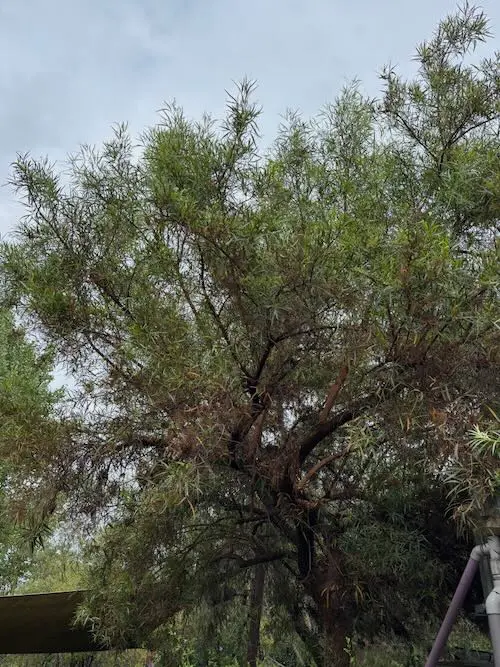
African Sumac is a dense shade tree, rather graceful with its arching branches and weeping foliage. It is tough and reliable in dry conditions, though it looks best with regular, deep watering. It is susceptible to Texas root rot. It is effective as a screen or windbreak and as an evergreen specimen. It may require regularly scheduled light top-trimming (but not necessarily shearing) of vigorous top shoots to maintain its height below 25.
Native Range: Southern Africa
Horticultural use: Screen
Ethnobotanical Info / Tree
Schoolyard Use: This tree features slender, trifoliate leaves that can be used to teach about compound leaf structures and drought resistance. Its small, yellowish flowers appear in clusters and attract various pollinators, making it useful for lessons on pollination and ecosystem interactions. The tree’s berries provide food for birds, adding another layer to discussions on wildlife habitats. Its evergreen nature ensures year-round foliage, ideal for studying photosynthesis in different seasons.
Tree Shape: Rounded
Foliage Type: Evergreen
Maximum Tree Height: 30 feet
Canopy Width: 20-35feet
Growth Rate: ~24in/year
Leaf Arrangement and Form: Alternate and Trifoliate
Leaf Shape: Linear
Leaf Color: Dark Green
Fall Color: No
Flowers: Inconspicuous
Flower Color: Cream
Flower Type: Has male and female reproductive parts in each flower (perfect)
Flower Time: Summer
Fruit Size and Color: Small Red or Yellow Drupe
Fruiting Time: Fall
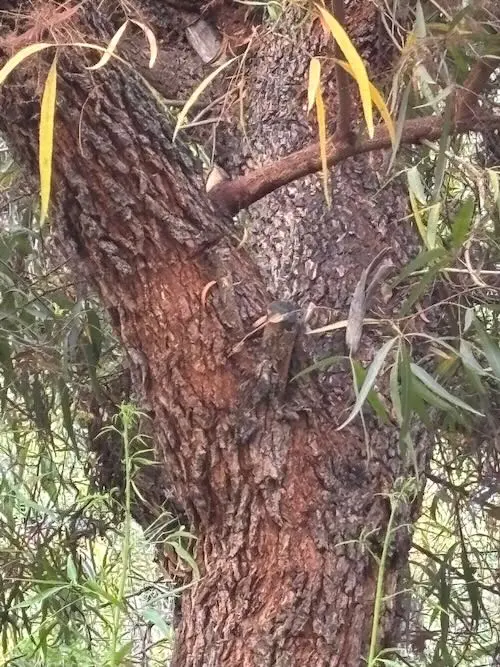
Bark Color: Red Brown
Bark Texture: Fissured
Litter Type: Dry Fruit
Recommended Planting Area: 4′ to 7′
Water Use Rating: Very Low
Sunset Climate Zone: 8 – 9 and 12 – 24
Soil Texture: Loam, Sand or Clay
Soil pH: Slightly Acidic to Very Alkaline
Salt Tolerance: Moderate
Schoolyard Trees: Yes
Shade Tolerance: No
Branch Strength: Medium
Root Damage Potential: Low
Potential health issues: None Known
Biogenic Emissions: Low
Wildlife Interactions: Attracts Birds
Disease and Pest Susceptibility: Root Rot and Verticillium
Utility Friendly: No