Sequoia sempervirens
Coast Redwood
General Info
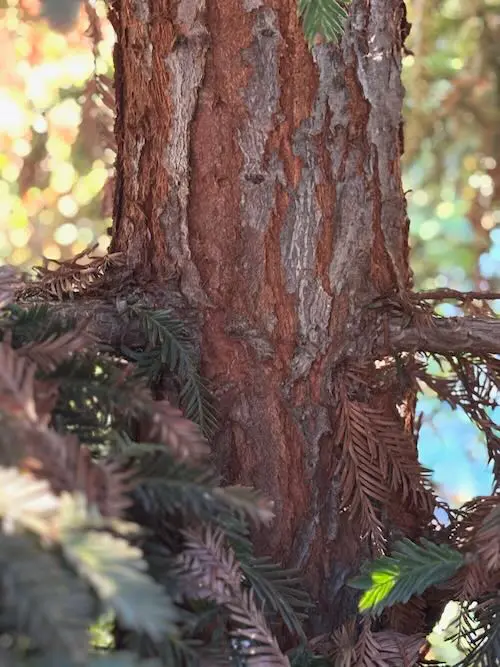
California’s official state tree is among the world’s most magnificent and revered organisms. Like many of the state’s conifers, they are surviving relics from a time when great forests flourished across the Northern Hemisphere. They now occur only in the mild climatic conditions of coastal central and northern California, receiving water from condensed fog during the dry summers. Redwoods are the tallest trees on Earth, with many individuals over 350 feet tall. The economic value of the durable lumber incentivized ruthless logging of the original two million acres of old growth stands, and now less than four percent remains. The oldest redwoods are estimated at 2,500 to 3,000 years old. The fire-resistant, cinnamon-colored bark is thick and spongy.
Native Range: California
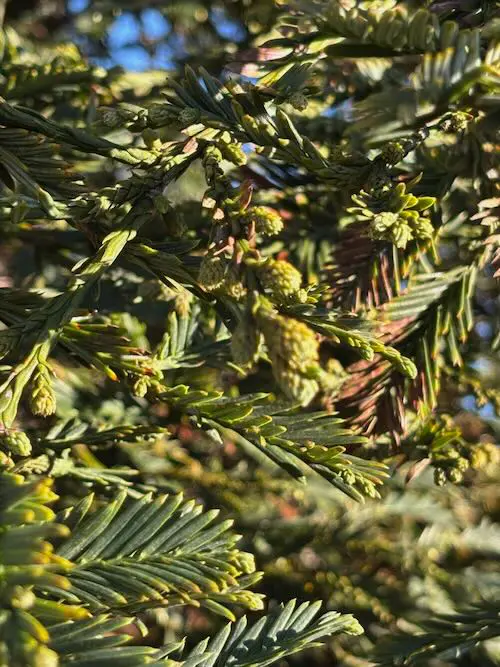
Schoolyard Use: This towering tree has thick, reddish-brown bark that can be used to discuss bark texture and fire resistance. Its needle-like leaves are evergreen and arranged in flat sprays, providing a year-round example of photosynthesis. The tree produces small, woody cones that can be used to illustrate seed dispersal and growth cycles. Its impressive height and longevity make it ideal for lessons on forest ecosystems and the importance of conservation.
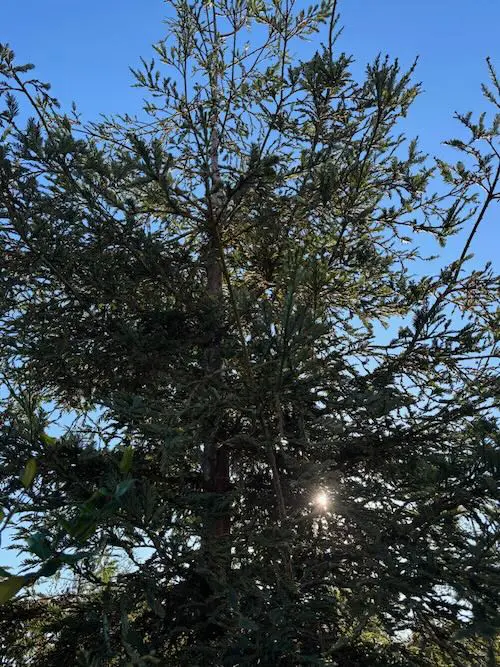
Tree Shape: Conical
Foliage Type: Deciduous
Maximum Tree Height: 150 feet
Canopy Width: 15-75feet
Growth Rate: ~36in/year
Leaf Arrangement and Form: Alternate and Simple
Leaf Shape: Linear
Leaf Color: Green
Fall Color: No
Cones: Fragrant
Cone Size and Color: Medium Brown Cone
Pollen time: Fall or Winter
Bark Color: Red Brown
Bark Texture: Fibrous and Furrowed
Litter Type: Dry Fruit
Recommended Planting Area: Greater than 7′
Water Use Rating: High
Sunset Climate Zone: 4 – 9 and 14 – 24
Soil Texture: Loam, Sand or Clay
Soil pH: Very Acidic to Slightly Alkaline
Salt Tolerance: High
Schoolyard Trees: Yes
Shade Tolerance: No
Branch Strength: Strong
Root Damage Potential: Low
Potential health issues: Allergy
Biogenic Emissions: Moderate
Wildlife Interactions: Attracts Birds
Disease and Pest Susceptibility: Armillaria, Phytophthora, Cypress Canker, Root Rot, Beetle Borers and Redwood Bark Beetle
Disease and Pest Resistance: Phytophthora kernoviae (Sudden Oak Death)
Utility Friendly: No