Spathodea campanulata
African Tulip Tree
General Info
Winter hardy to USDA Zones 10-11 where it is easily grown in rich, moderately fertile, moist, well-drained soils in full sun. Tolerates part shade, but best flowering is in full sun. May drop some leaves in dry seasons or when subjected to light frost. Must be sited in locations protected from wind because tree wood is weak and brittle. Gardeners need to prune after most rainstorms or light frosts to maintain good appearance. Near the edge of its area of winter hardiness, it may be planted as a shrub in a protected area to facilitate regular pruning and removal of dead branches. Propagate by seed, cuttings or root suckers. Established plants have some drought tolerance, but trees subject to dry conditions often become ragged in appearance with some leaf drop. Foliage will die if temperatures dip to 28 degrees F., but roots may survive to 20 degrees F. Notwithstanding its beauty, African tulip tree is considered to be an aggressive and invasive spreader in many tropical areas where it has been introduced. It produces abundant seeds which are carried by the wind or in the current of streams and rivers to new locations. In tropical climates, it can easily spread into disturbed sites, abandoned farmland, pastures, forest margins and waste areas.
Native Range: Tropical Africa
Zone: 10 to 11
Height: 25.00 to 40.00 feet
Spread: 15.00 to 25.00 feet
Bloom Time: Seasonal bloomer
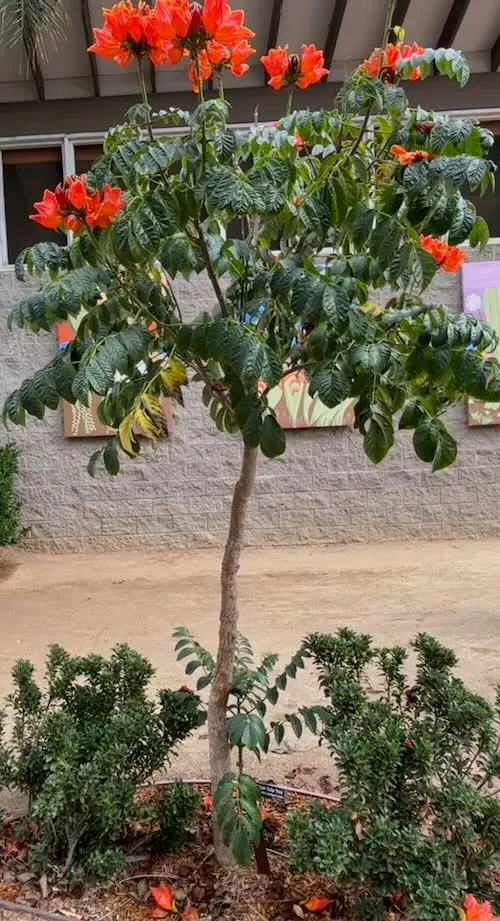
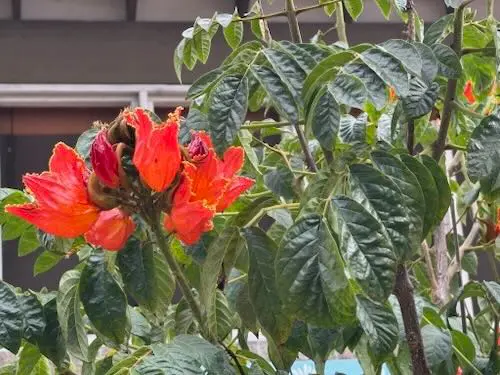
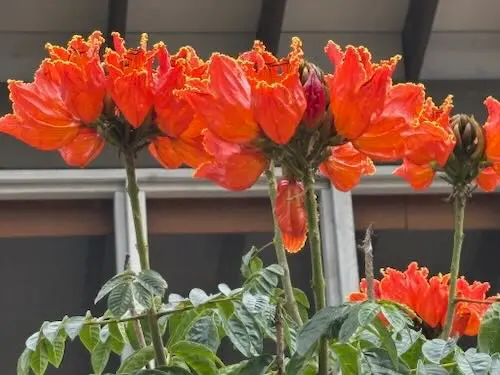
Bloom Description: Reddish-orange with yellow corolla margin
Sun: Full sun
Water: Medium
Maintenance: Medium
Suggested Use: Shade Tree, Flowering Tree
Flower: Showy
Leaf: Evergreen
Fruit: Showy
Other: Winter Interest