Syagrus romanzoffianum
Queen Palm
General Info
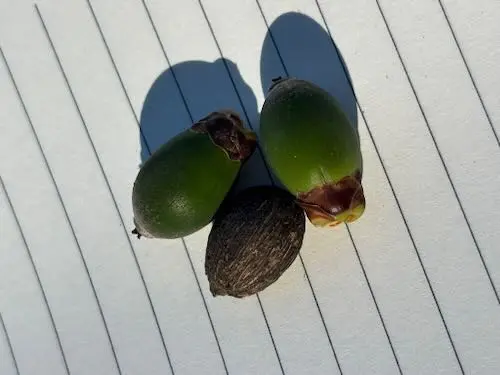
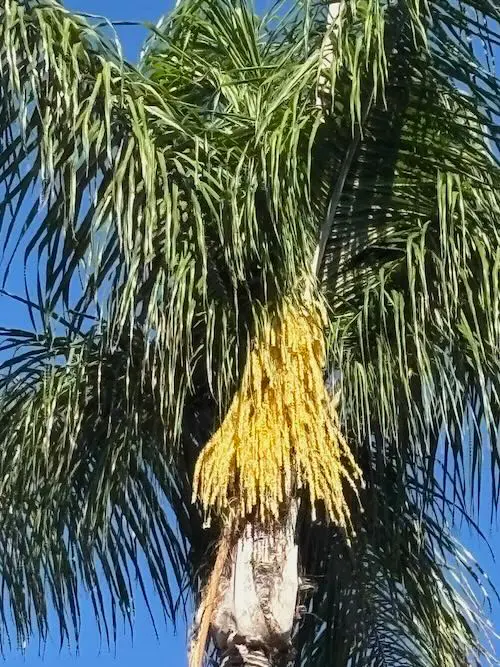
Syagrus romanzoffiana is a subtropical to tropical feather palm native to the woodlands of South America. Its elegant, arching, and dark green crown is supported by a slender and gray trunk. Bright orange drupes are produced in abundance, enjoyed by birds and small mammals. With its tolerance of light frost, drought, and heat, this is one of the hardiest tropical palms. Its fallen fruits can make a mess of the ground. Otherwise, this fast-grower has become very popular in cultivation.
Native Range: Southern Brazil and Northern Argentina
Horticultural use: Specimen, Buffer Strip or Street Tree
Ethnobotanical Info / Tree Use: The fruits of the Queen Palm are edible and processed into wines or syrups. Its young apical buds are also edible, but their removal kills the tree. Its leaves are a source of fiber for baskets and hats, while its salt-resistant trunks are used for water pipes and construction.
Tree Shape: Palm
Foliage Type: Evergreen
Maximum Tree Height: 50 feet
Canopy Width: 20-30feet
Growth Rate: ~24-36in/year
Leaf Arrangement and Form: Alternate and Pinnately Compound
Leaf Color: Green
Fall Color: No
Flowers: Inconspicuous
Flower Color: White
Flower Type: Has separate male and female reproductive parts on the same tree (monoecious)
Flower Time: Fall, Winter, Spring or Summer
Fruit Size and Color: Medium Orange Drupe
Fruiting Time: Fall, Winter, Spring or Summer
Fruit Value: Wildlife use it and Edible
Bark Color: Light Gray, Green
Bark Texture: Smooth and Ridged
Litter Type: Leaves and Wet Fruit
Recommended Planting Area: 4′ to 7′
Water Use Rating: Medium
Sunset Climate Zone: 12 – 13, 15 – 17, 19 – 24, H1 and H2
Soil Texture: Loam, Sand or Clay
Soil pH: Acidic to Slightly Alkaline
Salt Tolerance: Moderate
Schoolyard Trees: No
Shade Tolerance: No
Wildlife Interactions: Attracts Birds and Mammals
Disease and Pest Susceptibility: Butt Rot, Armillaria, Root Rot, Trunk Rot, Scales, Spider Mites and Red Palm Weevils (Rhynchophorus ferrugineus)
Disease and Pest Resistance: Texas Root Rot
Utility Friendly: No