Washingtonia robusta
Mexican Fan Palm
General Info
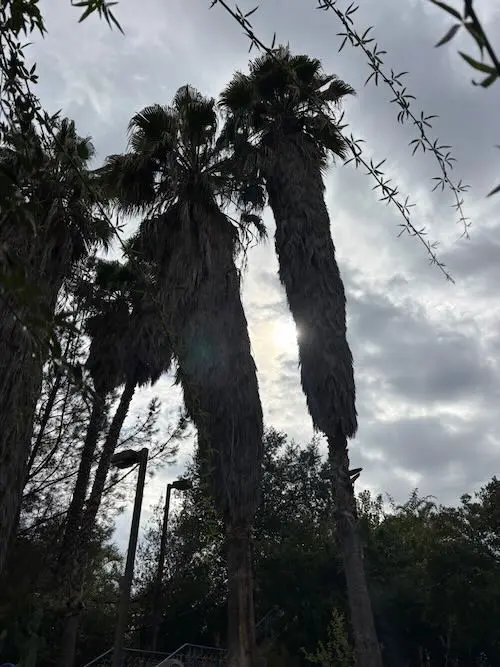
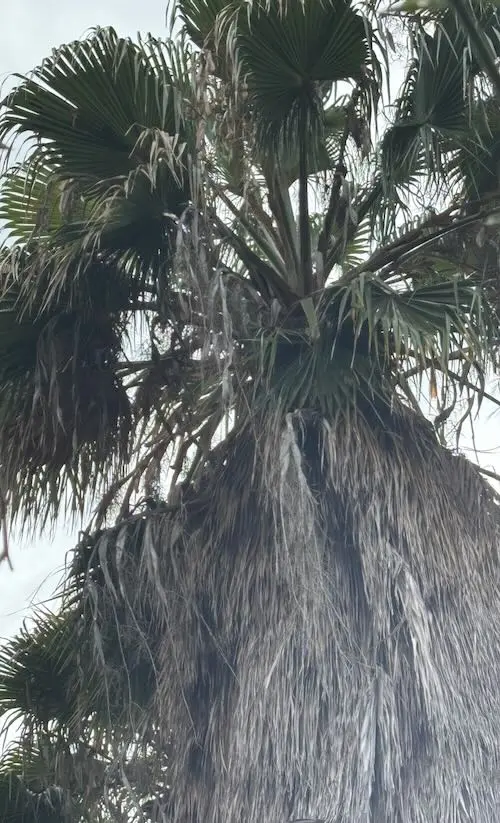
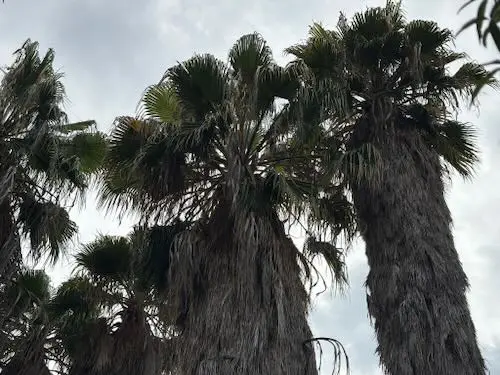
There are currently two species recognized in the genus Washingtonia, though some evidence suggests that Washingtonia is composed of one highly variable species and that local differentiation of populations is related to environmental gradients. The plant material in cultivation can be difficult to distinguish, and all kinds of supposed hybrids exist. In general, the two currently-recognized species can be distinguished, at least at their extremes this way: W. filifera is shorter, with a stouter trunk, more hair-like fibers on the leaf tips, and a less compact crown with longer leaf stalks (petioles) than W. robusta. The Mexican fan palm is Southern California s most common palm species. In its native range of Baja and Sonora Mexico, the leaves were used for roofs, baskets, and sandals, while the fiber was used in making cord. It is widely planted and often naturalized throughout the world. Washingtonia robusta has a HPWRA (Hawai‘i Pacific Weed Risk Assessment) score of 15 (High Risk).
Native Range: Northwestern Mexico
Potential invasiveness: This plant is classified as potentially invasive in specific areas of California by the California Invasive Plant Council
Ethnobotanical Info / Tree Use: An attractive palm native to the Baja Peninsula of Mexico, this palm is now a popular ornamental throughout the tropics. Recent research shows the pruning waste of the large fronds to be suitable for particleboard production. (Garcia-Ortuño et al., 2013
Tree Shape: Palm
Foliage Type: Deciduous
Maximum Tree Height: 70 feet
Canopy Width: 10-20feet
Growth Rate: ~36in/year
Leaf Arrangement and Form: Alternate and Palmately Compound
Leaf Color: Dark Green
Fall Color: No
Flowers: Inconspicuous
Fruit Size and Color: Small Black Drupe
Fruit Value: Edible
Bark Color: Red Brown
Bark Texture: Furrowed and Smooth
Litter Type: Dry Fruit and Leaves
Recommended Planting Area: 4′ to 7′
Water Use Rating: Low
Sunset Climate Zone: 8 – 24, H1 and H2
Soil Texture: Loam or Sand
Soil pH: Slightly Acidic to Very Alkaline
Salt Tolerance: moderate
Schoolyard Trees: No
Shade Tolerance: No
Root Damage Potential: Moderate
Potential health issues: Allergy
Biogenic Emissions: Moderate
Wildlife Interactions: Attracts
Disease and Pest Susceptibility: Beetle Borers and Red Palm Weevil (Rhynchophorus ferrugineus)
Disease and Pest Resistance: Texas Root Rot
Utility Friendly: No